
You’re dealing with stubborn sticker glue, and you want a fast, low-risk fix that actually works. Start by softening the adhesive with heat or a solvent, then lift it with a plastic card or cloth, taking care to match the method to the surface. There are simple home remedies for glass, wood, fabric, and tougher options if that fails — keep going and you’ll find the right approach for your item.
Key Takeaways
- Soften the residue with low heat from a hair dryer for 20–30 seconds, then peel or rub gently with a cloth.
- Apply rubbing alcohol, hand sanitizer, or citrus-based solvent to dissolve adhesive, let sit briefly, then wipe away.
- Use cooking oil, mineral oil, or peanut butter to loosen sticky glue, then blot and wash the surface with soapy water.
- For glass or metal, use isopropyl alcohol or a commercial adhesive remover; for painted or wood, test first and use mild oil or soap.
- On fabric, scrape off excess, treat with dish soap or rubbing alcohol on a hidden area, launder only after residue is removed.
Quick Household Fixes for Fresh Sticker Glue
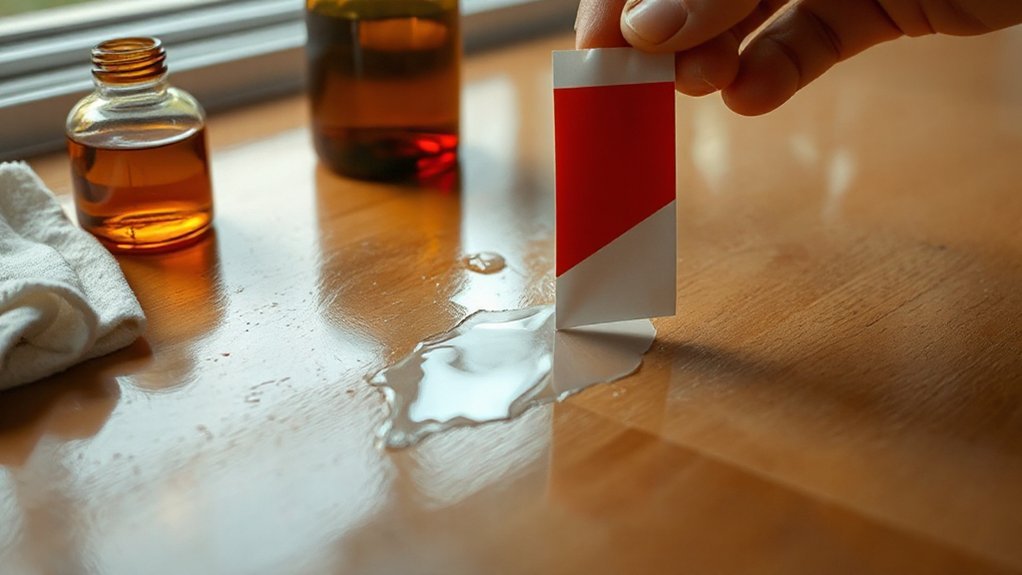
Grab a few common items and tackle fresh sticker glue before it sets: rubbing alcohol or hand sanitizer breaks down the adhesive, a dab of cooking oil or peanut butter softens it for gentle scraping with a plastic card, and a hairdryer on low heat loosens residue so you can wipe it away with a microfiber cloth. You’ll start by testing an inconspicuous spot, then apply small amounts and wait 30–60 seconds. Use a plastic card or fingernail to lift softened glue, reapplying solvent as needed. For porous or painted surfaces, favor oil based solutions sparingly to avoid staining; blot excess with a cloth. When you prefer less chemical exposure, try natural remedies like white vinegar or a citrus-based cleaner, following with mild soap and water to remove residues and oils.
Removing Residue From Glass, Ceramic, and Metal
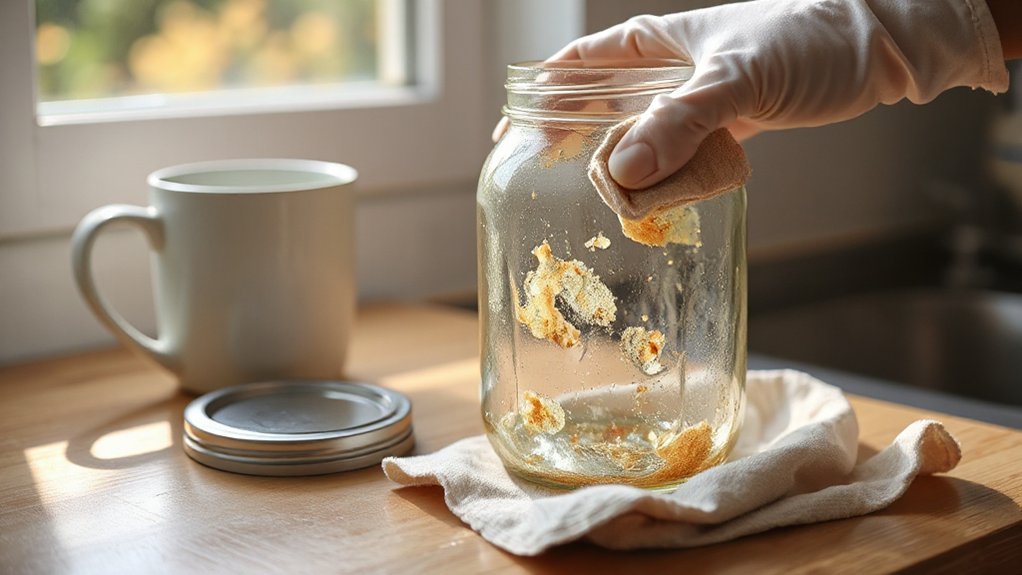
When working on glass, ceramic, or metal, you can step up from quick household fixes to techniques that protect finishes while removing stubborn adhesive. Start by softening residue with heat: use a hair dryer on low and peel gently with a plastic scraper. For glass cleaning, apply isopropyl alcohol or a dedicated adhesive remover, rub with a microfiber cloth, then finish with a streak-free glass cleaner. For ceramic care, avoid abrasive pads; use a paste of baking soda and water or a citrus-based solvent, rinse thoroughly, then dry to prevent water spots. For metal, test a small area, use mineral spirits or Goo Gone, then polish with a metal-safe cleaner. Always ventilate, wear gloves, and test products on an inconspicuous spot.
Safe Methods for Painted and Wood Surfaces
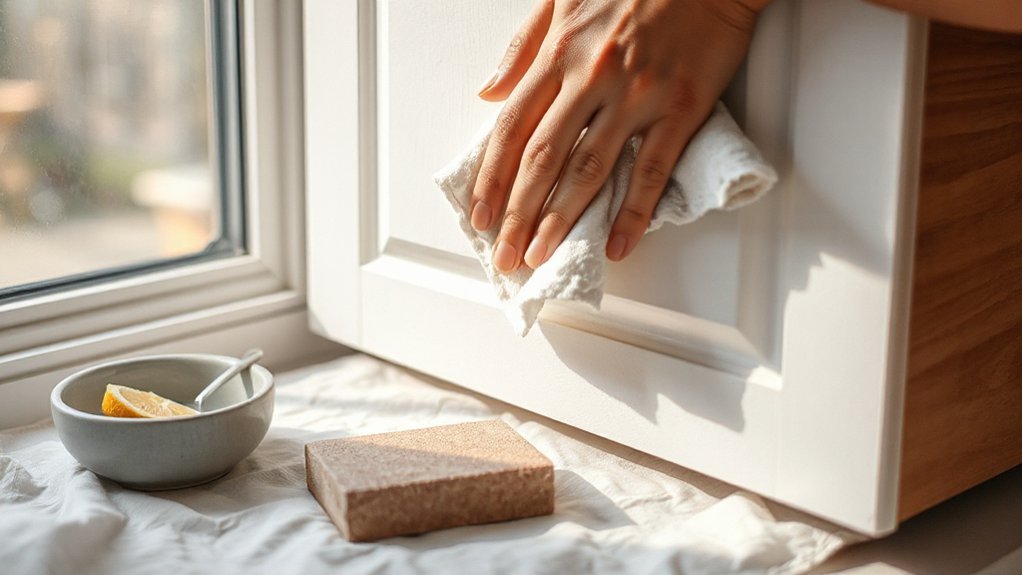
Because painted and wood surfaces can chip, discolor, or absorb solvents, start with the gentlest approach and escalate only as needed. Test a hidden spot first to confirm paint adhesion and finish stability. Use a plastic scraper or credit card at a low angle to lift residue without gouging. Apply a few drops of warm, soapy water and rub gently with a microfiber cloth; dry and inspect.
If residue persists, try a small amount of mineral oil or a dedicated citrus-based adhesive remover, applied sparingly and wiped away promptly to protect the finish. For stubborn areas, dampen a cloth with isopropyl alcohol, blot, and rinse immediately. Always work small sections, rinse well, and finish with a wipe of mild detergent to guarantee surface protection and preserve paint adhesion.
Tackling Sticky Buildup on Fabric and Clothing
If sticky residue’s on fabric, start by identifying the substance and checking the garment’s care label so you pick a solvent and method that won’t harm fibers or color. Work on the wrong side or a hidden seam first. For light adhesive types like paper-backed stickers, gently scrape excess, apply a bit of liquid dish soap or rubbing alcohol, blot, then launder per fabric care instructions. For oily or tacky residues, sprinkle cornstarch or baking soda to absorb, brush off, then pretreat with stain remover compatible with the care label. Avoid heat until residue’s gone; iron or dryer can set adhesive. For delicate fibers, use cold water and a mild detergent, repeating blot-and-rinse cycles. Always air-dry and inspect; repeat if needed.
When to Use Commercial Adhesive Removers
Although you can often tackle light sticker residue with household items, reach for a commercial adhesive remover when DIY methods fail, the residue is thick or rubbery, or the surface is sensitive to scraping. You’ll want to evaluate commercial product options by compatibility: check labels for plastic, painted, fabric, or glass-safe formulas. Test a small hidden area for colorfastness and finish before full application. Follow adhesive removal techniques precisely—apply, wait specified dwell time, and wipe with a soft cloth; repeat rather than force-scrape. Use gloves and ventilation; avoid heat on solvents near painted surfaces. For porous materials, choose water-based removers to reduce staining. After removal, neutralize and clean the area per manufacturer instructions to restore the surface and prevent residue reformation.
Conclusion
You’ve got practical options: warm the glue with a hairdryer, dab rubbing alcohol or hand sanitizer, or loosen stubborn residue with cooking oil or peanut butter, then scrape gently with a plastic card. Test solvents on an inconspicuous spot first. For painted or delicate finishes, stick to mild solvents and avoid scraping; for fabric, pre-treat and launder. Rinse surfaces with soapy water afterward. Use commercial removers only when gentler fixes fail.