
If your sink or shower is draining slowly, you can often clear it without harsh chemicals. Start by removing visible gunk, then try hot water, baking soda and vinegar, or dish soap for grease. I’ll outline safe, effective steps, simple tools that work, and when you should call a pro.
Common Causes of Clogged Drains
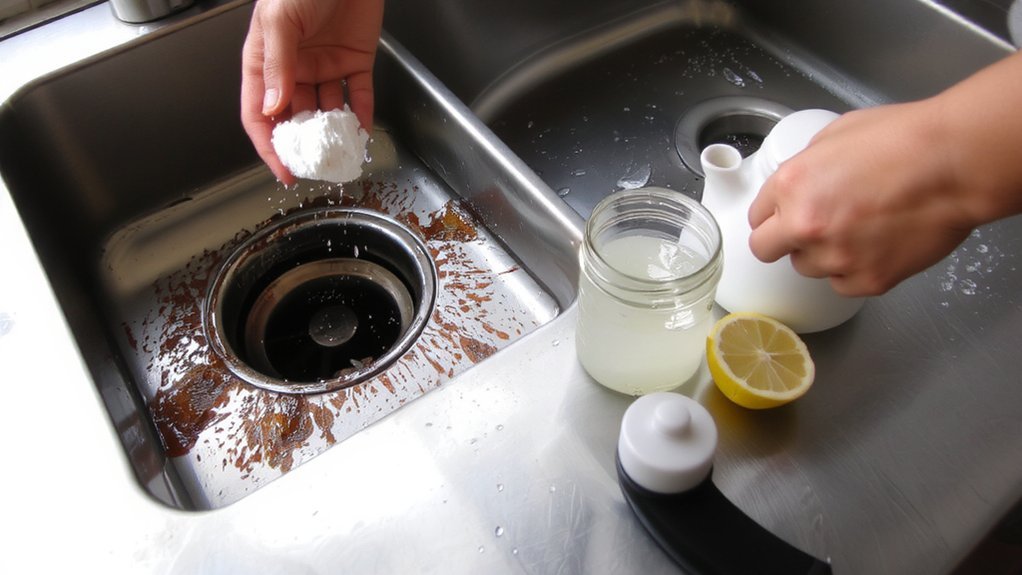
Many clogs start from everyday habits: hair, soap scum, and grease build up inside pipes until water can’t flow.
You’ll find bathroom drains choke on loose hair, long strands, and grooming products that bind with soap to form sticky blockages.
Kitchen sinks clog when you rinse fats, oils, and food particles—starchy pasta and fibrous vegetable scraps expand and snag.
Laundry and utility drains trap lint, fabric fibers, and detergent residue.
Flushing wipes, cotton swabs, or menstrual products creates severe stoppages.
Hard water leaves mineral scale that narrows pipes over time.
Outdoor lines suffer from tree root intrusions and collapsed joints in older systems.
Identifying where and what causes the restriction helps you pick the simplest natural method to clear the flow and prevent recurrence.
Safety Precautions Before You Start
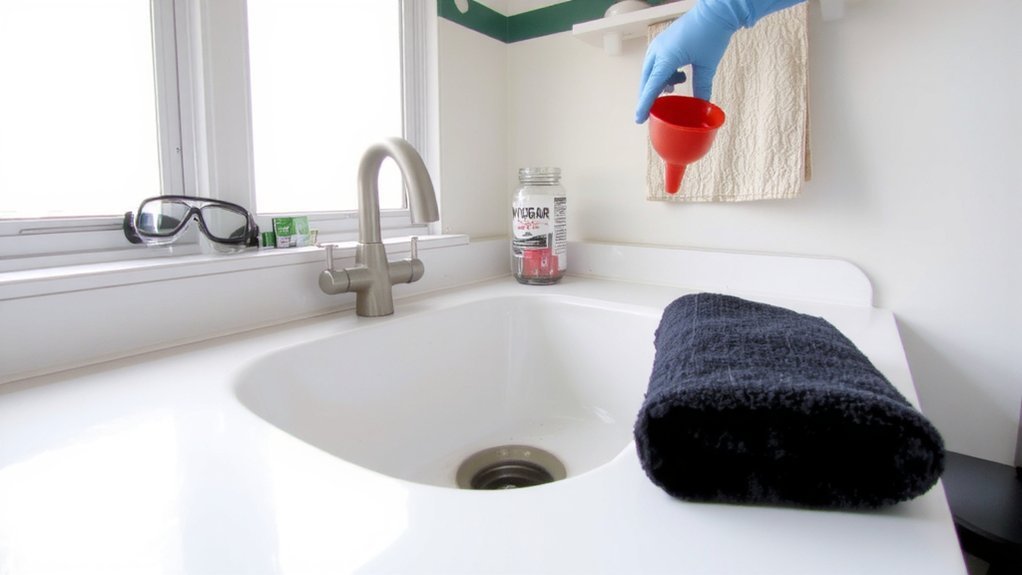
Knowing what likely caused the clog helps you choose a method, but before you start clearing it you should protect yourself and your home.
Wear rubber gloves and eye protection, and open windows or run a fan to ventilate fumes.
Turn off water at the fixture and unplug any nearby appliances.
Place a bucket under the trap and lay down towels or a plastic sheet to catch spills.
Keep children and pets out of the area.
If you plan to use any cleaners or tools, read labels and warnings first, and don’t mix products.
Use proper tools—plunger, drain snake, or hand auger—and work slowly to avoid damage.
Have a phone nearby in case you need help.
Keep a first-aid kit accessible just in case.
Boiling Water Method

Pouring boiling water down the drain can dissolve soap and grease buildup in kitchen and bathroom sinks.
You’ll want to remove any standing water first so the hot water reaches the clog. Boil a full kettle, then slowly pour it directly into the drain in two or three stages, waiting thirty seconds between pours. That thermal shock and flushing action often loosens residue and moves it along the pipes.
Repeat once if the drain improves; don’t overdo it on PVC pipes—check manufacturer guidance, since repeated extreme heat can soften some plastics.
If water backs up or the clog persists, stop and try mechanical methods like a plunger or drain snake, or call a pro to avoid damage.
Note results for future reference now.
Baking Soda and Vinegar Technique
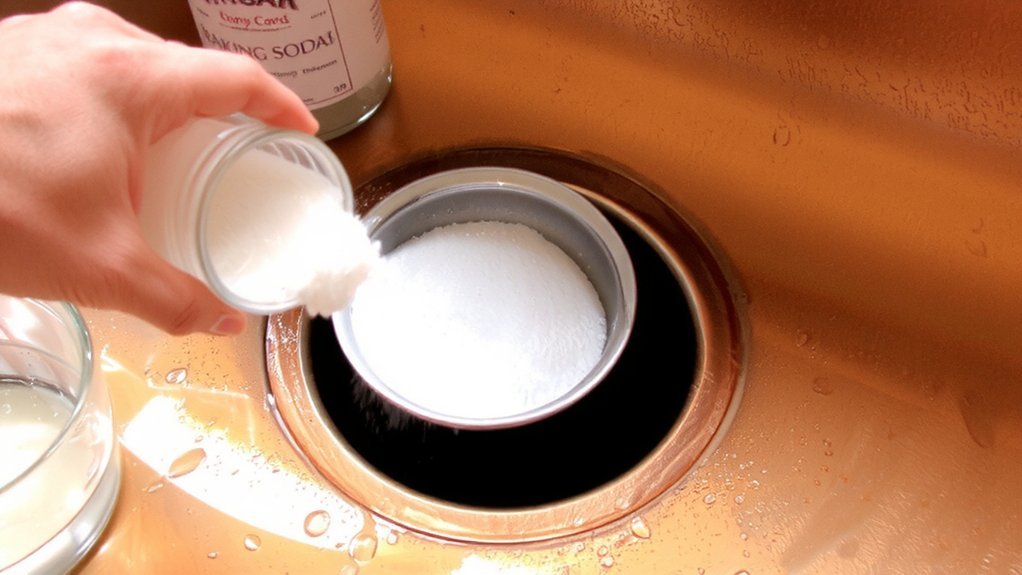
If the boiling-water trick didn’t clear the clog, try a baking soda and vinegar flush next — it uses a fizzing chemical reaction to break up grime without harsh chemicals.
Pour about a cup of baking soda down the drain, then add a cup of vinegar.
Plug the drain or cover it to force the reaction into the pipe, and wait 15–30 minutes.
Flush with hot tap water to clear loosened debris; use caution with PVC.
If the clog’s stubborn, you can repeat it.
For sinks with pop-up stoppers remove and clean visible gunk first so the mixture can reach deeper.
This method works best on mild organic buildups; it won’t remove large blockages or objects; call a pro if water still drains slowly.
Salt and Boiling Water Treatment
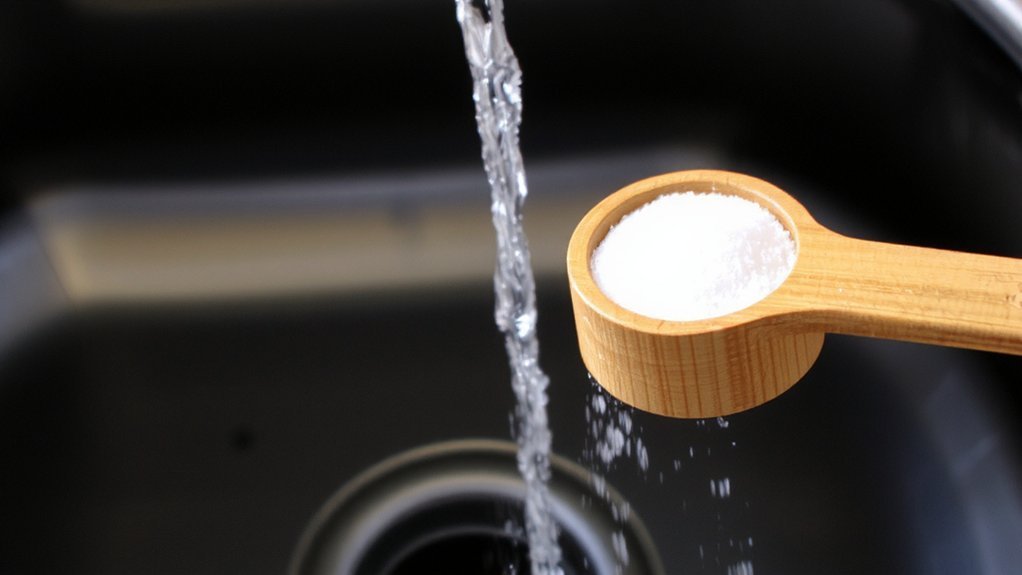
When grease and soap scum are clogging your sink, salt followed by boiling water can loosen and flush the buildup without chemicals.
Pour about half a cup of coarse salt into the drain, then let it sit for fifteen to twenty minutes so crystals abrade and break up deposits.
Meanwhile bring a kettle to a rolling boil. Slowly pour boiling water directly into the drain in two or three stages, pausing between pours to let heat and salt work deeper.
Repeat once if needed. For regular maintenance use this monthly to reduce buildup.
Don’t use boiling water on older PVC plumbing or near glued fittings — cooler hot water works better there to avoid softening seals. If it persists, call a plumber for tougher clogs.
Dish Soap and Hot Water for Grease
Using dish soap with hot water breaks down greasy residues so they slide away more easily: squirt a generous tablespoon of liquid dish soap into the drain, give it 5–10 minutes to emulsify the grease, then flush in two or three stages with hot water.
Repeat if the water still drains slowly. For stubborn grease, run the hottest tap you can safely tolerate while adding more soap incrementally.
Don’t pour boiling water into PVC; use very hot, not boiling. If you have a removable strainer, clean trapped grease from it first so soap can reach the clog.
Finish by running cold water for a minute to firm remaining grease and carry it away. This method targets fatty build-up and avoids harsh chemicals. And helps prevent future slowdowns.
Using a Plunger Effectively
Before you start plunging, make sure the plunger’s cup fits the drain and there’s enough water in the bowl to cover the cup so you get a seal.
Position the plunger directly over the drain and push down gently to expel air, then pull up sharply to create suction.
Keep a firm grip and use short, vigorous pumps, about 15 to 20 strokes, maintaining the seal.
If there’s an overflow or a second basin, block it with a wet cloth to focus pressure.
After several cycles, pull the plunger off quickly to let water rush through. Repeat as needed.
Finish by running hot water with a little dish soap to flush away loosened grease and debris and wipe area clean later to prevent smells.
When to Use a Drain Snake or Auger
If plunging doesn’t clear the blockage, reach for a drain snake or auger to break up or pull out the obstruction. You should use one when water drains slowly after repeated plunging, when debris seems lodged beyond the trap, or when hair and soap scum form dense clumps.
Choose a hand snake for shallow blockages in sinks and tubs; use a longer cable or drum auger for deeper or stubborn clogs in main lines. Feed the cable gently, rotate to snag material, then pull it back slowly.
If you feel solid resistance that doesn’t budge, stop to avoid damage and consider professional help. After extracting debris, flush the line with hot water to clear residual buildup and test flow and repeat if necessary periodically.
Preventive Maintenance Tips
Regularly performing simple maintenance keeps drains flowing and saves you from emergency clogs.
Every week, rinse sinks with hot water to dissolve grease and soap scum.
Once a month, pour a cup of baking soda followed by a cup of white vinegar, wait 15 minutes, then flush with boiling water to break down buildup.
Use a hair catcher in showers and a sink strainer for kitchen drains to trap debris before it enters pipes.
Avoid pouring fats, oils, or coffee grounds down the drain; wipe greasy pans with paper towels first.
Run water after each dishwasher or washing machine cycle to move residues.
Inspect accessible P-traps and clean them if you’ll notice slow drainage.
These simple steps reduce clogs and extend your plumbing’s life.
Conclusion
By following these simple, natural steps you’ll tackle most clogs yourself. Start by removing visible debris, then use hot (not boiling for PVC) water, baking soda and vinegar, or dish soap with hot water to break down grease. Use a plunger or hand auger for stubborn blockages, and repeat treatments once before calling a pro. Keep up preventive maintenance—avoid pouring fats and trap hair—to reduce future clogs and save time and effort easily every day.