
You can get shower doors clear and streak-free without harsh scrubbing if you follow the right steps and use a few simple tools. Start by rinsing and squeegeeing after showers, then use targeted cleaners for soap scum, hard water, and frame tracks when needed. Learn the best supplies, safe techniques for different door types, and quick DIY solutions so maintenance stays easy and results last—here’s what to do next.
Key Takeaways
- Rinse and squeegee glass after every shower to remove water and prevent soap scum and mineral buildup.
- Use a 1:1 white vinegar–water spray for hard water stains; let sit a few minutes before wiping with a microfiber cloth.
- Remove stubborn soap scum with a baking soda paste, gently scrub with a soft sponge, then rinse thoroughly.
- Clean tracks and seals with a toothbrush and mild dish soap, then dry to prevent mold and deterioration.
- Schedule light wipe-downs every few days, weekly thorough cleans, and monthly deep descaling for best results.
Tools and Supplies You Need
Before you start, gather the right tools and supplies so the job goes quickly and without surprises. You’ll want a compact supply list: a squeegee, microfiber cloths, a non-abrasive scrub brush, a plastic scraper, and a spray bottle. Include appropriate cleaning solutions—mild dish soap, white vinegar, and a commercial glass cleaner if needed—and rubber gloves to protect your hands. Choose cleaning tools that won’t scratch glass or metal finishes; avoid steel wool or harsh scouring pads. If you have hard-water stains, add a soft-bristled toothbrush for detail work. Keep a small bucket for mixing solutions and an old towel to catch drips. With this kit, you’ll handle most shower-door cleaning tasks efficiently and safely.
Cleaning Glass Shower Doors Safely
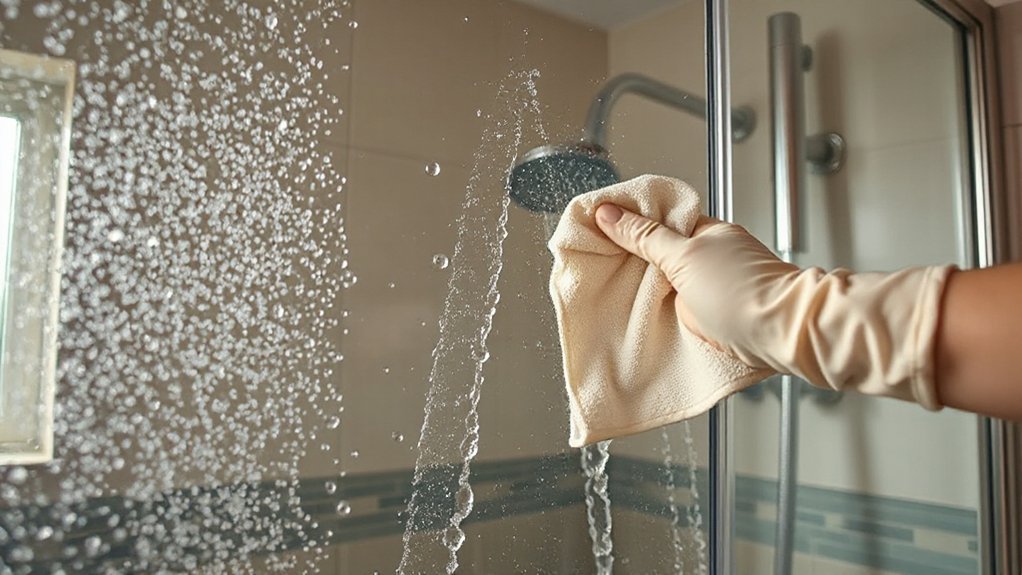
You should rinse and squeegee glass doors after each shower to keep water spots and soap residue from setting. When soap scum appears, use a gentle cleaner and a nonabrasive pad so you don’t etch the glass or strip coatings. To prevent hard water buildup, install a water softener or wipe down the doors regularly and treat spots promptly.
Daily Rinse and Squeegee
A quick daily rinse and a single squeegee pass will stop soap scum and mineral spots from building up on your glass shower doors. Make this part of your daily habits: after each shower, spray the glass with warm water or run the handheld for 20–30 seconds to loosen residue. Use a rubber squeegee from top to bottom in one smooth stroke, wiping the blade with a microfiber cloth between passes. Focus on corners and the lower rail where water pools. These effective techniques take less than a minute, prevent tougher cleaning sessions, and extend the life of glass treatments. Keep the squeegee and a small towel in the shower area so you won’t skip it — consistency matters.
Tackle Soap Scum Gently
Once you’ve kept up with rinsing and squeegeeing, tackle soap scum with gentle, nonabrasive methods that protect the glass and any protective coatings. Start by misting the glass with a mild vinegar solution—dilute white vinegar with equal parts water—to loosen residue. Let it sit a few minutes, then wipe with a microfiber cloth in circular motions. For stubborn spots, use a paste of baking soda and water as a gentle abrasive; apply it gently with a soft sponge and rinse thoroughly. Avoid steel wool, harsh scrubbing pads, or strong chemical cleaners that can etch glass or strip coatings. Finish by rinsing and drying with a microfiber towel. Repeat weekly or as needed to prevent buildup while preserving the finish.
Prevent Hard Water Buildup
Because mineral deposits bond quickly, preventing hard water buildup means staying proactive rather than waiting for white film to appear. You’ll cut work by wiping doors with a squeegee after each shower and using a microfiber cloth to remove remaining droplets. Install a water softener or a showerhead filter to reduce mineral content at the source; that’s the most effective hard water solution. Apply a daily shower spray or a diluted vinegar mist weekly to dissolve early deposits before they harden. For protective maintenance, consider a commercial glass sealant to repel water and minerals. When spots form, use a gentle nonabrasive cleaner and a soft sponge—avoiding scrapers that scratch glass. Regular, simple habits are the core of buildup prevention.
Tackling Framed and Textured Doors
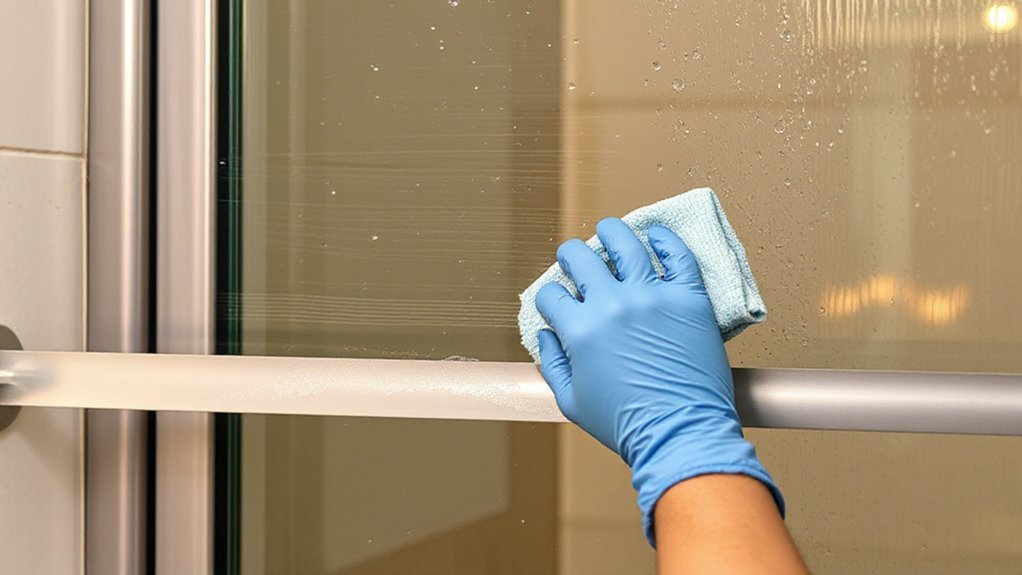
When you clean framed and textured shower doors, focus on the frame and grooves first since they trap the most grime; use a soft brush and a mild cleaner to loosen soap scum and mineral deposits without damaging finishes. Start by removing detachable parts like rollers and seals, wiping them separately. For framed doors, run a microfiber cloth along tracks, then flush with warm water and suction out residue with a towel or small vacuum. For textured doors, work the cleaner into crevices with a nylon brush, rinsing frequently to prevent buildup. Dry metal frames immediately to prevent corrosion and reassemble parts only when fully dry. Inspect seals and replace brittle ones to maintain watertight integrity and reduce future cleaning.
Removing Hard Water Stains and Soap Scum
Before you start scrubbing, identify whether marks are mineral deposits or soap scum so you pick the right method. Use safe cleaners—vinegar or a mild acid for hard water, and a gentle degreaser or baking soda paste for soap residue—to avoid etching glass or damaging hardware. Finish with simple preventive maintenance, like squeegeeing after each shower and installing a water softener or protective coating to cut future buildup.
Identify Stain Types
Although hard water stains and soap scum can look similar at a glance, you can tell them apart by texture and location: hard water leaves mineralized, cloudy white or chalky deposits that resist wiping, while soap scum forms greasy, filmy residue that smears and often traps dirt. For accurate stain identification, inspect affected areas up close and run a dry cloth over them: mineral spots will remain, film will smear. Check edges, corners, and fixtures where minerals concentrate from dripping; soap scum collects where soap and body oils contact glass repeatedly. Note color: minerals often appear white to gray; scum can be dull or brownish with embedded grime. Correctly identifying the stain guides effective stain removal and prevents wasted effort.
Safe Cleaning Solutions
Since hard water and soap scum respond to different treatments, pick cleaners that target the specific residue: acidic solutions (vinegar, citric acid) dissolve mineral deposits, while alkaline or surfactant-based cleaners (dish soap, commercial scum removers) break up greasy film. You should test cleaners on a hidden spot first and wear gloves and eye protection. For hard water, apply a 1:1 vinegar-water soak or a citric acid paste, let it sit, then scrub with a nonabrasive pad. For heavy soap scum, use warm water with dish soap or a dedicated scum remover, agitate, then rinse. If you prefer eco friendly solutions, use baking soda plus vinegar alternatives like lemon juice or commercial plant-based cleaners. Always rinse thoroughly and dry the glass.
Preventive Maintenance
If you want your shower doors to stay clear, make preventive maintenance a habit: wipe down glass and tracks after each use, squeegee the panels, and keep vents open so surfaces dry quickly. Adopt simple preventive strategies to stop hard water stains and soap scum from bonding to glass. Use a daily spray of diluted vinegar or a commercial water-repellent after rinsing; let it air-dry. Establish cleaning schedules: light wipe-downs every few days, thorough cleans weekly, and deep descaling monthly. Pay attention to corners and the track where grime accumulates. Replace damaged seals and polish metal hardware to reduce buildup. Consistency reduces effort and preserves warranty coverage, so stick to your routine and address spots as soon as you see them.
Preventative Routines to Keep Doors Sparkling
When you make a few simple habits part of your routine, shower doors stay clear and require far less heavy cleaning. You’ll cut soap scum and mineral buildup by embracing straightforward preventative habits and scheduling regular inspections of tracks, seals, and glass. Wipe doors after each use with a squeegee or microfiber cloth, dry tracks weekly, and address small residue before it hardens. Check seals monthly for mold or breakdown and tighten or replace hardware when it loosens. Keep ventilation running to reduce humidity that promotes stains.
- Squeegee or microfiber wipe after every shower
- Weekly track drying and debris removal
- Monthly regular inspections for seals, hardware, and mold
Consistent, short actions prevent major cleaning and extend door life.
Natural and DIY Cleaner Recipes
Those simple preventative habits make cleaning easier, and you can keep doors sparkling using inexpensive, natural cleaners you probably already have at home. Start with a natural vinegar solution: mix equal parts white vinegar and water in a spray bottle, spray glass, let sit 5–10 minutes, then wipe with a microfiber cloth to remove soap scum and hard-water films. For stubborn spots, apply a baking soda paste (baking soda plus a little water) to the area, scrub gently with a nonabrasive sponge, then rinse. Rinse thoroughly and dry to prevent streaks. Use these methods weekly for low maintenance. Test on a small area first if your doors have specialty coatings, and avoid abrasive tools that can scratch glass or damage seals.
Conclusion
You’ve got this: rinse doors after showers, squeegee glass top-to-bottom, and use microfiber cloths for drying. For deeper grime, spray diluted vinegar, let it sit briefly, then wipe; use a baking-soda paste or commercial cleaner on stubborn spots and rinse well. Pay special attention to frames, tracks and textured panels, scrub with a soft brush, and rinse. Keep a quick weekly routine and squeegee daily to prevent buildup and keep doors sparkling.