
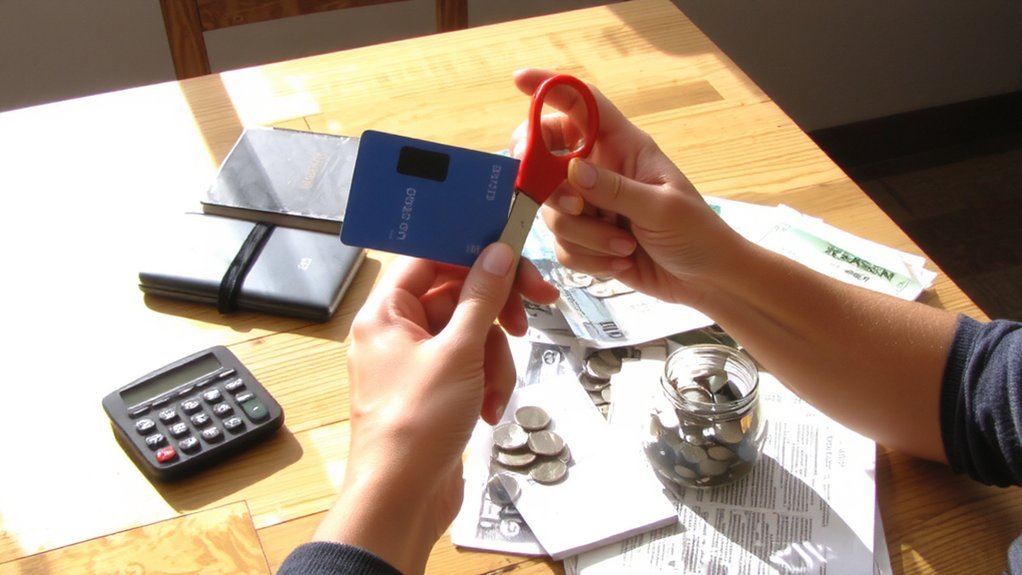
You’ll move faster if you first list every debt, creditor, balance, APR, and due date, then build a realistic budget that frees cash for repayments. Automate minimums and extra principal on payday, and pick avalanche for math or snowball for motivation. Want a short, practical plan you can start this week…
Take Inventory of All Debts

Before you make extra payments or pick a payoff strategy, list every debt you owe—credit cards, loans, medical bills, and any outstanding balances with their interest rates, minimum payments, and due dates.
Write each account on a single sheet or spreadsheet so you’ll scan it quickly.
Note the creditor, balance, account number, and next due date.
Include informal obligations, like money owed to friends or family.
Sort entries by balance, by creditor, or by due date—choose what helps you stick to the plan.
Take photos of statements and secure them in a folder or encrypted cloud storage.
Update this list monthly or after any transaction that changes a balance.
Having a complete, current inventory lets you act deliberately and stay motivated and focused daily.
Calculate Your Minimum Payments and Interest Rates

While a list shows what you owe, you need to know how much each debt actually costs so you can target the most expensive ones first. Gather statements or logins for each account, note the balance, annual percentage rate (APR), minimum payment and due date.
Convert APR to a monthly rate by dividing by 12 to estimate monthly interest charges: balance × (APR/12). Compare annual interest costs (balance × APR) to see which debts drain you most.
Don’t assume similar balances mean similar costs; higher APRs can double interest paid. If a rate is variable, flag it.
Record each minimum payment so you avoid late fees, and prioritize reducing high-APR balances to lower total interest paid over time. Recheck numbers monthly and update your debt log.
Create a Monthly Debt Repayment Budget

Once you’ve tallied your minimums and monthly interest, build a repayment budget that fits your actual cash flow.
List net income, fixed expenses, essentials and variable spending. Subtract totals to see disposable cash you can apply to debt.
Allocate a realistic extra payment amount each month and treat it as nonnegotiable—automate transfers to savings or directly to creditors.
Track spending weekly and adjust categories to protect your payment plan when income or bills change. Create a small buffer for unexpected costs so you don’t miss payments.
Review the budget monthly, update figures, and reassign freed-up funds from paid-off obligations. Keep statements and a simple spreadsheet or app to measure progress and stay motivated. Celebrate milestones to reinforce good habits and maintain momentum each month.
Choose Between the Debt Avalanche and Snowball Methods

If you want to eliminate debt efficiently, pick a strategy: the avalanche attacks highest-interest balances first to minimize total interest, while the snowball pays off the smallest balances first to create quick psychological wins. Decide based on math and motivation.
If you tolerate discipline and want the cheapest route, prioritize high-rate accounts and apply extra payments there while making minimums on others. If you need momentum to stay consistent, clear small balances to build confidence and free up cash faster.
Track progress monthly, adjust if life changes, and stick with the plan long enough to see results. Either method beats scattering payments; pick one, automate payments, and focus your extra dollars where the method directs. You’ll reduce interest and finish sooner if you commit.
Use Debt Consolidation and Balance Transfers Wisely

Though consolidating or doing a balance transfer can cut interest and simplify payments, you should weigh fees, promotional terms, and how the move affects your payoff timeline.
Look for lower ongoing APRs or a long 0% intro period, but calculate whether transfer fees erase savings.
Compare a personal loan’s fixed rate and predictable schedule to a credit-card transfer’s variable terms.
Check credit-score effects: new inquiries or higher utilization can matter.
Read the fine print for penalty rates, balance-transfer expiry, and allowed payments.
Avoid treating consolidation as permission to rack up new debt.
Use the tool to replace multiple obligations with one manageable account, and set automatic payments so you don’t miss the end of any promotional offer.
Review offers regularly to pick the best.
Increase Your Monthly Payments to Reduce Interest
After consolidating or moving balances, boosting your monthly payment is one of the fastest ways to cut total interest and speed up payoff.
You can apply extra dollars directly to principal, which reduces the balance that interest accrues on each month.
Prioritize higher-interest accounts first to maximize interest savings, or keep a small win for motivation by focusing one account at a time.
Always tell your servicer you want additional payments applied to principal, and confirm there are no prepayment penalties.
Even modest increases — rounding up payments, adding a fixed extra amount, or using irregular windfalls — noticeably shorten terms. Track progress so you adjust amounts as balances fall; the faster you pay principal, the less interest you’ll owe. You’ll save real money.
Cut Expenses and Redirect Savings Toward Debt
Cut back discretionary spending and funnel the savings straight to your debts.
Review monthly subscriptions, dining out, impulse buys, and entertainment; cancel or pause what’s nonessential.
Shop smarter: compare prices, use coupons, buy generic brands, and delay big purchases.
Trim recurring bills by negotiating rates for internet, insurance, and phone, and switch providers when savings justify the effort.
Create a pared-down budget that prioritizes debt payoff, then transfer the freed cash to the highest-interest account first or split it among balances if you prefer.
Track progress weekly so you stay accountable, adjust spending categories as needed, and treat the redirected savings as a nonnegotiable line item until your balances fall.
Reinvest any windfalls like tax refunds or bonuses toward balances to accelerate payoff now.
Build Momentum With Small Wins and Payment Automation
Once you’ve freed up cash by trimming expenses, use small wins and automation to keep momentum going.
Start by targeting one tiny extra payment each month — even $25 accelerates progress and boosts confidence.
Celebrate clearing a single small balance: that psychological win motivates you to tackle larger targets.
Automate minimums to avoid late fees, then set an extra automated transfer to your highest-priority debt or snowball target.
Use recurring payments synchronized with paydays so you never miss them.
Track cleared balances in a simple list so you can visibly check off victories.
Reinvest any windfalls, raises, or saved interest into automated extra payments.
Those steady, automated steps compound into measurable payoff speed without constant effort. You’ll stay committed with minimal daily effort, consistently.
Monitor Progress and Adjust Your Strategy Regularly
If you review your balances and payment schedule at least once a month, you’ll spot problems early and seize chances to accelerate payoff.
Track each account, interest rate, and minimum due, and compare progress to your payoff timeline.
Update your budget with any income or expense changes and redirect freed-up cash toward higher-interest balances.
Recalculate payoff dates after extra payments so you stay motivated.
Use spreadsheets, apps, or simple charts to visualize declining balances.
If a rate changes or a new fee appears, act quickly—negotiate, refinance, or shift payments to protect momentum.
Celebrate milestones and document what’s working.
Then tweak payment amounts, order, or automation to keep your plan efficient and on schedule.
Reviewing regularly each month keeps you accountable and focused on results.
Prevent Future Debt and Maintain Healthy Credit
How will you keep debt from creeping back in while protecting your credit?
Set a realistic budget, build an emergency fund, and avoid impulse purchases.
Use automatic transfers to savings and bill payments so you won’t miss due dates.
Keep credit utilization under 30% by paying balances before statement closing dates.
Review your credit reports yearly and dispute errors promptly.
Only open new accounts when necessary and choose cards with rewards that match your habits.
If offers tempt you, pause 24 hours and evaluate the impact on your plan.
Maintain healthy habits: track spending, adjust your budget after life changes, and celebrate milestones without overspending.
These steps lower relapse risk and preserve your creditworthiness for future goals.
Stick with the plan and stay disciplined.
Conclusion
Start by listing every debt, creditor, balance, APR, and due date, then build a realistic monthly budget that frees cash for repayment and a small emergency fund. Automate minimums and extra principal payments on your paydays. Pick avalanche for fastest interest savings or snowball for motivation; consider consolidation only after comparing costs. Trim spending, keep utilization low, reinvest windfalls, track progress, and celebrate milestones so you’ll stay motivated and become debt-free sooner and enjoy freedom.