
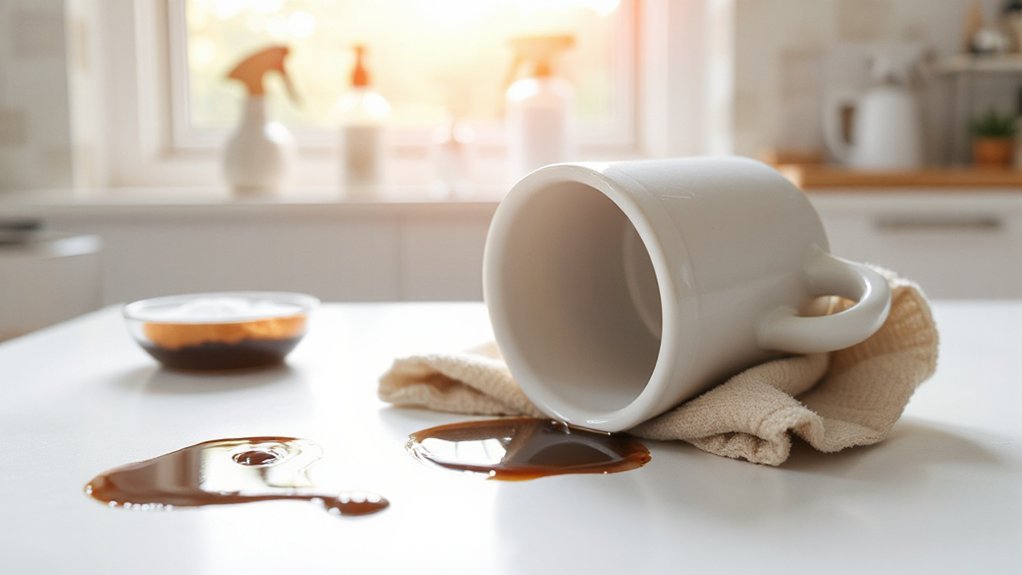
If you spill coffee, act fast: blot, don’t rub, to lift liquid without spreading it, then choose a treatment based on the surface—fabric, carpet, wood, or ceramic. You’ll want cold water and a mild detergent for most clothes, a vinegar-and-soap mix for rugs, and gentle scrubbing for cups; avoid heat until the stain’s gone. Keep going and you’ll learn the exact steps for each material and a few handy homemade solutions.
Key Takeaways
- Blot fresh spills immediately with a clean cloth, working from the edges inward to avoid spreading.
- Rinse fabric stains with cold water and check the care label before treatment.
- Use a mixture of 1 tsp dish soap, 1 tbsp white vinegar, and 2 cups warm water for carpets and upholstery.
- For mugs, scrub rings with baking soda paste or white vinegar and a nonabrasive sponge.
- Avoid heat until the stain is gone and launder treated garments promptly to prevent setting.
Immediate Steps to Take After a Fresh Coffee Spill
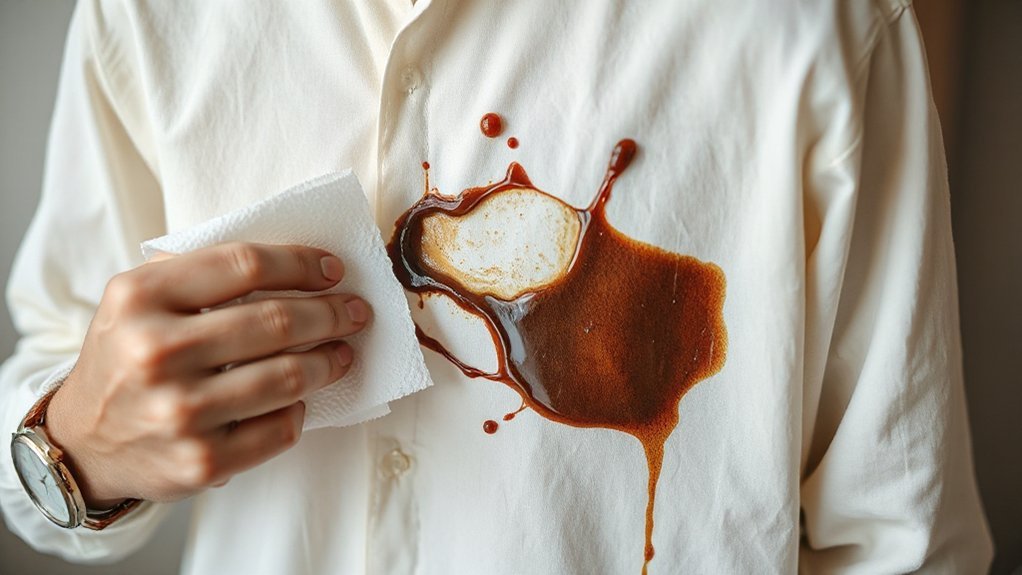
If you just spilled coffee, act fast: blot excess liquid with a clean cloth or paper towel without rubbing, lift what you can, then sprinkle cold water on the spot to dilute the stain. You’ll want a clear immediate response: keep blotting from the edges toward the center to prevent spread. Replace saturated cloths and continue until blotting yields minimal transfer. For hard surfaces, wipe with a damp cloth, then dry. For carpets or upholstery, test a hidden area with water first. Avoid heat and avoid scrubbing — both set pigment. If coffee contained milk or sugar, follow up quickly with a mild detergent solution and blot again, then rinse with cold water. Note the time and act before any drying occurs.
Removing Coffee Stains From Clothing and Fabrics
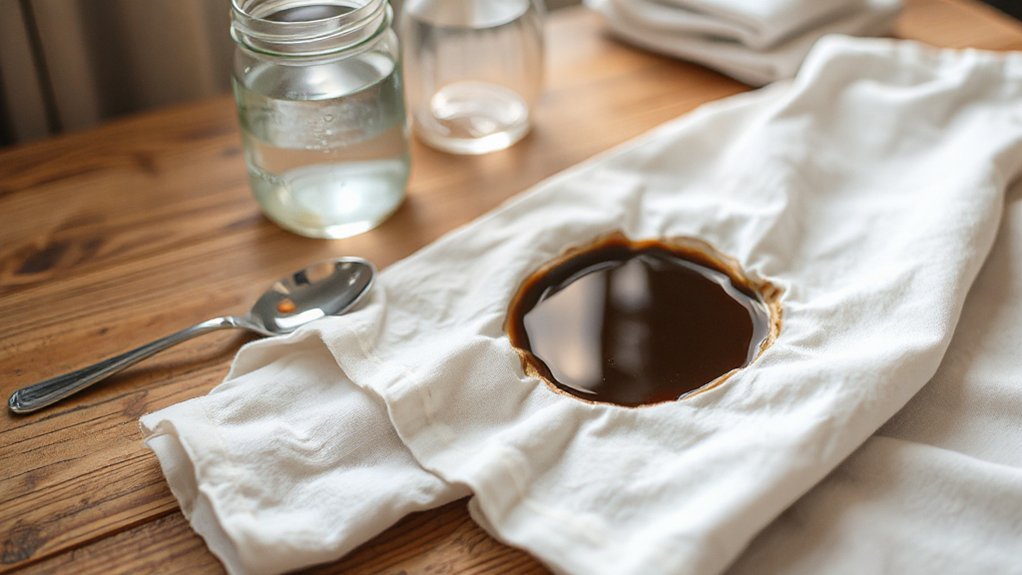
When coffee hits your clothes, blot the area with a clean cloth and cold water to stop it from setting. Check the garment’s care label and treat fibers accordingly—use mild detergent for cottons, blotting solutions for silks, and enzyme cleaners for protein-blend fabrics. Work from the outside of the stain inward and air-dry to confirm the stain is gone before using heat.
Immediate Action Steps
Although a fresh coffee stain looks small, acting fast prevents it from setting and makes removal far easier. First, blot gently with a clean cloth or paper towel to lift liquid—don’t rub or you’ll spread the stain. Hold the fabric under cold running water from the back to flush grounds and dilute pigment. If available, apply a small amount of liquid detergent or an oxygen-based stain remover, working it in with your fingers or a soft brush. Let it sit for five to ten minutes, then rinse thoroughly. For stubborn spots, repeat blotting and treatment—consistent quick response and basic stain removal techniques increase success. Finally, air-dry; heat from a dryer can set any remaining trace of stain.
Treat Different Fabrics
Now that you’ve handled a fresh spill, you’ll need to adapt your approach for different fabrics—each fiber reacts to cleaners and water differently. Assess the fabric type first (check the care label) and choose a stain treatment that won’t damage the material. Work from the garment’s reverse side, blotting; don’t rub.
- Cotton and linen: rinse with cold water, pretreat with liquid detergent, launder normally.
- Wool and silk: dab with a mild detergent solution, avoid soaking, blot and air dry flat.
- Synthetics (polyester, nylon): pretreat with stain remover, launder warm if label allows.
- Delicates and vintage: spot-clean with gentle soap or consult a professional cleaner.
Test any product on an inconspicuous area before full stain treatment.
Treating Coffee Stains on Carpets and Rugs
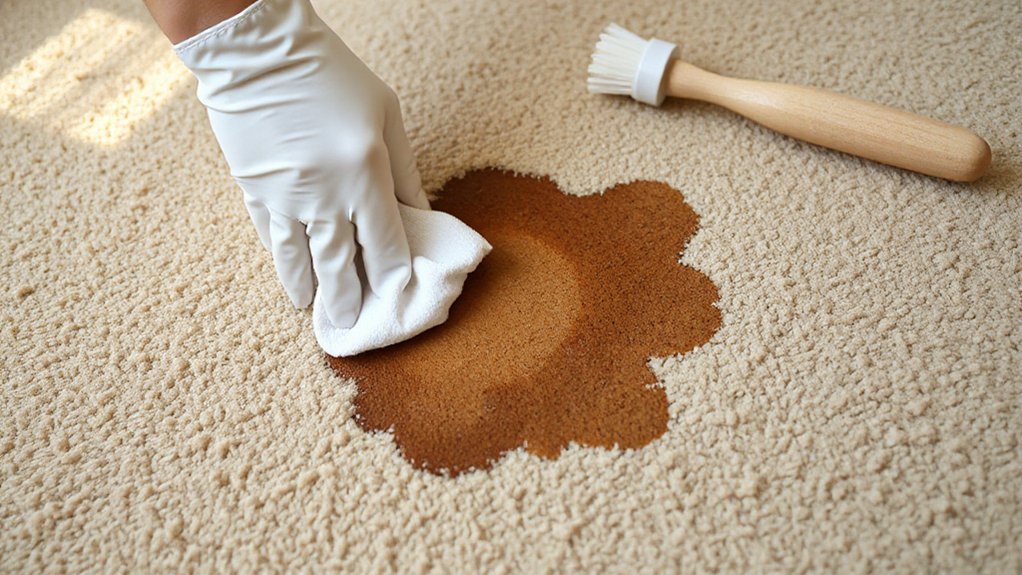
1 straightforward approach will save your carpet if you act fast: blot up as much liquid as you can with clean white cloths or paper towels, working from the outside of the spill toward the center to avoid spreading the stain. Next mix one teaspoon dish soap and one tablespoon white vinegar in two cups of warm water. Test on a hidden corner, then apply solution with a clean cloth, blotting—don’t rub—until the coffee lifts. Rinse by dabbing with plain water to remove residue, then blot dry. For stubborn marks, use a commercial carpet cleaning product following label directions. Finish by gently fluffing fibers with your fingers or a soft brush. Address spills promptly for effective stain removal and long-lasting carpet cleaning.
Cleaning Coffee Rings From Mugs and Cups
When you spot a coffee ring, start with a quick scrub using a nonabrasive sponge and warm soapy water to remove surface residue. If that doesn’t do the job, try natural stain removers like baking soda paste or white vinegar to lift stubborn marks without harsh chemicals. Finish by rinsing thoroughly and drying, and adopt simple habits—rinse cups promptly and use coasters—to prevent future rings.
Quick Scrub Methods
Although a few stubborn rings can look permanent, you can usually remove coffee stains from mugs and cups with a quick, targeted scrub. You’ll work methodically: choose scrub techniques that match the cup material, apply short focused strokes, and rinse frequently to check progress. Use effective tools to avoid scratching.
- Soft sponge for everyday ceramic and glass
- Soft-bristled brush for crevices and textured surfaces
- Melamine foam for light, stubborn rings (test first)
- Non-abrasive pad for tougher stains on durable ware
Scrub in circular motions, concentrate on the ring’s edges, and don’t soak for long—quick application prevents residue buildup. Rinse thoroughly and dry; repeat once if needed. If the stain persists, save stronger remedies for the next section.
Natural Stain Removers
If you prefer gentler options, reach for everyday pantry items—baking soda, white vinegar, lemon, and salt all lift coffee rings without harsh chemicals. For light rings, sprinkle baking soda on a damp sponge, scrub in small circles, rinse, and repeat until the stain fades. For stubborn residue, fill the cup with warm water, add two tablespoons of white vinegar to make a vinegar solution, let it soak 10–15 minutes, then scrub with baking soda for extra abrasion. For narrow mugs, use a bottle brush to work paste into tight areas. Lemon or salt works similarly: rub cut lemon or a salt scrub, then rinse. Dry and inspect; repeat the targeted step if any ring remains.
Preventing Future Rings
To stop coffee rings from forming in the first place, adopt a few simple habits you can do every day: rinse your mug immediately after finishing, wipe the rim with a damp cloth, and store cups upside down to prevent dust and residue buildup. You’ll minimize staining and speed cleaning by building consistent routines. Pair sensible hygiene with spill proof strategies and small equipment choices that boost coffee ring prevention.
- Use a saucer or coaster to catch drips.
- Choose mugs with a thin lip or silicone rim to reduce ring formation.
- Keep a microfiber cloth near your kettle for quick wipes.
- Rinse or soak stained cups within an hour to prevent set-in marks.
Stick to these steps and you’ll avoid most rings.
Lifting Dried Coffee Stains From Upholstery
When coffee’s dried into upholstery fibers, you’ll need to loosen the grit before treating the stain to avoid grinding it deeper; start by gently scraping or vacuuming the surface to remove any crusted particles. Next, test a mild cleaning solution on an inconspicuous area of the upholstery fabric — mix a teaspoon of dish soap with a cup of warm water. Blot the stain from the outside in with a clean cloth dampened in solution; don’t rub. Work in short cycles: apply, blot, and lift residue with a dry cloth. For stubborn spots, use a 1:1 white vinegar and water mix, then rinse with plain water and blot dry. Finish by airing the area and brushing the nap to restore texture.
Dealing With Coffee Stains on Porous Surfaces (Wood, Stone)
Because porous materials soak up liquid fast, you’ll need to act deliberately to prevent deep-set stains and surface damage. Start by blotting—don’t rub—and remove as much liquid as possible. For wood or stone, choose a porous surface treatment appropriate to finish and porosity before applying any cleaner. Use controlled stain absorption techniques: place absorbent paper to lift residual coffee, then test cleaners in an inconspicuous spot.
- Blot immediately with a clean cloth, moving outward from the spill.
- Use absorbent paper or powdered absorbents for gentle lifting.
- Test a mild, pH-appropriate cleaner on a hidden area first.
- After cleaning, dry thoroughly and consider a protective porous surface treatment (sealant) if recommended.
Work methodically and stop if the surface reacts; consult a pro for historic or valuable pieces.
Natural and Homemade Coffee Stain Removers That Work
After you’ve handled porous surfaces carefully, you can reach for simple, natural remedies for everyday coffee stains that are safe, inexpensive, and often effective. For fabric, blot excess, then apply a 1:1 vinegar solution to lift pigment; let sit 5–10 minutes, blot, then rinse. For cups and mugs, sprinkle baking soda on a damp sponge, scrub in circular motions, then rinse—baking soda removes residue without abrasives. For carpets, mix a teaspoon of baking soda with a cup of warm water, work gently into the spot, let dry, then vacuum. For upholstery, test a hidden area first; use diluted vinegar solution with quick blotting to avoid overwet. Always follow with plain water rinse and air-dry. Repeat only if stain lightens.
Preventing Future Coffee Stains and Quick-Clean Tips
If you want to keep coffee from becoming a recurring problem, adopt a few simple habits and quick fixes that prevent spills and make cleanup immediate. You’ll limit damage with routine actions and thoughtful choices. Use stain prevention strategies and consider coffee alternatives when appropriate to reduce risk.
- Wipe spills immediately with a clean cloth and a dab of cold water to lift liquid before it sets.
- Place mugs on coasters and use lids or travel cups to avoid accidental tipping.
- Treat fabrics with a fabric protector and blot stains—don’t rub—then launder promptly.
- Swap to lighter coffee alternatives or milder brews where staining matters, like meetings or light-colored linens.
Follow these methods to reduce stain frequency and speed cleanup.
Conclusion
Act fast and blot spills immediately to keep the stain from setting. For fabrics, rinse with cold water, pretreat with detergent or stain remover, then launder; avoid heat until it’s gone. For carpets and upholstery, test a mild soap-and-vinegar solution, then blot from the outside in. Use baking soda or commercial cleaners on porous surfaces and scrub mugs with baking soda paste. Keep supplies handy and treat stains promptly to make cleanup quick and effective.