
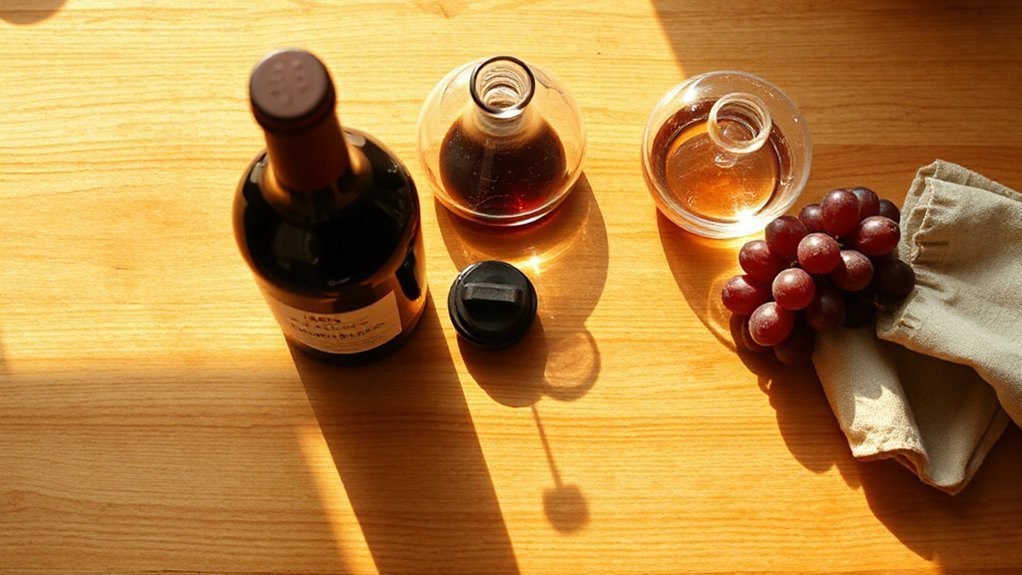
If you’ve ever opened a bottle and only drank a glass, you probably want to keep the rest tasting like it did at first. You can slow spoilage by limiting oxygen, keeping temperature steady, and choosing the right stopper or container. Different wines need slightly different care, and a few simple tools will stretch their life—here’s how to do it properly and what to expect next.
Key Takeaways
- Reseal the bottle tightly with the original cork, a silicone stopper, or purpose-made wine stopper to limit oxygen exposure.
- Chill white, rosé, and sparkling wines immediately in the fridge; keep reds in a cool, dark place or refrigerate if needed.
- Use a vacuum pump or inert-gas spray to remove or displace air for longer short-term preservation.
- Transfer leftover wine to a smaller, airtight bottle to minimize headspace and slow oxidation.
- Label with the date opened and consume sparkling within 1–3 days, whites/rosés within 3–5 days, reds within 3–7 days.
Why Wine Goes Bad and How Oxidation Affects Flavor

Because wine is a living product exposed to air, it begins to change as soon as the bottle’s seal is broken. You trigger the oxidation process the moment oxygen contacts wine, converting volatile aromatics and altering acids and tannins. You’ll notice bright fruit notes fade, sulfides or sherry-like aromas can develop, and the overall flavor profile flattens. Temperature accelerates these chemical changes, so warmer conditions speed deterioration. Microbial activity may follow if contaminants enter, introducing off-aromas and slight effervescence. You can judge progression by smell and taste: fresh, lively characteristics give way to dullness, brownish hues, and vinegar-like sharpness. Understanding these mechanisms helps you assess whether a bottle remains enjoyable or has crossed into spoilage.
Best Ways to Store Open Red Wines

When you’ve opened a bottle of red, slow oxygen exposure and proper temperature control determine how long the wine stays enjoyable; act quickly to limit air, keep the bottle cool, and minimize light and vibration. You’ll preserve structure and aroma by reducing headspace, stabilizing temperature, and avoiding heat or sunlight. For reliable red wine storage and wine preservation use practical, minimal steps:
- Reseal with the original cork or a silicone stopper to limit oxygen contact.
- Transfer to a smaller bottle if headspace is large to reduce air volume.
- Store upright in a cool, dark spot around 55–65°F (13–18°C); avoid temperature swings.
- Use a vacuum pump for short-term preservation to remove excess air.
- Consider inert-gas sprays for delicate bottles when you need extended preservation.
Storing Open White and Rosé Wines

Although white and rosé wines are more sensitive to warmth and light than many reds, you can keep their freshness by acting quickly: reseal tightly, chill to 45–55°F (7–13°C), and store upright in the coldest, darkest part of your fridge or a dedicated wine cooler. After pouring, replace the cork or use a purpose-made stopper that guarantees airtight storage to limit oxidation. Maintain consistent chilling temperatures; avoid door shelves where temps fluctuate. For partially filled bottles, transfer wine to a smaller container to minimize headspace if airtight stoppers aren’t available. Smell and taste daily; subtle shifts indicate declining fruit character. Drink whites and rosés within 3–5 days for best clarity and brightness; longer storage will dull aromatics and crispness.
Preserving Sparkling Wines and Champagnes
Having chilled your white or rosé, you’ll want a different approach for sparkling wines and champagnes—maintain pressure as well as low temperature. You’ll act quickly to preserve effervescence and aromatics. For sparkling preservation and champagne storage, follow focused steps:
Having chilled whites and rosés, treat sparklings differently—preserve pressure and chill quickly to keep bubbles and aroma.
- Reseal with a purpose-made sparkling stopper to keep CO2 pressure.
- Store upright to limit surface area exposed to air and reduce seepage.
- Keep at 34–45°F (1–7°C) to slow gas loss and flavor degradation.
- Avoid temperature swings and light; they accelerate dissipation and oxidation.
- Consume within 1–3 days for best foam and nose; longer storage sacrifices bubbles.
These measures prioritize carbonation integrity and sensory clarity, giving you predictable, disciplined results without guesswork.
Tools and Tricks to Extend Wine’s Freshness
If you want your opened bottles to taste like they did the first night, invest in a few targeted tools and learn a couple of simple tricks: vacuum pumps and inert-gas sprays limit oxygen contact, specialized stoppers seal reliably (and for sparklings, preserve pressure), smaller transfer bottles reduce headspace, and consistent cold storage slows chemical change. Choose wine preservation methods that suit how quickly you’ll finish a bottle: vacuum sealers work well for reds and fuller whites, inert-gas sprays are precise for delicate aromatics, and pressure-preserving stoppers keep bubbles intact. Transfer any remaining wine to a smaller bottle to minimize oxygen. Label stored bottles with date opened. Refrigerate promptly and use preserved wine within recommended windows for the cleanest, truest flavor.
Conclusion
You can keep leftover wine tasting good if you act fast: reseal with the original cork or a silicone stopper, stand reds upright in a cool, dark spot (55–65°F/13–18°C), and chill whites and rosés at 45–55°F (7–13°C) or keep them in the fridge. Reduce headspace by transferring to a smaller bottle, and use vacuum pumps or inert-gas sprays for extra protection. Consume within a few days for best flavor.