
You’ll want a simple, reliable routine to keep stainless steel appliances looking their best without causing damage. Start with a microfiber cloth and mild soap, always wipe with the grain, and use gentle home or commercial cleaners for tougher marks. I’ll explain which products to choose, how to handle fingerprints, water spots and rust, and what to avoid so your finish lasts — but first, learn how to identify the steel’s grain and finish.
Key Takeaways
- Wipe daily with a damp microfiber cloth along the grain to remove fingerprints and light smudges.
- For grease, use a mild dish soap solution and rinse thoroughly, then dry to prevent streaks.
- Use a 1:1 vinegar-water spray for water spots and mineral deposits, wiping with the grain.
- For tougher stains, apply a baking soda paste gently, rinse well, and dry immediately.
- Avoid bleach, ammonia, scouring pads, and abrasive cleaners that can scratch or damage finishes.
Understanding Stainless Steel Finishes
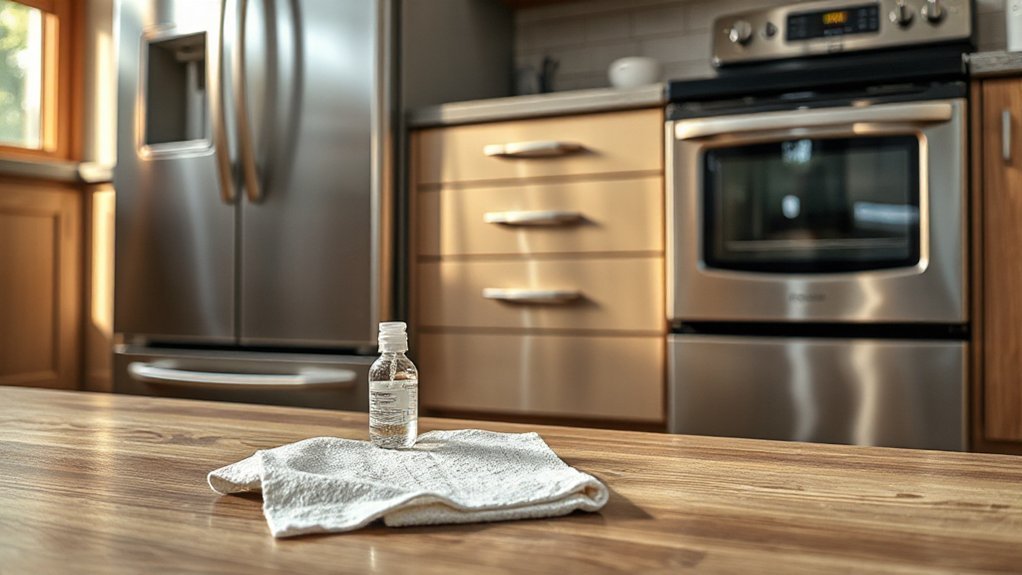
Finishes determine how your stainless steel looks, feels, and responds to cleaning. You’ll first identify whether you have a brushed finish—fine, linear grain that hides scratches and directs cleaning strokes—or a polished finish, smooth and reflective but prone to visible streaks and fingerprints. Inspect edges, appliance seams, and door faces under light to confirm grain direction and sheen. Match cleaners and motions: low-abrasion cloths and nonabrasive cleaners suit both, but you’ll avoid circular rubbing on brushed surfaces to prevent cross-grain marks. Note that protective coatings or clear lacquers change behavior; if present, use only manufacturer-recommended products. Knowing finish type lets you plan gentle, consistent maintenance that preserves appearance and minimizes micro-scratches.
Daily Wiping: Tools and Techniques
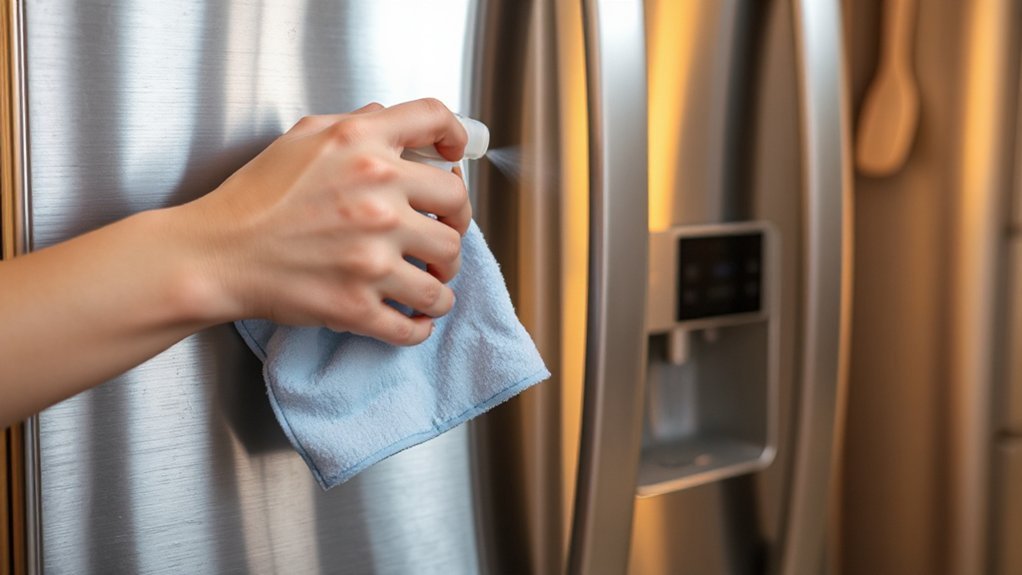
Start with a microfiber cloth and plain water: dampen the cloth (not soaking) and wipe along the grain to remove fingerprints, smudges, and light soil. For a daily routine, keep one clean microfiber for quick wipes and a second slightly damp for more persistent marks. Use a soft-bristle brush for creases and a cotton swab for edges and seams. Work top-to-bottom to avoid re-soiling and change cloth sections as they pick up oil. Dry immediately with a dry microfiber to prevent streaks. Choose effective tools only: lint-free cloths, non-abrasive brushes, and a gentle ladder or step stool for high areas. Store tools nearby so daily upkeep stays simple, fast, and consistent.
Best Homemade Cleaners That Work
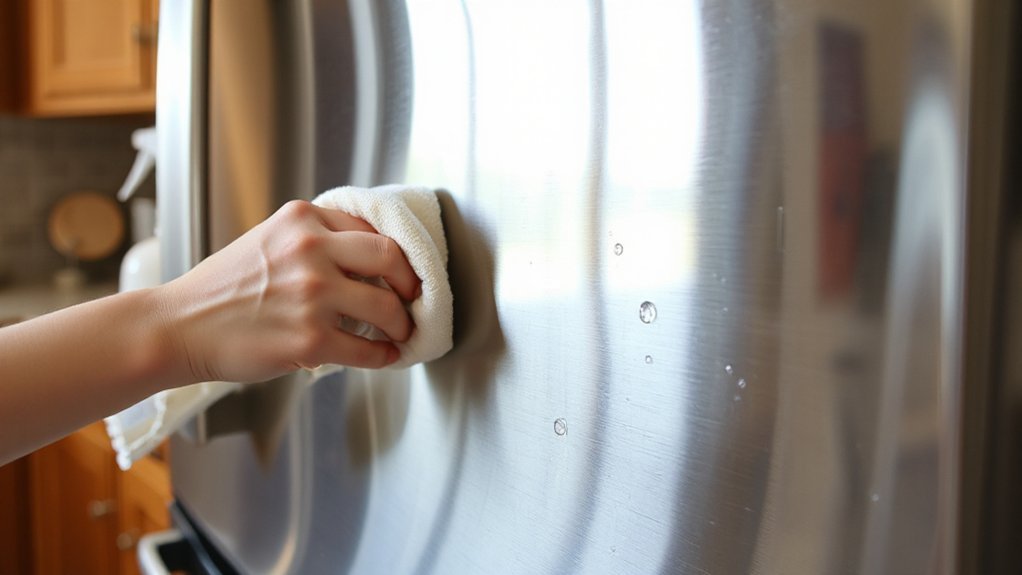
You can make two simple, effective cleaners from common pantry items: a 1:1 vinegar-and-water spray for fingerprints and an olive oil wipe to restore shine. For tougher spots, mix baking soda with a little water into a paste, apply gently with a soft cloth, then rinse and dry along the grain. Test any mixture in an inconspicuous area first and use minimal pressure to avoid scratching.
Vinegar and Olive Oil
Two simple household ingredients—white vinegar and olive oil—give you an effective, inexpensive way to clean and polish stainless steel without harsh chemicals. You’ll use vinegar benefits for grease-cutting and olive oil for a streak-free sheen. Work methodically: spray diluted white vinegar (1:1 with water), wipe with a microfiber cloth following the grain, then apply a few drops of olive oil to a clean cloth and buff in the same direction. That sequence removes grime, disinfects, and restores luster without residue.
- Dilute vinegar 1:1 with water for safe cleaning
- Test olive oil on an inconspicuous spot first
- Wipe with the steel grain to avoid scratches
- Use minimal oil to prevent buildup
- Reapply vinegar for stubborn spots, then buff
Baking Soda Paste
Mix baking soda with a little water to form a thick paste, then use it to tackle stains and stuck-on grime on stainless steel. Apply the baking soda mixture with a soft cloth or a non-abrasive sponge, working with the grain to avoid scratches. Let it sit for 5–10 minutes for stubborn spots, then gently rub using light pressure. Rinse thoroughly with warm water and dry immediately to prevent water spots. You’ll appreciate baking soda benefits: mild abrasiveness removes residue without damaging finish, and it deodorizes. For grease, pair the paste with a small amount of dish soap, rinse well, and buff with a microfiber cloth. Store leftover paste refrigerated for up to a week and always test in an inconspicuous area first.
Commercial Cleaners to Choose and Avoid
Although many commercial cleaners claim to be safe for stainless steel, you’ll want to choose products formulated specifically for stainless finishes and avoid anything labeled as “all-purpose” that contains bleach, ammonia, or abrasive powders. Pick cleaners from reputable commercial brands or vetted eco friendly options that list non-corrosive surfactants and clear usage directions. Test any new product in an inconspicuous spot first.
- Choose stainless-specific sprays or polishes with protective polymers.
- Prefer non-abrasive, pH-neutral formulas; avoid powders or creams with grit.
- Look for commercial brands that publish ingredient lists and safety data.
- Consider eco friendly options certified by third parties when possible.
- Don’t use bleach, ammonia, oven cleaners, or scouring pads; they damage finish.
Removing Fingerprints and Smudges Quickly
After selecting a safe stainless-specific cleaner, you’ll want a fast routine for daily spots and fingerprints so finishes stay consistent between deeper cleanings. Keep microfiber cloths and a small spray bottle of your chosen fingerprint remover accessible. Lightly mist the cloth — never oversaturate the surface — and follow the grain with firm, even strokes. For stubborn smudges, apply a touch more product to the cloth, rub gently, then buff dry with a clean microfiber to restore sheen. Use quick wipes for high-traffic areas: keypad edges, handles, and around dispenser openings. Rotate cloths to avoid redepositing oils. Inspect for streaks under good light and repeat targeted wiping as needed. Store supplies near the appliance for efficient maintenance.
Tackling Grease and Cooktop Residue
When grease builds up near your cooktop, act quickly to prevent baked-on residue: start by scraping loose crumbs and cooled splatters with a plastic scraper or old credit card, then blot oily areas with a paper towel to lift excess before you apply any cleaner. Use a grease-cutting spray or a mix of dish soap and warm water for targeted cooktop scrubbing. Work in small sections, rubbing with the grain when possible, and rinse thoroughly to avoid streaks. For stubborn spots, let the cleaner soak under a damp cloth for a few minutes before gentle agitation.
- Choose a mild, grease-cutting cleaner
- Test cleaner on a small area first
- Use nonabrasive pads for scrubbing
- Rinse and dry each section immediately
- Repeat only as needed to avoid damage
Dealing With Water Spots and Mineral Buildup
If hard water leaves cloudy spots or white scale on your stainless steel, gently dissolve the minerals with a mild acid and targeted technique to avoid scratching or discoloring the finish. Start by testing a small hidden area. Use white vinegar or a 1:1 vinegar-water mix applied with a soft microfiber cloth; let it sit 30–60 seconds, then wipe with the grain. For stubborn mineral buildup remedies, repeat short applications rather than scrubbing hard. Rinse thoroughly with plain water and dry immediately to prevent streaks. For prevention, install water spot prevention measures: wipe fixtures after use, use a water-softening pitcher, or run a soft cloth over surfaces weekly. Store vinegar in a labeled spray for controlled, safe spot treatment.
Removing Rust Stains Safely
Rust spots on stainless steel are usually surface oxidation from nearby corroded metals or iron particles; you can remove them without damaging the finish by using gentle, non-abrasive methods and testing first. Use targeted rust removal techniques and safe cleaning solutions, work in the direction of the grain, and rinse thoroughly. Test a small inconspicuous area, then proceed.
- Apply a paste of baking soda and water, let sit 10–15 minutes, rub gently with a soft cloth.
- Use a mild acid like white vinegar or lemon juice for stubborn spots, rinse immediately.
- Try a commercial stainless-steel rust remover labeled safe for finishes; follow instructions.
- Remove iron particles with a magnet or microfiber to prevent recontamination.
- Dry and buff with a clean microfiber cloth to restore sheen and remove residues.
Preventing Scratches and Surface Damage
Don’t use abrasive cleaners or scouring pads, because they can leave micro-scratches that dull the finish. Use only soft, non-abrasive cloths—microfiber is ideal—and wipe with the grain to minimize friction. For stubborn spots, dampen the cloth with mild soap and water rather than increasing scrubbing pressure.
Avoiding Abrasive Cleaners
When you clean stainless steel, choose soft cloths and nonabrasive cleaners so you won’t create scratches or dull the finish; abrasive pads, powdered cleansers, and steel wool remove protective coatings and leave microscopic grooves that trap dirt and accelerate corrosion. You’ll avoid abrasive materials that abrade the surface protection and compromise corrosion resistance. Pick pH-neutral cleaners labeled nonabrasive and test an inconspicuous spot first. Rinse thoroughly to remove residues that can etch over time. Dry to prevent mineral spotting.
- Don’t use scouring pads, powdered cleansers, or metal brushes.
- Skip bleach and strong acids that strip coatings.
- Avoid automatic dishwasher detergents near seams and gaskets.
- Use manufacturer-approved nonabrasive sprays sparingly.
- Immediately wipe spills from acidic foods to protect finish.
Using Soft Cloths Only
1 simple rule will keep your stainless looking new: always use soft, lint-free cloths and nothing abrasive. You’ll prevent scratches by choosing microfiber cloths or similarly gentle fabrics; they lift dirt without grinding particles into the finish. Use separate cloths for dry buffing and wet cleaning to avoid redepositing grime.
Dampen the cloth with water or a mild detergent solution, wring it well, and follow the grain with steady, light pressure. Rinse and re-fold the cloth frequently to trap debris inside the fibers. Avoid sponges with seams or rough edges. For final polishing, switch to a clean, dry microfiber cloth and buff in long strokes until streaks vanish.
These cleaning techniques preserve appearance and extend appliance life; inspect surfaces for residue and repeat only as needed.
Long-Term Care and Maintenance Schedule
To keep stainless steel appliances looking and performing their best over years of use, establish a simple maintenance schedule you’ll stick to: daily wipe-downs for fingerprints and spills, weekly deeper cleans for grime and smudges, monthly checks of seals, handles and venting for wear or blockages, and quarterly inspections for scratches, rust spots or loose fittings that need repair. You’ll perform routine inspections and verify product compatibility before applying cleaners. Track dates and actions in a notebook or app, note recurring issues, and address small problems immediately to prevent escalation.
- Inspect seals and gaskets monthly for gaps or deterioration.
- Clean vents and coils quarterly to maintain efficiency.
- Use only compatible cleaners and test on a hidden area.
- Buff minor scratches with a nonabrasive pad.
- Tighten loose fittings as needed.
Conclusion
You’ve got this—cleaning stainless steel is simple if you’re consistent and careful. Wipe daily with a damp microfiber cloth along the grain, use mild soap for routine dirt, and reach for baking soda paste or 1:1 vinegar solution for tougher spots. Rinse and dry to avoid streaks, avoid abrasives and steel wool to prevent scratches, and check seals and fittings regularly. Treat rust gently and follow a seasonal deep-clean schedule to keep appliances looking like new.
Understanding how to clean stainless steel appliances is essential for maintaining their appearance and longevity. In this guide, I will cover the best methods and products to ensure you know exactly How Do I Clean Stainless Steel.
How Do I Clean Stainless Steel
To achieve the best results when cleaning and disinfecting your stainless steel appliances, consider using a specialized stainless steel cleaner. This type of cleaner not only enhances shine but also adds a protective layer that helps prevent future smudges. For removing fingerprints or greasy spots, a solution of warm water and dish soap can be particularly effective.
Make sure to follow up with thorough drying to maintain the finish and avoid water spots. Regular maintenance keeps your appliances looking pristine and extends their lifespan by preventing rust and corrosion. Lastly, be sure to review the manufacturer’s guidelines for specific care instructions tailored to your appliances.
Using microfiber cloths for cleaning stainless steel surfaces is highly recommended, as they effectively lift dirt without scratching the surface. For tougher stains, consider using a gentle abrasive such as baking soda mixed with water to form a paste. Apply this paste with a soft cloth, and be sure to rinse thoroughly afterward.
Avoid harsh chemicals and steel wool, as they can damage the finish of your stainless steel. Regular deep cleaning will help keep your surfaces looking as good as new. Establishing a regular cleaning schedule can also help maintain the shine of your stainless steel.For optimal results, think about using a dedicated stainless steel cleaner, as these products are specifically designed to enhance shine. Always test any new cleaning product on a small, inconspicuous area first to ensure it is compatible with your surface. Additionally, keeping stainless steel free of food particles and fingerprints will contribute to a cleaner appearance. Finally, consider applying a protective sealant designed for stainless steel to provide an extra layer of defense against stains and scratches.
To maintain the appearance of stainless steel, regular cleaning is essential. Wipe up spills immediately to prevent staining, particularly from acidic substances. For more stubborn stains, a mixture of baking soda and water can effectively lift them without scratching the surface. Using microfiber cloths can also help reduce streaks during cleaning.Finally, always dry the surfaces thoroughly to avoid water spots and maintain their shine. Incorporating a regular cleaning schedule can further enhance the longevity of your stainless steel surfaces. Using a gentle dish soap mixed with warm water can help maintain a streak-free finish. For a natural shine, a little olive oil applied with a soft cloth can work wonders. Avoid using abrasive cleaners or steel wool, as these can cause permanent damage. By following these steps, you can keep your stainless steel looking pristine for years to come.