

If your dog has fleas, start by confirming the signs—live fleas, black “flea dirt,” or intense scratching—and assess how widespread it is. Use a fine-tooth comb and a vet-approved shampoo for immediate removal, then follow with a fast-acting topical or oral treatment appropriate for your dog’s age and weight. You’ll also need to treat your home and yard to prevent reinfestation, and there are specific next steps depending on severity.
Key Takeaways
- Confirm fleas by combing over a white cloth and looking for live fleas or black “flea dirt.”
- Use a veterinarian-approved fast-acting topical or oral adulticide matched to your dog’s age and weight.
- Bathe and comb the dog, then repeat treatments per product instructions while monitoring for skin issues.
- Treat home and yard: vacuum daily, wash bedding in hot water, and use EPA-registered insecticides/IGRs as needed.
- Maintain year-round preventive medication and recheck regularly to prevent reinfestation.
Recognizing Flea Signs and Assessing the Severity
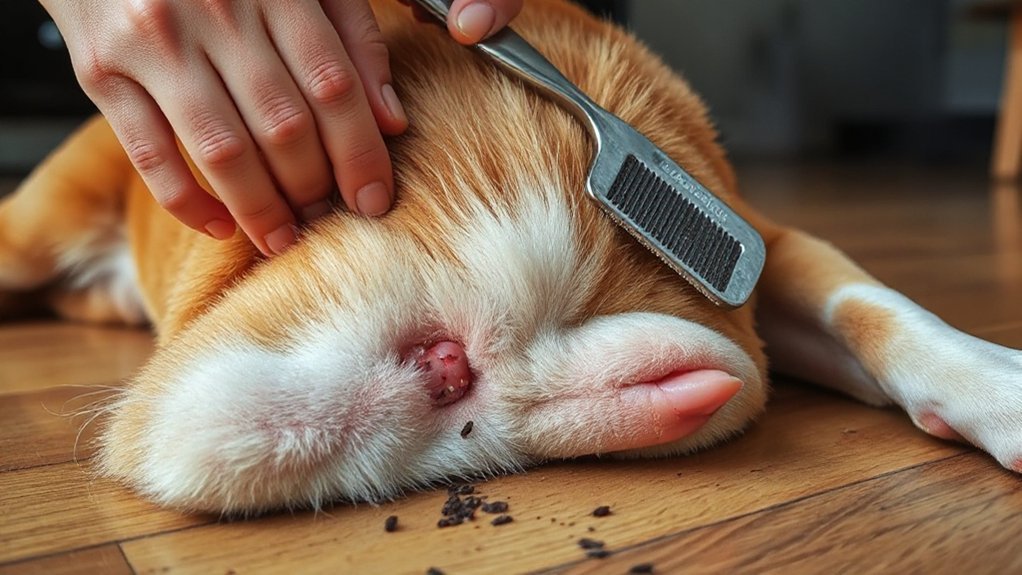
Start by checking your dog’s skin and coat for direct evidence: live fleas (small, fast, dark insects), flea dirt (black, pepper-like feces that turn reddish-brown on damp paper), and eggs (tiny, white, oval specks). You’ll inspect common sites: base of tail, groin, armpits, and neck. Quantify burden: a few adults and isolated dirt suggest early infestation; widespread adults, abundant dirt, and eggs indicate heavy infestation and environmental contamination. Consider clinical effects: intense pruritus, excoriations, and secondary pyoderma correlate with higher flea loads. Ask about seasonal exposure and contact with other animals to infer transmission dynamics. Remember flea life cycle duration affects recurrence risk. Screen for flea allergies if localized hair loss or severe irritation occurs despite low visible flea numbers.
Immediate Steps to Remove Fleas From Your Dog

Before treating your dog, confirm the infestation level and any skin lesions that may need immediate veterinary care, then act promptly to reduce adult fleas: comb your dog thoroughly with a fine-tooth flea comb over a white cloth to remove live fleas and flea dirt, bathe with a veterinary-approved insecticidal or medicated shampoo if recommended for your dog’s health status, and apply a fast-acting, vet‑approved topical or oral adulticide (following label and weight dosing) to kill remaining adults—while isolating the dog from other animals until treatment takes effect. After initial reduction, launder bedding, vacuum floors and upholstery, and treat premises per product instructions. Repeat combing and monitoring daily for 1–2 weeks. Seek veterinary care for severe dermatitis, secondary infection, or poor response to flea removal and dog bathing.
Safe and Effective Flea Treatments by Age and Weight

When choosing a flea product, match the treatment to your dog’s exact age and weight and follow label and veterinary guidance, because efficacy and safety vary substantially across life stages and formulations. Puppies and small breeds often need lower-dose topical treatments or puppy-specific oral medications; products labeled for adults can be toxic. For senior, pregnant, or medically compromised dogs, consult your vet before using systemic agents. Natural remedies lack consistent clinical evidence and shouldn’t replace approved therapies for heavy infestations. Monitor for adverse reactions after application and report concerns promptly.
Match flea treatments to your dog’s exact age and weight; follow labels and consult your vet for safe, effective care
- Use age- and weight-specific topical treatments or vet-prescribed oral options; follow dosing precisely.
- Avoid off-label use and unproven natural remedies as sole therapy.
- Reassess treatment if signs persist or side effects occur; involve your veterinarian.
Treating Your Home and Yard to Stop Reinfestation
Treating your dog is only part of the solution; you also need to eliminate fleas and their immature stages from the environment to prevent rapid reinfestation. Vacuum carpets, rugs, upholstery, and pet bedding daily for two weeks, then twice weekly; dispose of vacuum bags or empty canisters immediately. Wash bedding and soft toys in hot water and dry on high heat. Use EPA-registered adulticide and insect-growth regulator (IGR) products for targeted home treatments; follow label directions and treat cracks, baseboards, and pet resting areas. For yard maintenance, clear debris, mow lawn, and restrict pet access to shaded, humid zones where flea larvae thrive. Consider outdoor insecticides labeled for fleas in heavy infestations and consult a professional pest control service if treatments fail.
Long-Term Prevention and Monitoring Strategies
Although eliminating an active infestation is critical, long-term flea control depends on consistent prevention, regular monitoring, and evidence-based interventions that you apply year-round. You’ll focus on interrupting the flea life cycle, maintaining preventive medication, and reducing environmental reservoirs. Monitor your dog and home weekly, document findings, and act at first sign of adult fleas or increased scratching.
- Maintain veterinarian-prescribed topical or oral preventives and rotate products only under vet guidance; combine with targeted environmental treatments when required.
- Inspect bedding, vacuum carpets, and wash fabrics frequently; integrate integrated pest management principles and evaluate for reinfestation sources.
- Consider evidence-supported natural repellents as adjuncts, not replacements for proven chemoprophylaxis; validate efficacy and safety before use.
Conclusion
You’ve learned to identify infestation by seeing live fleas, flea dirt, or eggs and to use combing and vet-approved bathing for immediate removal. Follow a veterinarian’s recommendation for fast-acting topical or oral products dosed by age and weight, and treat indoor and outdoor environments with appropriate insecticides and vacuuming. Monitor regularly, maintain preventive medication, and consult your vet if signs persist or your dog shows allergic or systemic reactions to guarantee effective, evidence-based control.