

You can lose weight without strict dieting by shifting daily habits and the way you move, sleep, eat, and manage stress. Small, evidence-backed changes to activity, sleep, food choices, and your environment add up more than short-term restriction. You’ll avoid burnout and feel more sustainable progress. Let’s look at practical, sustainable steps you can start today.
Key Takeaways
- Increase everyday movement (NEAT): stand more, take stairs, walk during calls, and add short activity pulses throughout the day.
- Prioritize consistent 7–9 hours of sleep and active recovery to regulate appetite, energy, and metabolic health.
- Choose whole, nutrient-dense foods and practice mindful eating instead of restrictive dieting to feel fuller on fewer calories.
- Design your environment: make healthy foods visible, hide tempting snacks, and pre-portion meals to reduce impulsive eating.
- Track one behavior at a time, review weekly trends, and celebrate small wins to build lasting habits.
Move More: Everyday Activity That Adds Up


Although you don’t have to carve out hours for the gym, increasing everyday movement—called non-exercise activity thermogenesis (NEAT)—can meaningfully boost calorie burn and improve mood and metabolic health. You can incorporate movement into routines: stand during calls, walk meetings, park farther, take stairs, pace while you think. Small changes add up—research links higher NEAT to better weight management independent of formal workouts. Treat daily exercise as flexible: aim for activity pulses across the day rather than one long session. Use simple tech—step counters, timers, smart prompts—to nudge consistency without pressure. If you have mobility limits, focus on seated or gentle resisted moves; they still raise energy expenditure and support circulation. Track trends, not perfection; increase steps or active minutes by 5–15% per week to avoid burnout. You’ll get metabolic and mood benefits, feel capable, and adopt an innovative, sustainable approach to moving more as part of everyday life.
Make Sleep and Recovery Non-Negotiable

Sleep is a core weight-supporting process, so aim for a consistent 7–9 hours a night to help appetite regulation and metabolic health. You can boost recovery by scheduling a wind-down routine, limiting late screens, and keeping a regular wake time to reinforce your circadian rhythm. Small, repeatable habits—short naps after intense activity, proper hydration, and gentle stretching—help your body repair and make other healthy choices easier.
Prioritize Sleep Duration
Because getting enough rest—generally 7–9 hours for most adults—directly affects hunger hormones (leptin and ghrelin), insulin sensitivity, and physical recovery, make sleep duration a non-negotiable part of your weight plan. Aim for consistent bed and wake times to stabilize circadian rhythms; studies link regular timing to better sleep quality and metabolic health. Treat sleep like an innovation project: measure, iterate, optimize. Track duration, note patterns, and test adjustments (earlier lights-out, screen curfew). Improve sleep hygiene with a cool, dark bedroom and a brief wind-down routine that calms your nervous system. If you still struggle, consult a clinician to rule out sleep disorders. Prioritizing duration gives you hormonal balance, clearer decision-making, and more reliable energy for sustainable behavior change and supports long-term weight resilience daily.
Enhance Recovery Habits
Now that you’ve prioritized consistent sleep duration, make recovery habits non-negotiable too. Treat recovery as an active component of weight change: combine active recovery days, targeted mobility, and brief mindfulness practices to lower stress and sustain energy. Use tracking to adjust intensity and rest based on performance and mood; research links recovery to metabolic regulation. Start small: 10–20 minute walks on rest days, mobility routines, breathing breaks. Habit design beats willpower.
| Element | Example |
|---|---|
| Active recovery | Walk, swim, yoga |
| Mindfulness practices | 5–10 min breathing |
| Mobility | Foam rolling, stretches |
| Monitoring | Sleep, mood, performance |
Implement consistently, iterate weekly, and protect these routines as non-negotiable. You’ll notice improved recovery, steadier appetite cues, and more sustainable progress when you honor these micro-rest interventions every week. Measure, refine, repeat, daily.
Choose Satisfying Whole Foods, Not Restrictive Rules
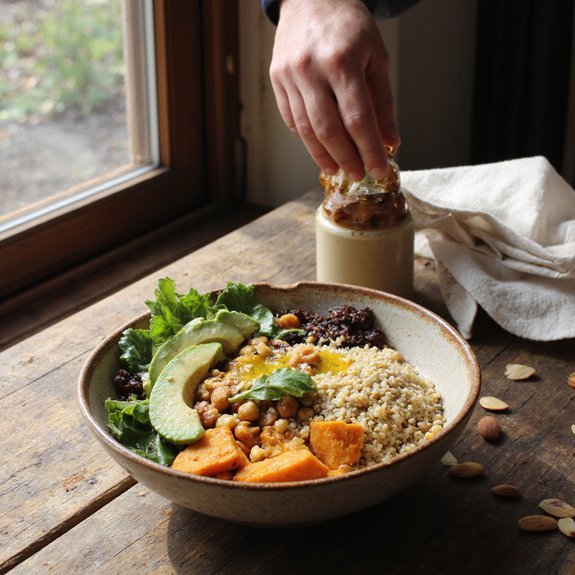
Choose satisfying whole foods over rigid rules — it keeps you fuller on fewer calories and makes healthy habits stick. Shift toward vegetables, lean proteins, legumes, whole grains, nuts and fruit so your meals deliver volume and nutrients without constant hunger. Relying on simple ingredient lists reduces decision fatigue and supports sustainable choices; you won’t need strict bans or calorie gymnastics to see progress. Practice mindful eating: slow down, notice textures, let satisfaction guide portions. Experiment with bold herbs, contrasting textures and high-water foods to feel pleased with less. Track changes in energy and satiety rather than the scale, and iterate—small adjustments beat all-or-nothing rules. If you innovate with batch cooking, bowl formulas and swaps (cauliflower rice, chickpea pasta), you’ll lower calorie density while enjoying meals. This approach is practical, research-aligned and kind to your lifestyle, so you can lose weight without living by a list of prohibitions.
Manage Stress to Prevent Emotional Eating
When stress spikes, you may find yourself reaching for comfort foods even if you’re not hungry — that’s your brain and hormones (like cortisol and dopamine) steering you toward quick rewards. Recognize emotional triggers and pause: label the feeling, note the urge, and delay action for ten minutes. Use short mindful breathing cycles (4-4-6) to down-regulate arousal; research ties simple breath work to lower cortisol and clearer decisions. Create a brief toolkit: walk, call a friend, hydrate, or scribble a frustration list. Track patterns for a week to spot times and contexts when cravings return.
Be compassionate with yourself; stress-driven eating is adaptive, not a failure. Experiment with innovative cues—an app reminder, a textured object, lighting change—to interrupt the loop. Over time, these evidence-based strategies reduce impulsive eating and help you choose nourishment aligned with your goals. Stick with small experiments; they compound into lasting behavioral change gradually.
Build Habits That Remove Decision Fatigue
Because your brain has limited willpower and decision-making wears down across the day, automate the small choices that drain you so you can reserve energy for what matters most. You’ll make consistent progress when you apply habit stacking and decision simplification: link a new, healthy action to an existing routine and reduce options so decisions don’t sap your focus. Start small, measure, iterate.
- Choose one reliable cue (morning coffee, after-work shoes) and attach a 2-minute habit.
- Limit choices: pick one lunch template and one snack option to avoid deliberation.
- Use tiny rewards and tracking to reinforce repetition without relying on willpower.
Evidence shows routines conserve cognitive resources and increase adherence. Be pragmatic: test micro-habits, drop what fails, scale what works. This approach fits innovative thinkers — you’ll optimize behavior like an experiment, freeing up mental bandwidth for bigger goals. Reflect weekly and adjust quickly now.
Design Your Environment for Healthier Choices
You can nudge your choices by arranging your kitchen so healthy foods are front-and-center and easy to grab. Research shows visible, convenient options increase healthier eating, while hiding sugary snacks reduces impulse consumption. Start by putting fruit on the counter, pre-cut veggies at eye level in the fridge, and moving treats to high shelves or opaque containers out of immediate reach.
Make Healthy Foods Visible
If you arrange your kitchen so healthy options are easiest to see and reach, you’ll choose them more often—research links visible cues to healthier eating. You can use clear containers, open shelving, and eye-level placement to make healthy snacks and meal prep staples the default visual choice. That subtle nudging reduces decision fatigue and supports consistent behavior change without willpower battles.
- Store cut fruit and veg at eye level in clear containers.
- Keep portioned healthy snacks in the front of the pantry.
- Pre-plate or label meal prep containers for grab-and-go clarity.
These strategies are low-effort, scalable, and backed by behavioral studies; they’ll help you make smarter choices automatically. Try small experiments—track what changes stick and iterate quickly. Use tech cues like timers and labels.
Remove Temptations From Reach
By putting tempting foods out of sight and out of reach, you’ll cut many impulse bites before they start. Reconfigure your kitchen: store snacks in opaque containers on high shelves, keep fruit on the counter, and place healthier food substitutes at eye level. Research shows reducing visibility lowers consumption, so automate the environment—use jars, bins, or a small box for portioned treats. Identify your craving triggers (time of day, stress, social cues) and move related items away from immediate access. When you can’t remove something, create friction: lock a drawer, store in a different room, or pre-portion servings. These changes nudge behavior without willpower battles, making healthier choices easier, sustainable, and aligned with an innovative approach to habit design for long-term results and maintenance.
Track Progress With Gentle, Actionable Metrics
A small set of measurable, nonpunitive indicators helps you see progress and stay motivated. Choose metrics that reflect behavior and wellbeing — like weekly movement minutes, sleep quality, and consistency of mindful meals — not just the scale. Use progress journaling and simple measurement tools (a wearable, app, or notebook) to capture patterns without judgment. Check trends weekly rather than daily to reduce noise and avoidance.
- Track one behavior goal at a time for 4 to 6 weeks.
- Record context: mood, trigger, and environment.
- Visualize trends with simple charts or color codes.
Evidence shows small wins build sustainable habits, so celebrate consistency, not perfection. If a metric feels punitive, swap it for something that boosts curiosity. Iterate: refine indicators based on what predicts your energy and mood. You’ll innovate a personalized system that nudges choice architecture toward long-term change. Small, measurable feedback loops accelerate adaptive, sustainable behavior change.