
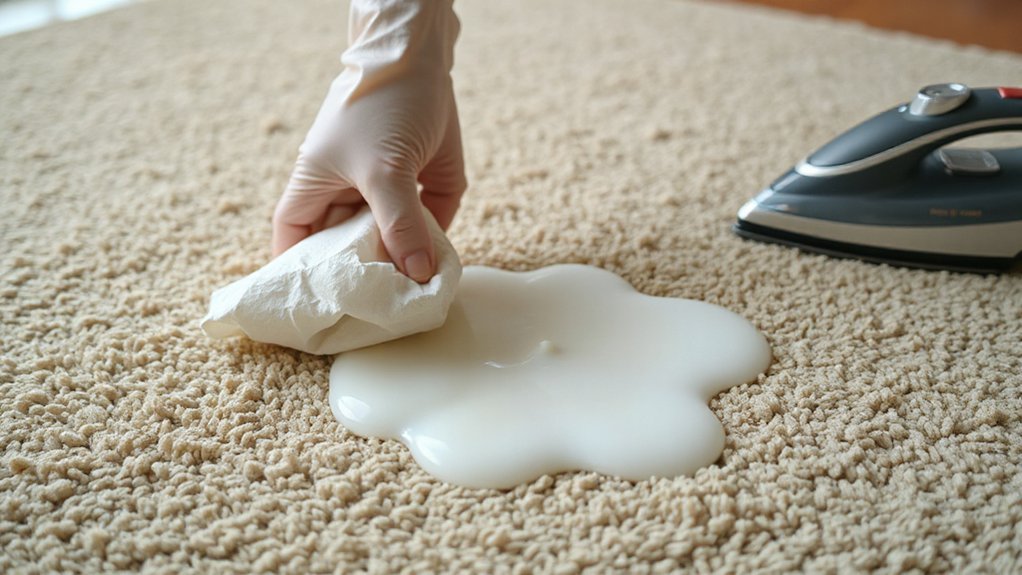
If wax’s on your carpet, you can usually get it out without replacing fibers — but you need the right steps and a steady hand. Start by hardening the wax with ice, chip away flakes, then lift the residue with controlled heat and absorbent paper. Different wax types and dyes change the approach, and one misstep can scorch the pile. Keep going to learn the exact tools and sequence that work consistently.
Key Takeaways
- Harden wax with ice for 10–15 minutes, then gently chip away flakes with a plastic scraper or spoon.
- Vacuum remaining debris, then cover residue with a paper towel or brown paper bag to absorb melted wax.
- Apply low heat (iron on low or hair dryer) through the paper to melt wax into the paper, reusing fresh paper as needed.
- Blot any colored or oily residue with rubbing alcohol or carpet spot remover, testing first in an inconspicuous spot.
- After removal, clean with mild detergent, rinse with water, blot dry, and brush fibers to restore pile.
Why Candle Wax Stains Carpets and What Affects Removal Difficulty
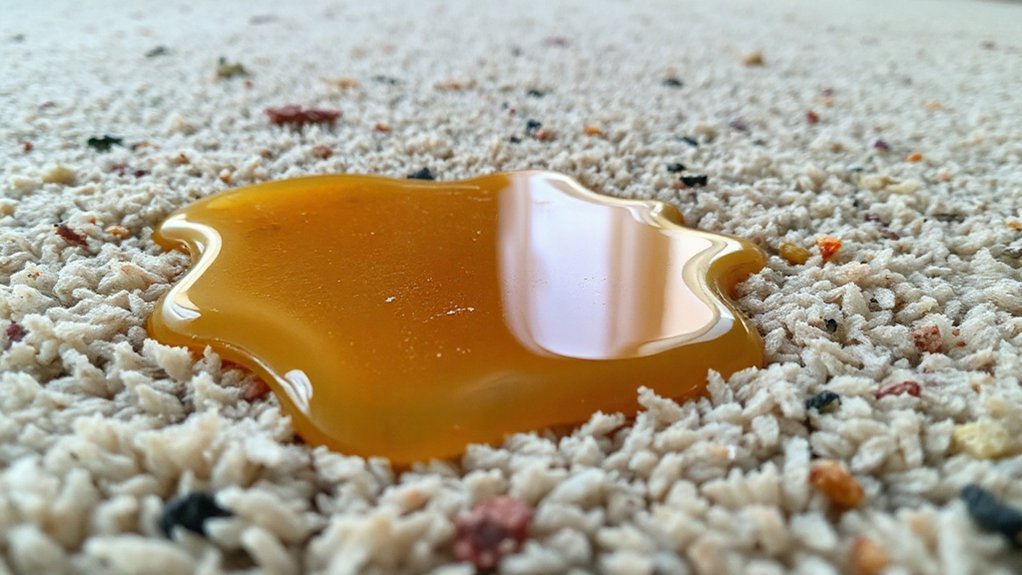
Because wax melts, so it penetrates carpet fibers and binds with dust and dyes, leaving a visible deposit that’s hard to lift. You need to understand wax composition effects: paraffin, soy, and beeswax differ in melting point, hardness, and oil content, which change how deeply wax migrates and how it adheres to synthetic or natural fibers. Stain permanence factors include pigment concentration, dye affinity, heat exposure duration, and fiber porosity; higher temperatures and longer contact increase penetration and chemical interaction. You’ll assess the carpet pile, backing, and preexisting soil to predict removal success. That lets you choose a thermal-softening or solvent approach and set realistic expectations for complete recovery versus residual discoloration or pile distortion.
Tools and Materials You’ll Need Before You Start
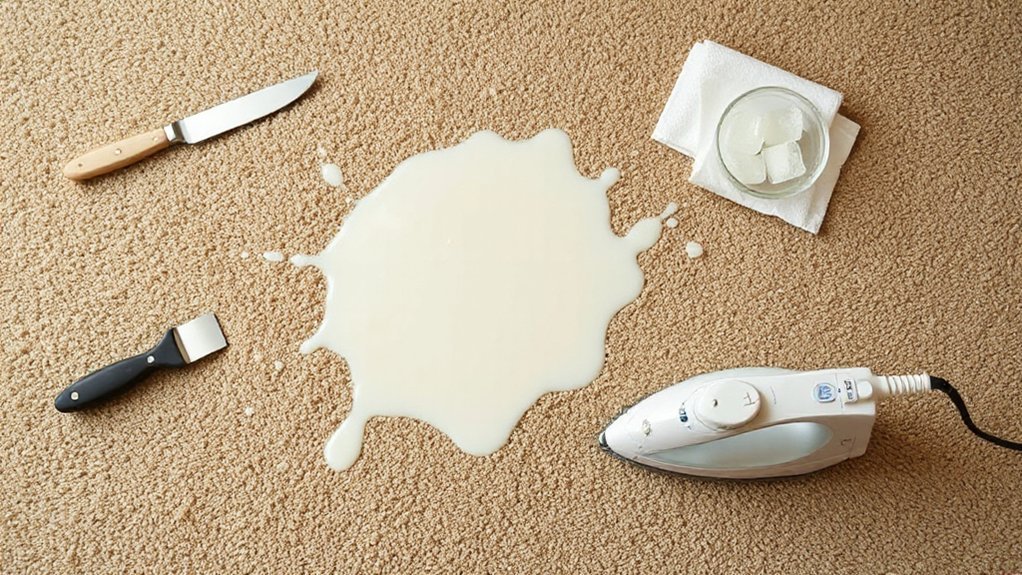
Gather the right tools before you touch the wax: a utility knife or spoon to lift bulk wax, a clean white cloth and several paper towels for blotting, an iron or clothes steamer (or a hair dryer) to soften the residue, a stack of plain brown paper bags or clean paper towels to absorb melted wax, rubbing alcohol or a commercial carpet spot remover for dye/oil residues, a gentle carpet brush or old toothbrush, and disposable gloves to protect your hands; optional items include an ice pack for hardening brittle wax and a small vacuum for lifted flakes. You’ll also want a spray bottle for diluting cleaning solutions and a small bowl for mixing. Choose solvents tested on an inconspicuous area. Keep tools organized and within reach to streamline wax removal and minimize carpet disturbance.
Step-by-Step Method: Freeze, Chip, and Lift Wax
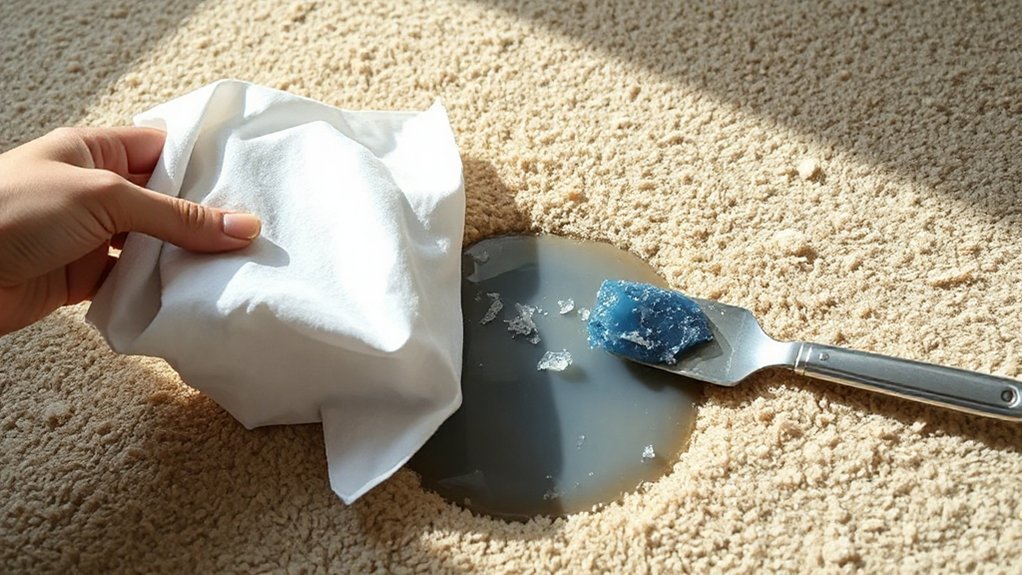
With your tools in place, start by hardening the wax so you can remove it cleanly. Place an ice pack or bag of ice over the spill for 10–15 minutes until the wax is brittle. Test a corner with a blunt tool. Once rigid, use a plastic scraper or credit card at a shallow angle to chip away flakes; work outward from the center to avoid embedding particles. Vacuum the debris with a crevice tool. If residue remains, cover with a paper towel and apply low heat briefly with an iron or hairdryer on low, blotting lifted wax—repeat until transfer stops. These wax removal techniques protect fibers and pile. Follow up with carpet maintenance tips: spot-clean with mild detergent and allow to dry fully.
Dealing With Colored Wax, Dye Transfer, and Scorch Marks
If colored wax has melted into your carpet or the dye’s started to transfer, act quickly to prevent permanent staining: scrape and freeze only remove surface wax, but dye and scorch require targeted chemical and thermal treatments. First blot any liquid residue with a clean cloth; don’t rub. Test a solvent (isopropyl alcohol or a commercial dye remover) in an inconspicuous spot. Apply sparingly to lift dye stains, working from the outside in, then neutralize with water. For scorch marks, assess pile damage—light singeing can be trimmed with scissors; deep burns need professional repair or patching. Avoid heat on dye-transferred areas; heat can set pigments. After treatment, rinse and blot thoroughly, then allow complete drying before evaluating whether repeat treatment or carpet replacement is necessary.
Preventing Future Wax Spills and Quick-Response Tips
Because prevention is far easier than restoration, plan for and reduce candle-wax incidents by controlling ignition points, surface materials, and handling routines: use sturdy, nonflammable holders with wide bases, place candles on trays or mats that catch drips, keep candles at least 12 inches from fabric and high-traffic routes, and never leave burning candles unattended. Prepare a simple toolkit so you can act fast: metal spatula, brown paper or lint-free cloth, ice pack, iron or hair dryer, and solvent appropriate to your carpet fiber. For preventative measures, set safe lighting locations, use dripless or enclosed candles, and enforce handling protocols. For quick cleanup, harden wax with ice, lift flakes with the spatula, absorb residue with paper and solvent, then groom fibers and inspect for dye transfer.
Conclusion
You can remove candle wax from carpet effectively by working methodically: freeze the wax with an ice pack, chip away brittle pieces with a plastic scraper, then absorb melted residue using a paper towel and low heat. Finish by cleaning with mild detergent and drying thoroughly. For colored wax or dye transfer, treat with a carpet-safe solvent and test first; for scorch marks, consult a professional. Prevent spills with dripless holders and act quickly to minimize staining.