
You can get crayon off walls without harsh scrubbing or damaging paint if you follow a few simple steps. Start by gently lifting excess wax, then try mild soap and water, moving from the outside in. If that doesn’t work, a diluted vinegar solution or a safe solvent often helps — but choose methods based on your wall finish. Keep going to find the right approach for your surface and stain.
Key Takeaways
- Act quickly: scrape off excess wax gently with a plastic scraper or old credit card.
- Start mild: blot with a microfiber cloth and a dish-soap diluted in water solution.
- For painted drywall, test first, then use a 50/50 white vinegar and water mix for tougher marks.
- Soften stubborn wax with a low hair-dryer setting, then lift residue with alcohol or mild solvent tested first.
- Rinse the area with plain water, pat dry, and touch up paint if cleaning lightens the finish.
Quick Steps for Fresh Crayon Marks
If your child just finished a masterpiece, act fast: fresh crayon comes off walls much easier than old wax. Start by scraping gently with a plastic scraper or an old credit card to lift the bulk without pressing wax deeper. Blot—don’t rub—with a dry microfiber cloth to remove loose particles. Apply a small amount of a mild wall cleaning solution (dish soap diluted in water works) to a soft sponge, testing an inconspicuous spot first. Work from the outside of the mark inward with light, circular motions until pigment fades. Rinse the area with a clean damp cloth and pat dry. For stubborn spots, repeat once; avoid abrasive pads or harsh solvents that damage paint. These crayon removal techniques save time and preserve finish.
Removing Crayon From Painted Drywall
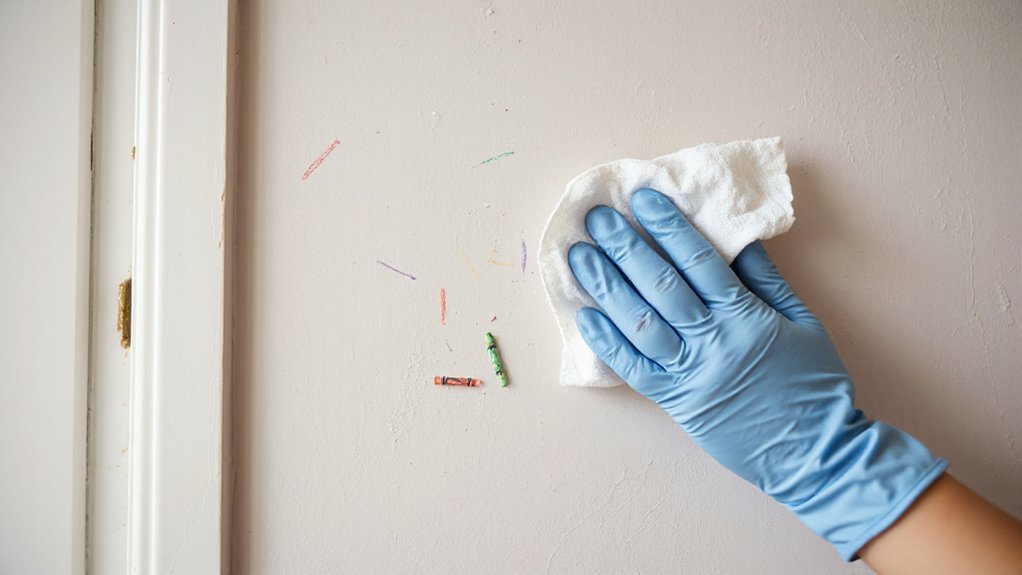
Those quick steps work well on many surfaces, but painted drywall needs a gentler, more controlled approach to avoid removing paint or leaving sheen differences. Start by testing a hidden spot with mild dish soap and water; blot, don’t scrub. If that fails, try a soft cloth dampened with a 50/50 mix of white vinegar and water, working outward from the mark in light circular motions.
For stubborn wax, warm the crayon slightly with a hair dryer on low to soften, then lift softened residue with a soft cloth or a plastic scraper held flat. Rinse the area with plain water and pat dry. These crayon removal techniques and wall cleaning tips help protect paint finish while removing marks effectively.
Cleaning Crayon Off Textured or Glossy Surfaces
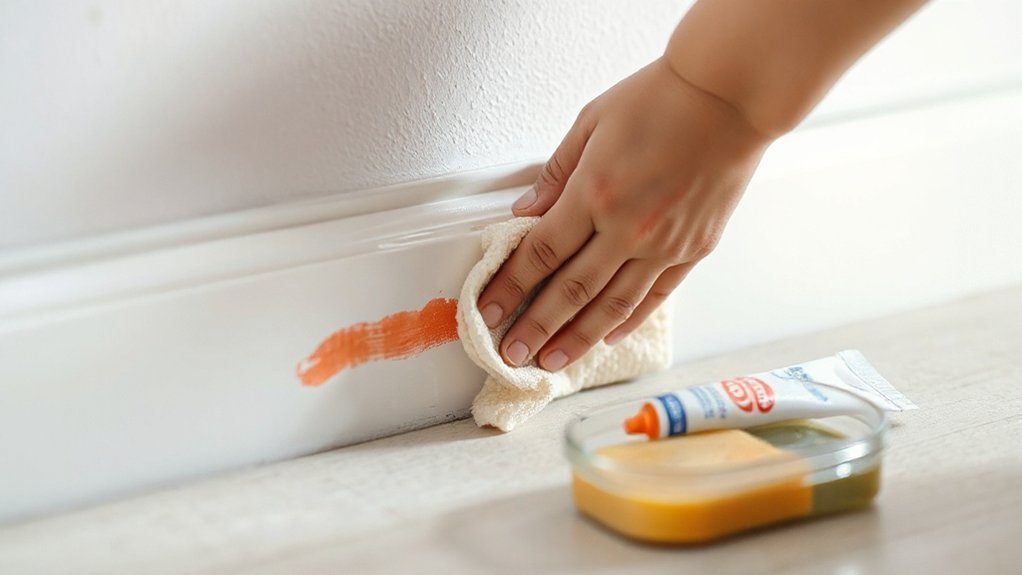
Because textured and glossy surfaces react differently to cleaners, you’ll use slightly different techniques to avoid damage while removing crayon. For textured surfaces, start by gently scraping with a plastic putty knife or old credit card at a low angle to lift wax from grooves. Use a soft-bristle brush to work a mild dish soap solution into crevices, blotting with a microfiber cloth rather than rubbing. Rinse and pat dry.
For glossy finishes, avoid abrasives and excess water. Wipe a small hidden area with a damp microfiber and mild detergent to test for shine loss. If safe, apply a dab of non-gel toothpaste or baking soda paste on a cloth and rub lightly in circular motions. Rinse promptly and buff to restore gloss.
Stubborn Crayon Stains and Safe Solvents
When crayon won’t budge with soap and a scraper, reach for a safe solvent and a test spot before you treat the whole stain. Identify the paint finish, then try isopropyl alcohol on an inconspicuous area; it’s a common option in crayon removal techniques. Apply a small amount to a cloth, dab gently, and blot—don’t rub hard. If alcohol fades paint, switch to a mild, oil-based safe cleaning solution like baby oil or a citrus-based cleaner diluted per label instructions. For stubborn residue, warm the area slightly with a hair dryer to soften wax, then lift with a soft cloth and solvent. Rinse the wall with water, dry, and inspect the test spot before proceeding across larger stains.
Preventing Future Crayon Art on Walls
After you’ve tested solvents and repaired any marks, focus on keeping fresh crayon off walls in the first place. Establish clear rules: designate wall-free zones and explain where drawing is allowed. Create an inviting alternative workspace with paper rolls, easel, or a chalkboard panel. Store art supplies in accessible bins so kids choose proper surfaces. Use washable crayons and smocks to reduce temptation. Mount a roll of butcher paper on a lower wall section for approved large-scale projects. Praise drawings done on permitted areas and gently redirect wall attempts to the alternatives you provided. If a child insists on walls, supervise and offer a timer for limited mural time on a removable surface. Regular reinforcement and visible creative alternatives prevent repeat offenses.
Conclusion
Act quickly: scrape off excess with a plastic card, blot with a microfiber cloth, then wash gently with mild dish soap and water, working from the outside in. For painted drywall, rinse and pat dry to avoid damage; for textured or glossy surfaces, use a soft sponge and be gentler. For stubborn marks, try a 50/50 vinegar solution or a specialized cleaner, testing first in an inconspicuous spot. Prevent repeats by giving kids paper or washable crayons.