
Grease stains happen fast and they don’t disappear on their own, so you’ll want a clear, step-by-step approach to stop oil from setting. Start by blotting excess, use an absorbent powder, then pretreat with dish soap or a concentrated detergent and launder at the hottest safe temperature. There are tweaks for delicate fabrics and stubborn, set-in stains you’ll need to evaluate next.
Key Takeaways
- Blot excess oil gently, avoid rubbing to prevent deeper fiber penetration.
- Apply absorbent powder (cornstarch or baking soda) for 15–30 minutes, then brush or vacuum away.
- Pretreat stain with dish soap or concentrated laundry detergent, gently agitate, and let sit 5–10 minutes.
- Launder at the hottest safe temperature per care label and inspect before tumble-drying.
- For delicates or set-in stains, use solvent-based removers or professional cleaning after testing for colorfastness.
What Causes Grease Stains and Why Quick Action Matters
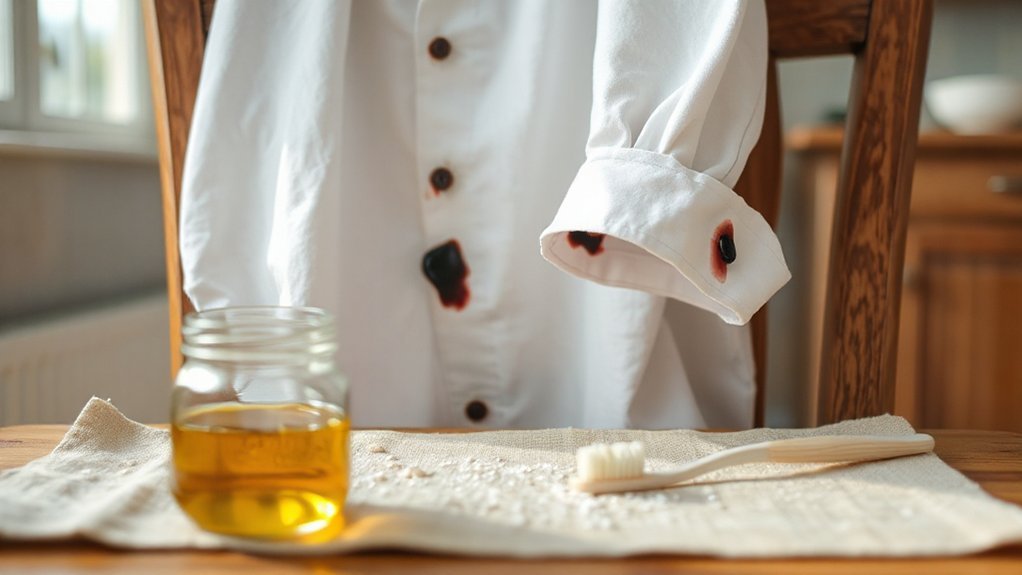
Because oils and fats repel water, grease stains come from substances like cooking oil, motor oil, lotions, and food dressings that penetrate fabric fibers and resist normal washing. You should identify grease sources quickly: kitchen oils, automotive fluids, cosmetic formulations, and salad dressings are common. These lipophilic compounds embed in textile matrices, creating low-surface-energy zones that reduce detergent wetting and emulsification. Time matters because oxidation and heat can set lipid residues, increasing molecular cross-linking and dye affinity. For effective stain prevention, you’ll separate contaminated garments, avoid heat exposure, and treat fabrics with appropriate pre-wash agents that solubilize lipids. Understanding the chemistry lets you choose enzymatic or solvent-based interventions and reduces trial-and-error, improving remediation success and preserving fabric integrity.
Immediate Steps for Fresh Grease Stains

When you find a fresh grease spot, blot the area immediately with a clean cloth to lift surface oil — don’t rub, which will push grease deeper. After blotting, sprinkle an absorbent powder like cornstarch or baking soda and let it sit to draw out remaining oil. Brush off the powder gently and repeat blotting as needed before treating the fabric further.
Blot, Don’t Rub
If you get fresh grease on fabric, act fast: gently blot the spot with a clean, absorbent cloth or paper towel to lift oil without spreading it. You’ll use controlled blot techniques: press, hold briefly, lift straight up, and repeat with clean areas of the cloth until no more oil transfers. Work from the fabric’s outer edge toward the center to prevent spreading. Don’t rub; rubbing forces oil deeper into fibers and creates smear patterns. Rubbing effects include fiber abrasion, stain enlargement, and set-in grease that’s harder to remove later. Use light, consistent pressure and replace the cloth once saturated. After blotting, proceed to targeted pre-treatment or laundering—only after you’ve minimized surface oil with precise blotting.
Apply Absorbent Powder
After you’ve blotted away surface oil, lay the garment flat and sprinkle a generous layer of absorbent powder directly on the stain. Work methodically: choose from powder types such as cornstarch, talc, baking soda, or commercial grease-absorbing powders. Use enough to fully cover the stain but avoid saturating surrounding fabric. Let the absorbent materials sit undisturbed for 15–30 minutes; longer for thicker deposits. For set-in grease, you can gently press the powder with a spoon to increase contact, never rub. After dwell time, lift the powder with a soft brush or shake it off over a sink. Repeat once if oil remains. Proceed to pretreat with detergent before laundering to remove residual grease and powder residues.
Using Dish Soap and Laundry Detergent as Pretreatment

Anyone can get tough grease out by pre-treating the spot with dish soap or concentrated laundry detergent: these products break down oils and emulsify grease so your wash can remove it. Work on the stain from the garment’s reverse side when possible. Apply a small amount of dish soap (note dish soap effectiveness on oily residues) directly to the stain, gently agitate with a soft brush or your fingers, and let sit 5–10 minutes. For heavier soils, use a concentrated liquid laundry detergent designed for grease (compare laundry detergent options for enzyme or surfactant strength). Rinse the area with warm water, then launder at the highest safe temperature. Inspect before drying; repeat treatment if residual oil remains to avoid setting the stain.
Home Remedies: Baking Soda, Cornstarch, and Baby Powder
While chemical degreasers tackle oil with surfactants, powdered absorbers like baking soda, cornstarch, and talc-based baby powder draw fresh grease out of fabric fibers by capillary action and surface adsorption. You’ll work quickly: blot excess oil, then apply a generous layer of baking soda or cornstarch directly to the stain. Leave the powder undisturbed for 15–30 minutes to allow adsorption; for thicker deposits, gently rub the powder into the fabric with a soft brush to increase contact area. Tap or vacuum away the powder; repeat if you still see oil transfer. After absorption, launder according to the garment’s care label using the warmest safe temperature. Avoid heat drying until the stain is fully removed to prevent setting.
Treating Set-In and Dried Grease Stains
For set-in or dried grease stains, start by gently loosening the crusted material with a blunt edge so you don’t spread the oil. Apply an absorbent powder (baking soda or cornstarch) to draw out remaining grease, let it sit, then brush away the residue. Finally, pretreat the area with a solvent-based stain remover or rubbing alcohol before laundering as usual.
Loosen Dried Grease
Start by breaking up the hardened grease mechanically before applying any solvents: scrape off excess with a dull knife or gently shred the area with a soft-bristled brush to loosen crusted particles without damaging fabric fibers. Next, target remaining deposits with effective techniques: apply a small amount of liquid dish detergent directly to the area, work it in with short, controlled strokes, and let it sit 5–10 minutes to emulsify oil. For delicate fibers, substitute a mild solvent like isopropyl alcohol applied to a cotton swab, testing an inconspicuous spot first. Rework the area, then rinse with warm water to assess progress. Repeat mechanical agitation and detergent application as needed until grease is visibly reduced, avoiding heat until the stain’s removed.
Use Absorbent Powders
1 simple, high-absorbency powder can draw oil out of set-in grease without chemical weakening of the fabric. You’ll work methodically: lay the garment flat, protect the reverse side with a barrier, and apply a generous layer of an appropriate absorbent materials—talc, cornstarch, or baking soda. Tap the powder into the stain to maximize grease absorption; don’t rub, which pushes oil deeper. Let it sit 30–60 minutes for capillary action to transfer oil into the granules. After dwell time, gently brush or vacuum the residue, then repeat if a trace remains. If the fabric tolerates it, launder promptly using the hottest recommended temperature and your usual detergent. Inspect before drying; heat can set remaining oil.
Pretreat With Solvent
Grab a solvent-safe spot and test it first: apply a small amount of your chosen solvent (dish detergent, liquid laundry pretreater, rubbing alcohol, or a commercial stain remover formulated for oils) to an inconspicuous seam or hem and wait a minute to confirm colorfastness and fabric stability. For set-in or dried grease, you’ll use targeted pretreatment techniques before laundering. Work from outside toward the center, blotting — don’t rub — to mobilize oil. Choose solvent options based on fiber: water-based surfactants for synthetics, alcohol for protein blends, commercial oil removers for heavy cottons.
- Apply solvent sparingly with a cotton swab.
- Agitate gently with a soft brush.
- Let sit 5–15 minutes; don’t let dry.
- Blot excess, then launder per care label.
Repeat if stain persists.
Removing Motor Oil and Heavy-Duty Grease
When you’re dealing with motor oil or heavy-duty grease, act quickly and work methodically: blot excess with a clean rag, avoid rubbing it deeper into fibers, then apply a solvent or degreaser compatible with the fabric. Next, test the product on an inconspicuous area. If safe, apply solvent to the stain edge-to-center to prevent spreading. Agitate gently with a soft-bristled brush or cloth for several minutes. Allow dwell time per product instructions, then blot to transfer dissolved grease. Repeat application and blotting until no more lift occurs. Launder using the hottest safe water and a heavy-duty detergent containing enzymes or surfactants. Inspect the garment before drying; if residue remains, repeat treatment—heat will set motor oil and heavy duty grease permanently.
Fabric-Specific Care: Delicates, Wool, and Silk
For delicates you’ll hand-wash gently with a mild detergent and controlled agitation to avoid fiber damage. For wool, use cool water, a wool-specific cleaner, and minimal friction to prevent felting. For silk, apply a pH-neutral solvent or enzyme-free detergent and blot rather than rub to protect the filament structure.
Hand-Washing Delicate Fabrics
If a garment’s care label calls for hand-washing, treat delicates like silk and wool with gentle agitation in cool water and a measured, pH-neutral detergent formulated for fine fibers. You’ll apply handwashing techniques that respect fabric sensitivity: work from the stained area outward, avoid scrubbing, and limit immersion time to prevent fiber stress. Rinse thoroughly with cool water until suds clear, then remove excess water by pressing—don’t wring. Lay flat on an absorbent towel and reshape.
- Pre-test detergent on an inconspicuous seam
- Use a shallow basin to control water temperature
- Blot grease with absorbent powder before washing
- Air-dry flat away from direct heat
Follow these steps systematically to minimize distortion and preserve fiber structure.
Treating Wool and Silk
You’ve already taken care to blot grease and test detergent; now focus on the specific needs of wool and silk. Treat both fabrics promptly. For wool care, lift excess oil with a dry absorbent (cornstarch or talc) for 30–60 minutes, brush gently, then apply a small amount of enzyme-free liquid detergent diluted in cool water. Agitate minimally; avoid wringing. Rinse in cool water until clear, press between towels, and reshape flat to dry away from heat.
For silk treatment, blot, then sprinkle cornstarch briefly and brush off. Use a pH-neutral silk detergent or mild baby shampoo diluted in tepid water. Swirl gently; do not soak longer than necessary. Rinse with cool water containing a splash of white vinegar to restore sheen. Air-dry flat or hang away from direct sun.
Stain Removal for Colored and Dark Clothing
When treating grease on colored or dark fabrics, work quickly and avoid bleach or strong alkali cleaners that can strip dye; instead, blot excess oil, apply a color-safe degreasing agent or diluted dish soap, and test it on an inconspicuous seam before full application. You’ll follow color safe methods and account for dark fabric considerations to prevent fading or bleed. Blot—don’t rub. Use cool water to flush treated areas. Repeat testing before laundering.
- Blot excess with paper towel, lifting oil from fibers.
- Apply a small amount of diluted dish soap or enzyme cleaner; wait 5–10 minutes.
- Rinse with cool water, checking for dye migration.
- Air-dry and inspect; if residue remains, repeat the test-and-treat cycle.
Handle stains methodically to preserve color integrity.
When to Use Commercial Stain Removers or Solvents
After you’ve tried gentle, color-safe methods on colored or dark fabrics and the stain persists, it’s time to contemplate commercial stain removers or solvents. You’ll evaluate fabric composition, dye stability, and care-label limitations before selecting a product. Choose commercial cleaners formulated for oils and grease; review active ingredients and follow concentration guidance. Test on an inconspicuous area for colorfastness and fiber reaction. Apply minimally, allow prescribed dwell time, then blot—don’t rub—to lift emulsified grease. For stubborn residues, consider stronger solvent options like dry-cleaning solvents or petroleum-derived spot removers, but limit exposure and ventilate the area. Rinse thoroughly with appropriate detergent and water. If in doubt, consult a professional cleaner to avoid irreversible damage.
Preventing Grease Stains and Maintaining Garment Care
Because prevention is simpler than removal, adopt routine habits that minimize grease contact and make cleanup easier. You’ll extend garment preservation by treating garments as technical assets: inspect pockets, fasten closures, and isolate oily tasks. Establish predictable actions to support stain prevention and reduce intervention time.
- Wear washable aprons or disposable covers when cooking or working with lubricants.
- Keep designated tools and towels to limit cross-contamination of fabrics.
- Pre-treat high-risk zones (collars, cuffs) with a hydrophobic barrier or absorbent powder.
- Store garments away from oily environments and launder per care labels promptly.
Follow label-specific temperatures and detergents, document recurring exposures, and perform periodic fabric testing to validate your garment preservation protocol.
Conclusion
Act fast: blot excess oil, apply an absorbent (cornstarch or baking soda) for 15–30 minutes, then pretreat with dish soap or concentrated laundry detergent, gently agitate, rinse, and launder at the highest safe temperature. For set-in stains, repeat pretreatment, use targeted solvents or commercial stain removers, and adapt methods for delicates, wool, silk, and dyed fabrics. Regular care and prompt action prevent permanent damage and extend garment life.