
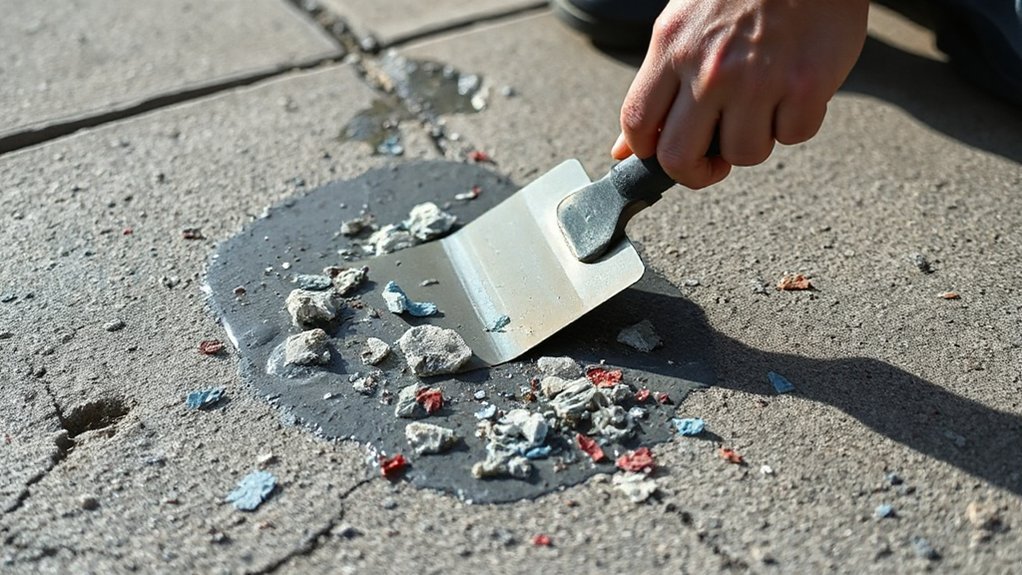
You can remove paint from concrete effectively if you pick the right method for the paint type and surface condition. Start by evaluating whether it’s latex, oil-based, or an epoxy coating, then secure the area, wear proper PPE, and choose chemical strippers, mechanical grinding, pressure washing, or a low-toxicity option. Each method has trade-offs in time, cost, and dust or fume control—keep going to match the best approach to your project.
Key Takeaways
- Identify the paint type (latex, oil-based, epoxy) with solvent tests and scraping to choose the right removal method.
- Use biodegradable chemical strippers for thin paint or stubborn spots, following product instructions and wearing PPE.
- Employ mechanical methods—diamond cup grinders, shot blasting, or sanding—for heavy coatings or large areas, controlling dust with vacuums.
- Protect the area and yourself: clear the space, lay drop cloths, use respirator, eye protection, gloves, and hearing protection.
- After removal, inspect and repair pitting or cracks, then apply a breathable, UV-stable sealer to protect the concrete.
Assessing the Paint Type and Condition
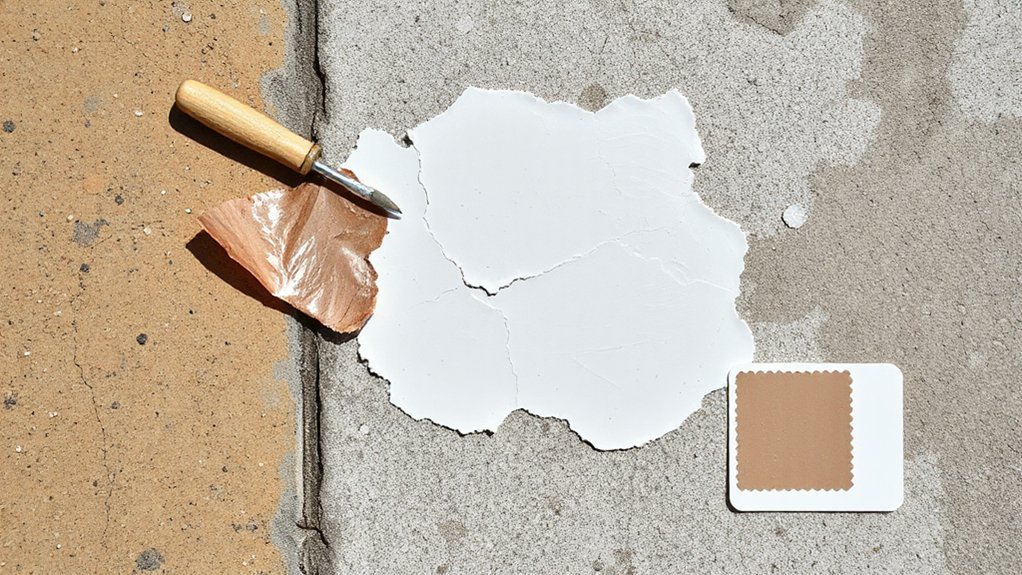
Start by identifying what kind of paint you’re dealing and how well it’s adhered to the concrete. You’ll inspect gloss, thickness, and age to determine if it’s latex, oil-based, or epoxy — each responds differently to removal methods. Test small areas with a scraper and a solvent appropriate for the suspected paint; note how quickly it softens to gauge paint adhesion. Check for flaking, chalking, or deep penetration into pores; those issues change your approach and the level of surface preparation required. Photograph and mark problem spots so you can track progress. Use simple tests rather than guesses: adhesion and substrate condition dictate whether mechanical, chemical, or thermal methods will be safest and most effective for your job.
Preparing the Work Area and Safety Precautions
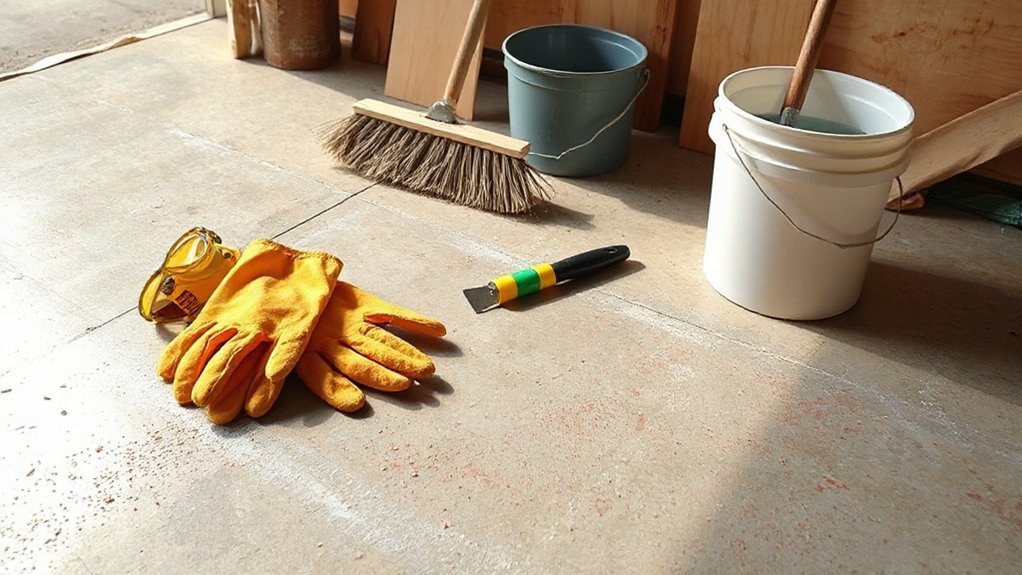
Before you begin removal, clear and secure the area so you can work efficiently and protect people, pets, and plants. Rope off or block access, move furniture and potted plants, and keep children and animals well away. Inspect the surface for trip hazards and improve lighting so you can see paint edges and debris.
Select appropriate safety gear: respirator with particulate/cartridge rating, chemical-resistant gloves, eye protection, long sleeves, and sturdy boots. Use hearing protection if you’ll run power tools. Lay heavy-duty drop cloths to catch chips and run a containment plan for runoff — never let residue reach storm drains or soil.
Keep a well-stocked first-aid kit, a fire extinguisher nearby, and have a helper or phone available in case you need assistance.
Chemical Paint Strippers and How to Use Them

You’ll want to pick a stripper formulated for concrete and the type of paint you’re removing, since effectiveness and safety vary widely. Put your safety gear and ventilation first, and follow label instructions to the letter to protect yourself and the surface. Apply the product evenly, let it work the recommended time, then scrape and rinse with a stiff brush or pressure washer to remove residue.
Choosing the Right Stripper
Wondering which chemical stripper will do the job without damaging your concrete? You’ll pick one based on paint stripper types, the paint’s age and thickness, and the surface texture. Choose a solvent for thin latex, a caustic for heavy oil-based coatings, or a bio-based product for sensitive areas. Match application techniques to the product: brush on thick gels for verticals, mop or squeegee for flats, or poultice stubborn spots.
- Solvent-based: fast, works on many finishes, needs careful rinsing.
- Caustic: strips deep layers, may etch porous concrete.
- Bio-based: gentler, slower but less harsh.
Test a small area first, follow dwell times, then remove residue thoroughly for best results.
Safety Precautions First
Because chemical strippers can be hazardous, take safety seriously every time you work with them: wear chemical-resistant gloves, eye protection, a respirator rated for organic vapors, and long sleeves to keep skin covered. You’ll also need sturdy footwear and a face shield for splash-prone tasks. Before you begin, review the product Safety Data Sheet and label warnings so you know first-aid steps and incompatible materials. Set up clear ventilation measures: open windows, run exhaust fans, and, if indoors, use a cartridge respirator designed for solvents. Keep a fire extinguisher nearby and store flammable strippers away from heat. Isolate the work area to protect bystanders and pets, and dispose of rags and waste per local hazardous-waste rules. If you’re unsure, consult a professional.
Application and Removal Methods
Start by choosing the right type of chemical stripper for the paint and concrete—methylene chloride-based strippers act fast on multiple coatings but are highly toxic, while safer, less aggressive soy- or citrus-based alternatives need longer dwell time and more mechanical effort. You’ll do surface preparation first: clean, remove loose paint, and mask surrounding areas. Apply stripper in consistent coats, follow manufacturer dwell times, and keep the area ventilated. Once the paint softens, scrape with a stiff scraper or use a nylon brush, avoid metal that scores concrete and harms future paint adhesion. Neutralize and rinse thoroughly, then let the slab dry before inspecting for residues.
- Test a small area for effectiveness and substrate reaction.
- Use proper PPE: respirator, gloves, eye protection.
- Dispose of waste per local regulations.
Mechanical Methods: Grinding, Sanding, and Shot Blasting
Mechanical methods—grinding, sanding, and shot blasting—offer fast, effective ways to strip paint from concrete when chemical strippers aren’t suitable or when you need a clean, profiled surface for recoating. You’ll choose grinding techniques for heavy, stubborn coatings; diamond cup grinders remove multiple layers quickly and create the profile needed for primers. For light coatings and feathering edges, use sanding equipment like floor sanders or orbital sanders with coarse abrasives. Shot blasting is best for large areas and industrial jobs: it cleans and profiles without chemicals, but needs containment for spent media. Always wear respirators, hearing protection, and eye gear; control dust with vacuums or shrouds. Work methodically, test a small area, and adjust abrasive grit or blast settings for ideal results.
Pressure Washing and Steam Cleaning Techniques
If grinding or shot blasting feels too aggressive for your project, pressure washing and steam cleaning offer gentler alternatives that still remove paint and prepare concrete for recoating. You’ll choose equipment and settings based on paint type, surface condition, and containment needs. Use pressure washing techniques with a 2000–4000 psi washer, fan tips, and controlled passes to strip loose paint without etching too deeply. For stubborn or oil-contaminated areas, apply steam cleaning methods at high temperature to soften binders and lift residue, then rinse and vacuum.
- Start with a test patch to dial in pressure, distance, and nozzle.
- Combine detergent with hot water for latex paints; rinse thoroughly.
- Always wear PPE, protect nearby plants, and direct runoff to appropriate drains.
Eco-Friendly and Low-Toxicity Removal Options
Consider using biodegradable paint strippers when you want effective removal without harsh fumes or runoff. You can also use mechanical methods—like scrapers, wire brushes, or a floor grinder—if you take care to control dust and avoid damaging the concrete. Combine both approaches for stubborn spots: apply a low-toxicity stripper, then finish with careful mechanical action.
Biodegradable Paint Strippers
When you want to strip paint without harsh chemicals, biodegradable paint strippers offer an effective, lower-toxicity alternative that minimizes environmental impact and indoor air hazards. You’ll find biodegradable options formulated from natural ingredients like citrus solvents, soy esters, or plant-based surfactants. They work slower than methylene chloride but reduce fumes and disposal hazards, so plan longer dwell times and test a small area first.
- Choose a product labeled biodegradable and low-toxicity; check ingredients and safety data.
- Apply per instructions, keep the area ventilated, and use plastic sheeting to collect residues.
- Neutralize and rinse thoroughly; dispose of waste per local regulations for biodegradable chemical waste.
You’ll protect surfaces and health while achieving good paint removal when you follow directions carefully.
Mechanical Methods With Care
A few careful mechanical techniques let you remove paint from concrete without heavy chemicals, keeping the job eco-friendlier and safer for indoor use. You’ll choose methods based on paint thickness and substrate condition: use hand-held sanding techniques with coarse- to medium-grit discs for small, shallow spots, and switch to an orbital sander for broader areas to reduce gouging. For thicker coatings, employ grinding tools with diamond cup wheels, working slowly and in passes to avoid overheating and dust clouds. Always clamp or mark edges to protect surrounding concrete. Wear a respirator, eye protection, and use a vacuum with a HEPA filter to capture dust at the source. Test a small area first, then proceed methodically to preserve concrete integrity while removing paint.
Repairing and Sealing Concrete After Paint Removal
Once the paint’s gone, you’ll need to assess and fix any surface damage before sealing so the repairs bond properly and the finish lasts. Inspect for pitting, cracks, and spalled areas; clean thoroughly, then use appropriate concrete patch or polymer-modified mortar for surface repair. Follow product instructions, feather edges smooth, and allow full cure.
- Small hairline cracks: use epoxy or polyurethane injectable sealant.
- Pits and chips: fill with a patching compound, trowel smooth, grind if needed.
- Larger damaged sections: replace or apply a bonded overlay for uniformity.
Before concrete sealing, test a small area for coverage and adhesion. Choose a breathable, UV-stable sealer for exterior concrete, apply evenly, and allow recommended dry times for durable protection.
Conclusion
You’ve got the basics: identify the paint and condition, secure the area, wear proper PPE, then choose the right method—chemical strippers for thin coatings, grinding or shot blasting for tough layers, or pressure/steam cleaning for surface removal. Prefer biodegradable or low-toxicity products when possible. After stripping, inspect and repair pitting or cracks, then seal the concrete to protect it. Work methodically and test a small area first to guarantee best results.