
You’ll get pet hair off furniture faster than you think if you use the right tools and a few simple techniques. Start with a lint roller or rubber glove for quick pickup, then use your vacuum’s upholstery tool and damp microfiber for stubborn strands. Different fabrics need different approaches, and a few preventive habits cut down future mess. Keep going to learn the exact steps for every surface and situation.
Key Takeaways
- Vacuum furniture with an upholstery or motorized pet-hair attachment slowly in overlapping passes to lift embedded fur.
- Rub a slightly damp rubber glove or microfiber mitt across fabric in short strokes to gather hair into clumps.
- Use a lint roller or adhesive tape for quick touch-ups and to pick up fine residue.
- For leather or faux-leather, wipe with a damp microfiber cloth or soft rubber brush along seams and grain.
- Rinse tools and clean vacuum filters regularly, and launder removable covers per care labels to prevent buildup.
Quick Tools That Work Immediately
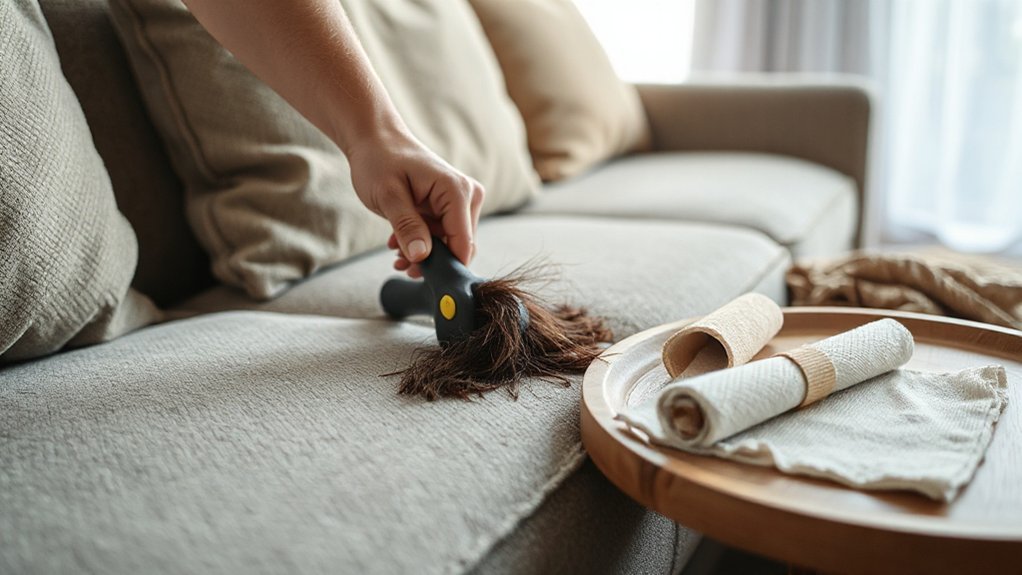
You don’t need fancy equipment to get pet hair off furniture fast — reach for a rubber glove, a lint roller, a damp microfiber cloth, or a slightly-wet sponge and you’ll remove clumps in minutes; sweep the surface with short, firm strokes, rinse or peel away hair as needed, and repeat until the majority is gone. Use lint rollers for quick touch-ups: roll in one direction, replace adhesive sheets when full, and store extras nearby for fast swaps. A rubber glove gives you control on upholstery—dampen it slightly and rub to gather hair into piles you can pick up. Damp microfiber traps fine hairs without soaking fabric. For stubborn areas, a slightly-wet sponge or a pet hair brush finishes the job cleanly.
How to Use a Vacuum for Best Results
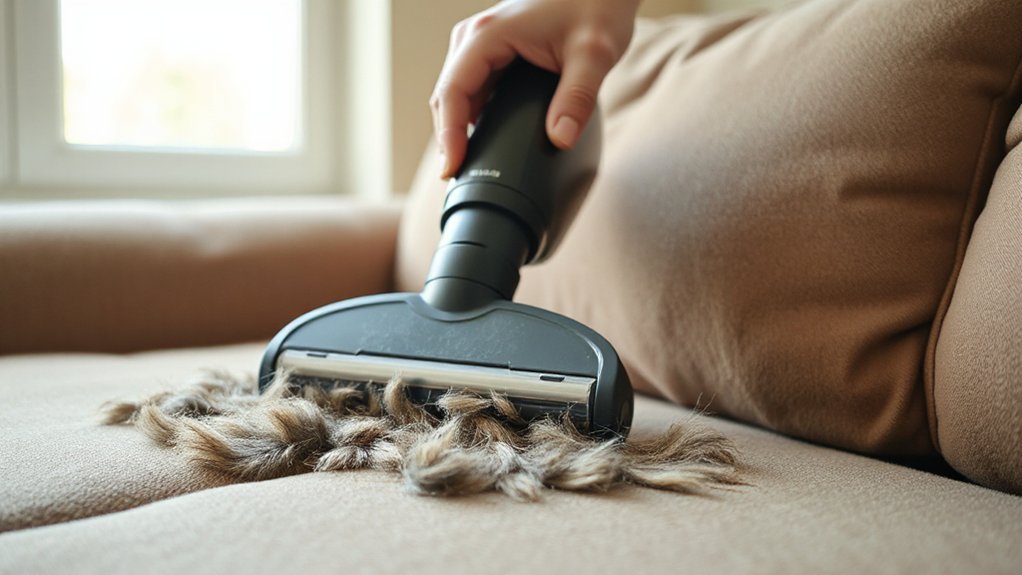
Pick the right vacuum attachment for upholstery and pet hair, like a motorized brush or rubberized tool, to lift fur without damaging fabric. Move the nozzle slowly in overlapping passes and change directions to loosen embedded hairs. Keep filters, brushes, and hoses clean and check for clogs so your vacuum performs at peak power.
Choose the Right Attachment
Often the right vacuum attachment makes the difference between a quick pass and hours of tugging—so match the tool to the surface. You’ll want a motorized brush for upholstered couches and area rugs; its rotating bristles lift embedded pet hair quickly. Use a soft-bristle brush on delicate fabrics and a crevice tool for seams and tight gaps. Microfiber or rubberized furniture attachments work wonders on leather and smooth surfaces by attracting hair rather than scattering it. Keep a small handheld or turbo tool for stairs and cushions you can remove. Change or clean attachments regularly to maintain suction and avoid redepositing hair. Pick attachments designed for pet hair and prioritize ones that fit your vacuum model for efficient, predictable results.
Use Proper Vacuum Technique
Start each pass slowly and deliberately, keeping the nozzle flat and moving in overlapping strokes so the vacuum can lift and capture hair instead of just pushing it around. Use a steady vacuuming technique: short, repeated passes work better than one fast sweep. Adjust suction power for fabric type — higher for dense upholstery, lower for delicate materials. Angle the tool to get along seams and under cushions. Finish edges and crevices with the crevice tool.
- Move slowly and overlap strokes to pick up embedded hair.
- Vary suction power by fabric to avoid damage and maximize pickup.
- Target seams, folds, and under cushions with focused passes.
- Use attachments for edges, crevices, and tight spots.
You’ll get cleaner furniture when you combine control, correct suction power, and methodical technique.
Maintain Vacuum Regularly
While you’re focused on technique, don’t neglect regular vacuum maintenance, because a well-kept machine works far better and lasts longer. Check brushes and hoses weekly for clogs and hair, and clear them immediately to keep suction strong. Empty or replace bags before they reach capacity to avoid reduced performance. Follow the manufacturer’s schedule for filter replacement; a clogged filter can cut suction and blow dust back onto upholstery. Clean or wash reusable filters as directed and let them dry completely before reinstalling. Inspect belts and rotating brushes monthly; replace worn parts to maintain consistent agitation on fabric. Keep vents and crevices clear, and store the vacuum in a dry place. Proper vacuum maintenance saves time and guarantees reliable pet-hair removal.
DIY Tricks Using Items You Already Have
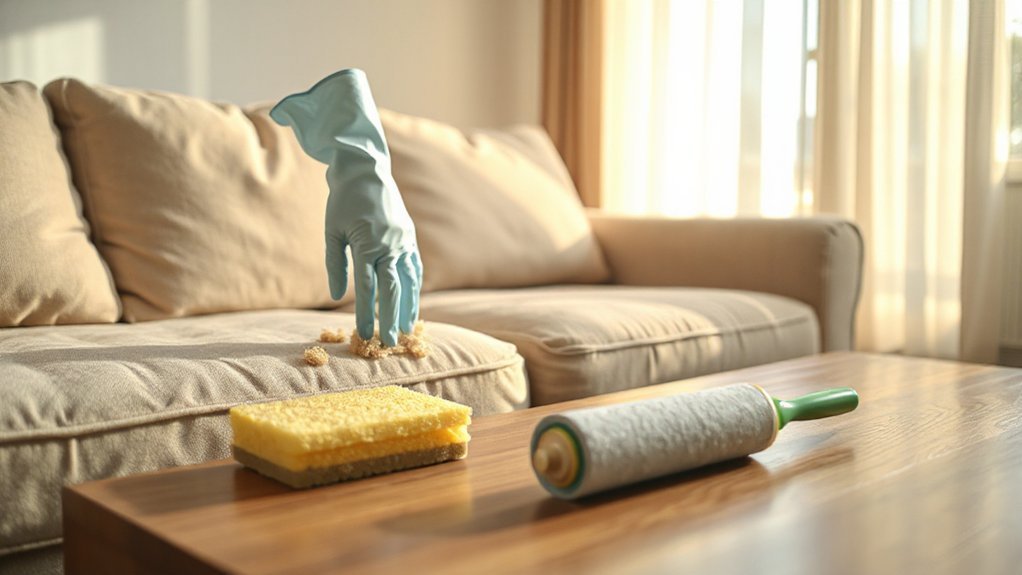
You can tackle stubborn pet hair with things you already have at home. Run a damp sponge or a rubber glove over the fabric to gather hairs into easy-to-remove clumps. Use short, firm strokes and rinse the sponge or wipe off the glove as needed for best results.
Use a Rubber Glove
A simple rubber glove turns pet-hair removal into a quick, efficient task: slip it on, dampen the palm slightly, and rub the furniture in short, deliberate strokes to gather hairs into manageable clumps you can lift away. You’ll see immediate rubber glove effectiveness: static and friction pull hairs from fabric faster than brushing alone. Work methodically in one direction, emptying clumps into a trash bag as you go to avoid re-depositing hair. This method’s low cost and speed make it a top alternative cleaning methods option when you need a fast touch-up.
- Use a fitted glove for control and reach corners.
- Keep the palm just damp, not wet.
- Rinse the glove when buildup slows performance.
- Finish with a lint roller for fine residue.
Dampen a Sponge
One dampened sponge is all you need to lift stubborn pet hair from upholstery. Wet a common kitchen sponge, wring it until it’s just slightly damp — not dripping — and sweep it across fabric in short, firm strokes. The damp sponge creates light surface tension that pulls hairs together into manageable piles. Work in one direction, gather the hair, and discard it into a trash bag or lint bin. Rinse and re-wring the sponge when it gets full, then repeat until the surface is clear. This damp sponge method is fast, inexpensive, and an effective cleaning step between deeper treatments. Use it regularly to prevent buildup and keep furniture looking neat without special tools.
Tackling Hair on Upholstery and Fabric Sofas
Although fabric sofas hold hair stubbornly, you can remove it quickly with the right tools and a simple routine. Start by vacuuming with an upholstery cleaning attachment to lift embedded fur; go with the grain and use overlapping strokes. Use a rubber brush or a damp microfiber mitt to gather remaining hairs—these tools clump hair for easy removal. For cushions, unzip and launder covers if fabric care labels allow; otherwise, spot-clean and air-dry thoroughly. Finish by applying a lint roller for touch-ups and to catch stray fibers.
- Vacuum with upholstery attachment
- Rubber brush or damp microfiber mitt
- Launder or spot-clean covers per fabric care
- Lint roller for final pass
Managing Hair on Leather and Faux-Leather Furniture
Leather and faux-leather repel fur more than fabric, but hair still clings in creases and seams, so you’ll want a targeted, gentle approach to avoid damage. Use a soft rubber brush or a slightly damp microfiber cloth to gather hair—work toward seams and wipe along grain lines. For stubborn tufts, lift with a piece of sticky tape or a lint roller designed for delicate surfaces, avoiding aggressive adhesives that can strip finish. Vacuum with a brush attachment on low suction for regular upkeep, and wipe spills immediately with a damp cloth. Condition genuine leather periodically using approved leather care products; test any cleaner on an inconspicuous spot first. For faux leather maintenance, avoid harsh solvents and follow manufacturer guidelines to preserve texture and finish.
Preventive Habits to Reduce Shedding Indoors
Keeping furniture cleaner starts before hair lands on it, so pair the leather-care steps with routines that cut shedding at the source. You’ll reduce cleaning time if you adopt daily grooming routines, balanced nutrition, and environmental controls focused on shedding prevention.
- Brush your pet daily — use the right tool for coat type to remove loose fur before it spreads.
- Schedule regular baths with gentle shampoo to loosen and rinse hair, but don’t overbathe.
- Feed a high-quality diet and consider supplements after consulting your vet to improve coat health and limit shedding.
- Manage indoor environment: vacuum floors, use washable throws, control humidity, and limit pet access to key furniture.
These practical steps lower hair accumulation and keep leather-looking better longer.
When to Call in Professional Cleaners
If hair, stains, odors, or ingrained residue persist despite your best efforts, call a professional cleaner to restore the upholstery and protect its finish. You’ll know when to hire one if routine tools—vacuum, lint roller, damp cloth—don’t remove embedded hair or if odors and staining return quickly. Signs of necessity include musty smells after cleaning, brittle or discolored fabric, visible residue in seams, or repeated allergic reactions among household members. Choose a cleaner with upholstery certifications, eco-friendly solutions, and positive local reviews. Ask about methods, drying time, stain guarantees, and pet-safe products. Getting expert help prevents damage, extends furniture life, and saves you time. Act promptly when signs of necessity appear.
Conclusion
You’ve got simple, effective options to keep furniture fur-free. Use a lint roller, damp rubber glove, or microfiber cloth for quick pickup, and vacuum with an upholstery tool—overlap passes and switch directions to lift embedded hair. For leather, wipe with a damp cloth; for fabrics, try a damp sponge or sticky tape. Stay on a regular cleaning schedule and groom pets often to cut shedding. Call pros for persistent buildup or delicate materials.