
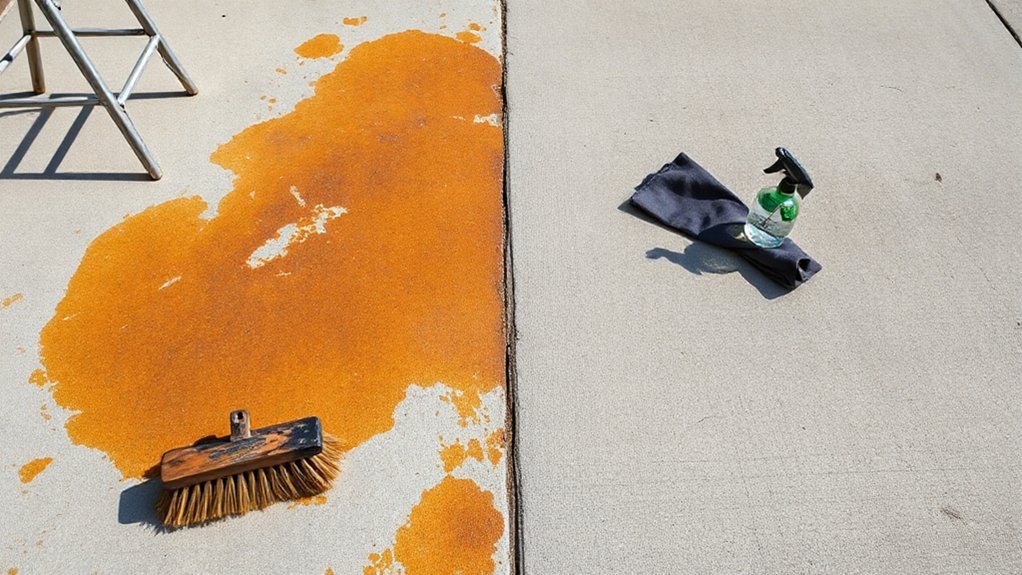
If you’ve got rust on concrete, you can usually remove it with common products and a bit of elbow grease—white vinegar or a baking soda paste for light stains, stronger chelators or masonry rust removers for deeper marks—always test first and protect your skin and eyes. I’ll walk you through safe household methods, when to step up to commercial acids, and how to prevent the problem from coming back.
Key Takeaways
- Test stain depth: wet the area and probe with a stiff brush to determine if rust is superficial or embedded.
- Try household remedies first: apply white vinegar for 10–15 minutes, scrub with a nylon brush, then rinse.
- For stubborn stains, use a masonry rust remover or chelating cleaner, following label dwell time and safety instructions.
- Pre-wet concrete, agitate stains with a stiff nylon brush, and repeat treatment cycles rather than increasing chemical strength.
- Prevent recurrence by removing corroding metal, controlling moisture, and sealing concrete with a rust-resistant masonry sealer.
Understanding Rust Stains and Concrete
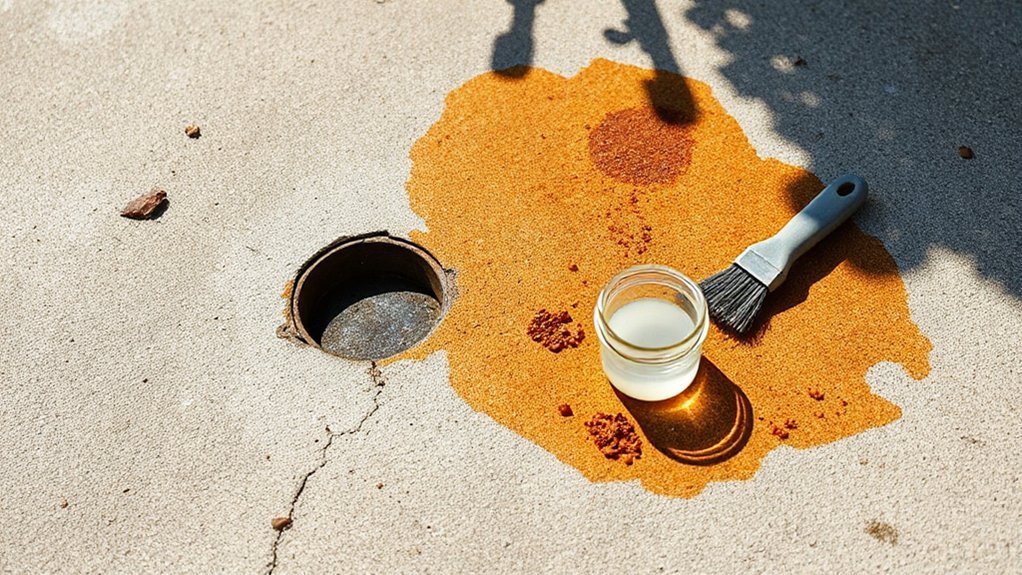
Because concrete is porous and often contains iron-bearing aggregates, rust stains form when metal contacts moisture and oxidizes, then leaches into the pores. You’ll want to grasp concrete composition: cement matrix, aggregate size and type, porosity, and any surface treatments. Rust formation depends on available iron, oxygen, and water; microscopic capillaries transport oxidized iron ions into the matrix where they bind to silica and calcium compounds. You should inspect aggregate color and nearby metal sources—rebar, fasteners, or runoff—to pinpoint contamination paths. Porosity and pH influence stain depth and chemical reactivity, so assess whether stains are superficial or embedded. That assessment guides whether mechanical or chemical interventions will reach stain-bearing layers without damaging substrate integrity.
Safe Household Treatments That Work
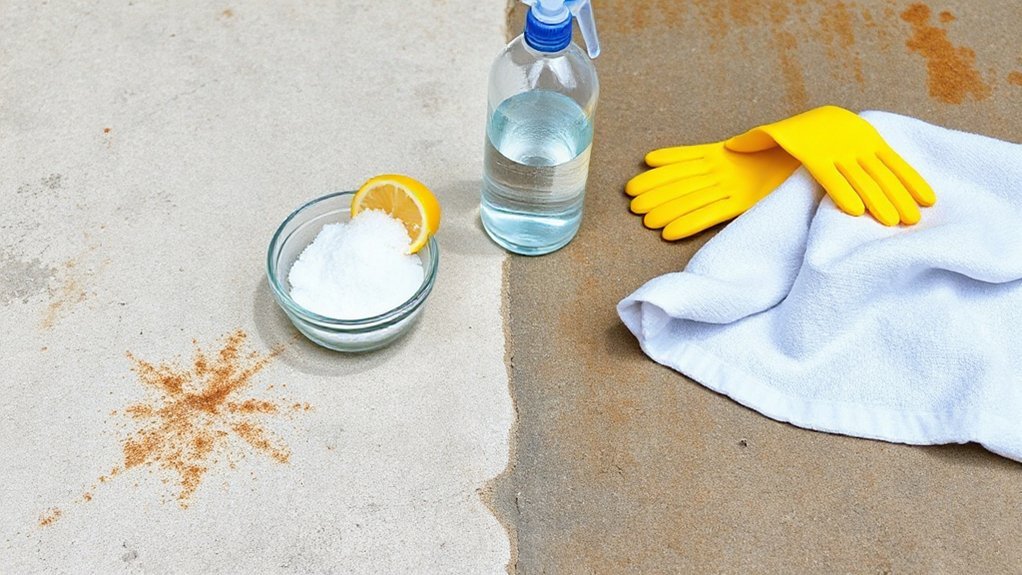
Household treatments can remove many rust stains from concrete when you match the product to stain depth and surface condition. For light stains use a vinegar solution: apply straight white vinegar, let sit 10–15 minutes, agitate with a stiff nylon brush, then rinse. For slightly deeper stains make a paste of baking soda and water, spread over the stain, scrub after 10 minutes, and rinse; the mild abrasive action lifts oxidized iron without etching the concrete. Repeat cycles rather than increasing concentration. Always test in an inconspicuous spot and use gloves and eye protection. Avoid metal brushes that can deposit iron. After treatment neutralize residue with water and mild detergent, then let the surface dry to assess if further action is required.
Stronger Commercial Cleaners and How to Use Them
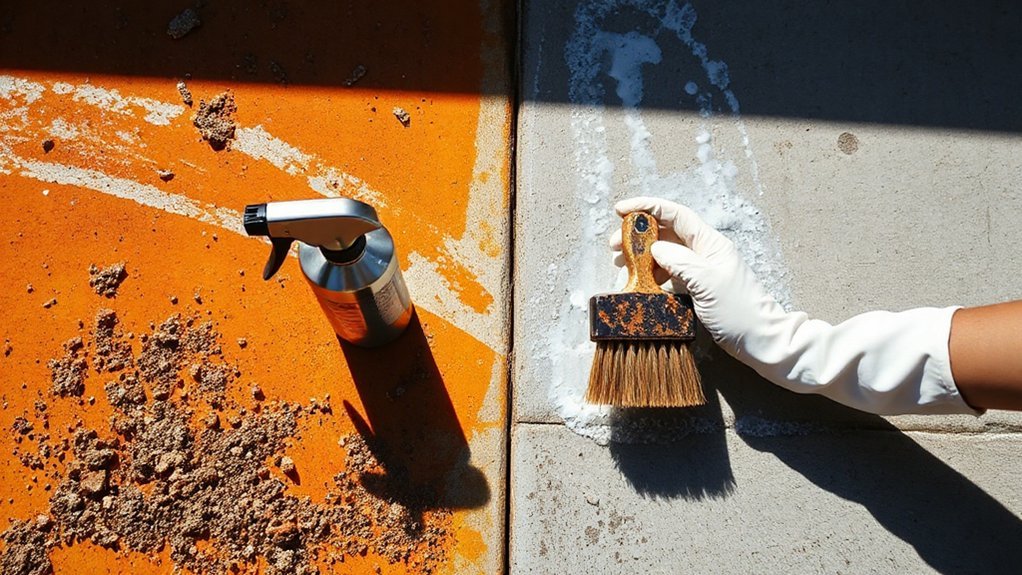
When light DIY treatments don’t remove embedded rust, you’ll need stronger commercial cleaners formulated with rust-dissolving acids or chelating agents; these products work faster and penetrate deeper but demand stricter safety and application controls. Choose industrial rust removers or concrete cleaning solutions specified for porous masonry; check pH, active ingredient (hydrochloric, oxalic, phosphoric, or EDTA-based), and manufacturer dilution rates. Pre-wet the slab, apply with a plastic pump sprayer or brush, and allow specified dwell time while preventing drying. Agitate stubborn areas with a stiff nylon brush, then rinse thoroughly with a pressure washer on a moderate setting to avoid surface damage. Always wear chemical-resistant gloves, eye protection, and a respirator per label directions; neutralize acid residues if required and dispose of runoff responsibly.
When to Call a Professional for Rust Removal
If a commercial cleaner and careful scrubbing still won’t remove deep, widespread, or recurring rust, it’s time to call a professional. You should engage professional services when stains penetrate concrete pores, cover large areas, or return after multiple attempts. Technicians assess substrate damage, select targeted removal techniques (chemical chelants, abrasive micro-blasting, or controlled acid application), and control runoff to protect nearby vegetation and finishes. Call a pro if you’re unsure about structural impact, when adjacent coatings or reinforcement steel may be affected, or when regulations govern disposal of spent cleaners. Expect an on-site evaluation, cost estimate, and specified remediation plan. Hiring trained professionals reduces risk of over-treatment, surface etching, or environmental violations while restoring concrete more reliably.
Preventing Future Rust Stains on Concrete
Because rust stains usually start from metal contact or trapped moisture, preventing them means controlling those sources and protecting the concrete surface. You should inspect and remove corroding metal: replace or coat steel fixtures, fit rubber or plastic spacers under equipment, and guarantee drains and slope prevent pooling. Implement routine cleaning to remove debris and salts that accelerate corrosion. Apply preventive measures like routine inspections, prompt repair of cracks, and managing runoff to reduce moisture exposure. Use rust resistant sealants formulated for concrete; follow manufacturer specifications for surface prep, application thickness, and recoat intervals. For high-risk areas, choose primers with corrosion inhibitors before sealing. Document maintenance schedules and reapply sealants on a planned cycle to sustain protection.
Conclusion
You can remove most rust stains yourself with safe, practical steps. Start with white vinegar for light marks, use a baking-soda paste for deeper stains, and progress to commercial rust removers or chelating agents for stubborn, embedded rust—always wear gloves and eye protection and test in an inconspicuous spot first. If stains persist or the concrete’s integrity is at risk, call a professional. Prevent recurrence by addressing metal corrosion and sealing the surface.