
You want great-tasting coffee and a machine that lasts, so you should clean your coffee maker regularly. Start with simple daily rinses and wipes, then schedule deeper descaling every few months to remove mineral buildup and mold. Different machines and parts need different steps, but a few practical habits will prevent most problems. Keep scrolling to learn the quick routines and one safe, effective method for a full deep clean.
Key Takeaways
- Rinse and wash removable parts (carafe, filter basket, lids) with warm, soapy water after each use.
- Descale the machine every 1–3 months using vinegar, citric acid, or a commercial descaler to remove mineral buildup.
- Run two to three plain water rinse cycles after descaling to remove any cleaning solution residue.
- Clean needles, showerheads, and gaskets with a brush or cloth to remove trapped grounds and oils.
- Allow all parts to air-dry fully before reassembling and use filtered water to reduce future scale and odors.
Why Regular Cleaning Matters for Taste and Safety
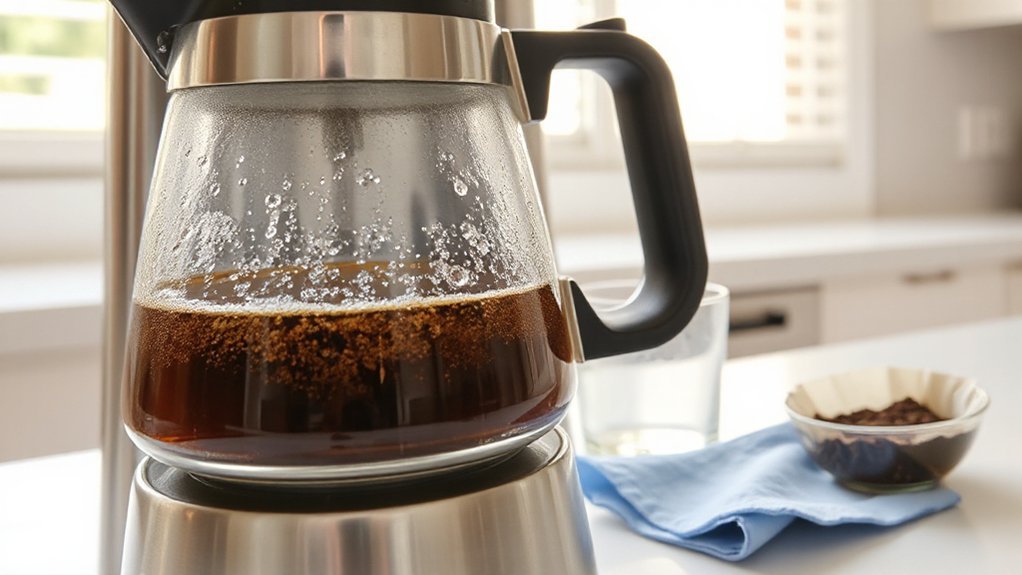
Because mineral deposits and coffee oils build up quickly, you should clean your coffee maker regularly to keep drinks tasting fresh and to prevent bacteria and mold from growing. You’ll notice stale flavors when buildup clings to internal parts; cleaning preserves the true aroma and flavor, ensuring taste preservation every brew. Regular maintenance also removes residues where microbes hide, giving you safety assurance for your household. You don’t need fancy tools—consistent attention prevents bigger problems, prolongs machine life, and keeps performance steady. Make cleaning a simple habit so you avoid off-flavors, clogged components, and potential health risks. That small, routine effort delivers reliably better coffee and peace of mind without extra fuss.
Daily Cleaning Routine for Drip Coffee Makers
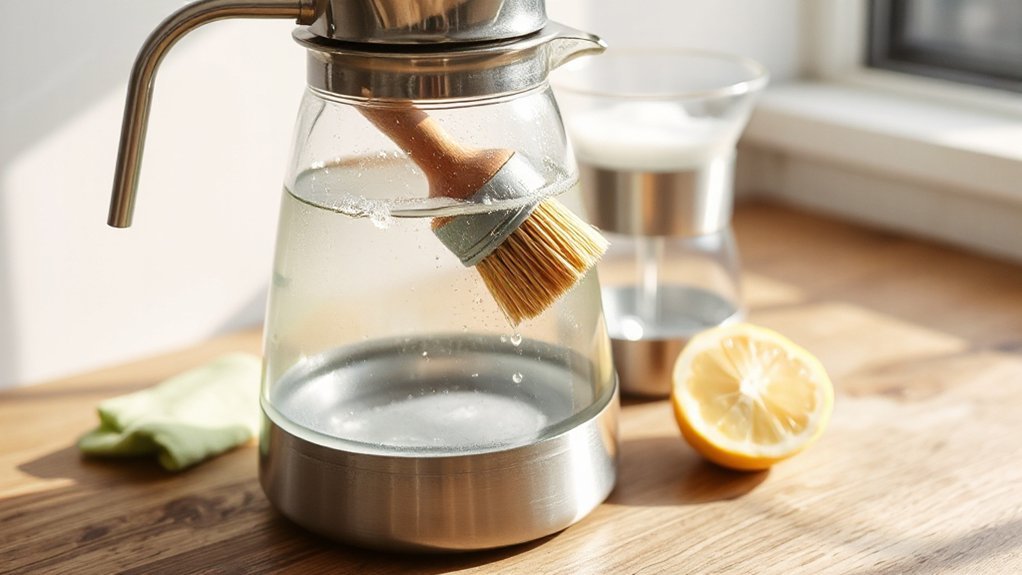
When you finish each brew, take a few minutes to rinse removable parts and wipe the carafe and brew basket so oils and grounds don’t harden into stains or clogs. Each morning, discard used grounds, wash the filter, carafe, and any removable lids with warm, soapy water, then let them air dry. Wipe the exterior and warming plate with a damp cloth to remove spills. Check the water reservoir for grit and rinse it if needed. Run a plain water brew (no coffee) weekly to flush loose debris. Keep a small towel or brush by the sink to speed the routine. These simple daily maintenance steps keep your coffee machine sanitary and tasting fresh, and they prevent minor problems from growing into big ones.
Deep Cleaning and Descaling: When and How
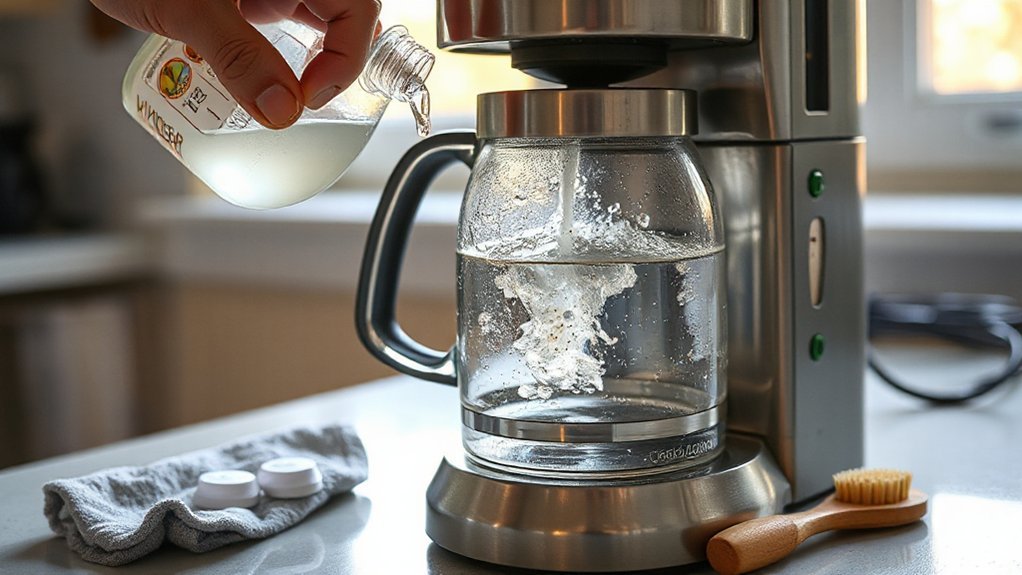
You should descale your coffee maker every 1–3 months or sooner if you notice slower brewing, odd tastes, or visible limescale. You can use white vinegar or a citric acid solution—vinegar is cheap and effective, while citric is milder and leaves less smell. After descaling run two to three full rinse cycles with fresh water to flush any residue before brewing.
When to Descale
If your coffee starts tasting flat, brews more slowly, or the machine shows mineral buildup, it’s time to descale — regular flushing with a descaling solution keeps water pathways clear and preserves flavor. How often you descale depends on your water hardness and use: check manufacturer recommendations for descaling frequency, but monthly is typical for hard water, every 3–6 months for soft water. Watch for signs: slow flow, weird noises, flaky deposits, or longer brew times. Descale proactively rather than waiting for failure; it prevents clogs and preserves lifespan. Always run a rinse cycle afterward to remove any residue. Keep a simple calendar reminder and note water source so you descale at the right intervals.
Vinegar Vs Citric
Although both vinegar and citric acid remove mineral deposits effectively, they work differently and suit different needs, so choose based on smell tolerance, machine materials, and how thorough a clean you want. You’ll find vinegar benefits include strong descaling power and low cost, making it a good choice for stubborn buildup. It’s acidic and cuts through limescale quickly, but it can leave an odor you may need to neutralize. Citric effectiveness shines when you want a milder, food-safe option that’s gentler on seals and metal parts and usually leaves less smell. Use citric acid if your manual warns against vinegar or you prefer a kitchen-friendly cleaner. Whichever you pick, follow concentration guidelines and handle solutions safely.
Rinse and Run Cycles
Now that you’ve picked vinegar or citric acid, it’s time to run rinse-and-run cycles to flush out loosened scale and any lingering cleaner. Fill the reservoir with fresh water and start a brew cycle, then discard the water when it finishes. Repeat this as two to three rinse cycles until the smell and taste of the descaler is gone. For stubborn residue, do an extra run cycle or let water sit in the carafe for a few minutes before brewing. Check removable parts and wipe them between cycles. You’ll know you’re done when brewed water is clear, odorless, and tastes neutral. Regular run cycles after descaling keep your machine healthy and your coffee tasting right.
Cleaning Single-Serve Pod Machines
Single-serve pod machines are convenient, but they still need regular care to keep coffee tasting fresh and the machine running well. For single serve maintenance, empty and rinse the removable drip tray, pod holder, and water reservoir after each use. Once a month, run a descaling cycle with a manufacturer-recommended solution or a vinegar-water mix to remove mineral buildup—follow with two full water-only cycles to flush residue. Wipe external surfaces and the needle that punctures pods with a soft brush or cloth to prevent clogging. Use filtered water if your tap is hard. If your machine has a reusable pod, clean it immediately after use. These simple steps keep pod machine care efficient and extend the life and performance of your brewer.
Caring for French Presses and Pour-Over Gear
For French presses and pour-over gear, you’ll want a simple routine that tackles grind retention, glass and steel care, and filter or mesh maintenance. Brush and vacuum out trapped grounds, wash glass and stainless parts with warm soapy water (or a vinegar rinse for stubborn stains), and scrub or replace mesh filters regularly to prevent oils and buildup. With a few minutes after each use and a deeper clean weekly, your brew will stay bright and your equipment will last.
Grind Retention Cleaning
Grind retention is the unseen reason your French press and pour-over always taste stale, so you’ll want to clean nooks where old grounds hide. You’ll check the grind chamber of your burr grinder and the small corners of your hand grinder, plus the filter holder, funnel, and the press mesh. Be gentle but thorough so you don’t damage seals or screens.
- Knock out loose grounds into a trash bin, then use a small brush to reach crevices.
- Remove detachable parts from the burr grinder and wipe with a dry cloth; avoid water on bearings.
- Use a vacuum or compressed air for stubborn particles in the grind chamber and chute.
- Reassemble and run a few test grinds to flush remaining debris.
Glass and Steel Care
When you handle glass and stainless parts for your French press or pour-over, treat them gently but don’t skimp on cleaning: rinse warm soapy water through the carafe, filter, and any metal meshes to remove oils and residue, then dry thoroughly to prevent water spots and rust. After rinsing, polish glass with a soft microfiber cloth for glass polishing that restores clarity without scratching. For stainless components, wipe with a mild detergent and warm water, then buff dry to avoid streaks. If you see mineral deposits, soak briefly in a vinegar solution, rinse well, and dry. Regular steel maintenance—wiping, drying, and occasional gentle polishing—keeps parts corrosion-free and looking new, and it preserves flavor.
Filter and Mesh Maintenance
You’ve cleaned the carafe and polished the steel; now pay the same attention to the parts that actually hold your coffee grounds. For French presses and pour-over setups, regular filter types inspection and mesh cleaning prevent oils and fines from building up. Rinse after each use, then deep-clean weekly.
- Remove and rinse paper, cloth, or metal filters; check for tears or stains.
- For reusable metal filters and French-press meshes, soak 15–30 minutes in warm water with mild detergent, then brush gently.
- Use a soft brush or toothbrush for mesh cleaning to dislodge trapped grounds without stretching or tearing.
- Rinse thoroughly and air-dry fully before reassembly to avoid off-flavors and mold.
Routine care keeps extraction consistent and your coffee tasting fresh.
Cleaning Carafes, Filters, and Removable Parts
Because these parts contact your coffee directly, clean them after each use to prevent oils and residue from building up and affecting flavor. Rinse the carafe and removable parts right away, then wash with warm, soapy water. For different carafe materials—glass, stainless steel, or thermal—use a soft brush to reach the bottom and avoid abrasive pads on coated finishes. Empty and rinse permanent and paper filter baskets; discard paper filters and wash permanent filters gently to remove grounds caught in the mesh. Check seal gaskets, lids, and water towers for trapped grounds and wipe them dry. Let everything air-dry fully before reassembling to prevent mildew. Reassemble carefully so parts sit correctly and your machine brews reliably every time.
Natural Cleaning Solutions vs. Commercial Descalers
Although both natural solutions and commercial descalers remove mineral buildup, they differ in strength, speed, and suitability for certain machines, so you’ll want to pick the option that fits your coffee maker and water hardness. You can use natural remedies like vinegar or baking soda for light scale and eco friendly options such as citric acid or biodegradable descalers for gentler, greener cleaning. Commercial descalers act faster on heavy deposits and are formulated to protect seals and sensors. Check your manual before choosing.
- Vinegar or baking soda: cheap, accessible, good for mild scale.
- Citric acid: eco friendly, effective, less odor.
- Commercial descaler: fast, machine-safe for heavy scale.
- Follow manufacturer guidance to avoid damage.
Preventing Mineral Buildup and Mold
If you want to keep minerals and mold from taking hold, make prevention part of your routine: rinse and dry removable parts after each use, brew with filtered or softened water when possible, and run a weekly rinse cycle with plain water or a mild natural cleaner. Wipe the carafe, filter basket, and lids dry so standing water can’t encourage mold growth. Empty and dry the water reservoir if you won’t use the maker for a day or more. Descale on a schedule based on your water hardness to prevent mineral deposits from building up in heaters and tubes. Store parts loosely assembled to allow airflow. If you notice any musty smell, clean promptly; early action keeps your coffee tasting fresh and your machine healthy.
Troubleshooting Common Cleaning Problems
When cleaning doesn’t go as planned, stay calm and methodical: identify the symptom, check the obvious parts (carafe, filter basket, gasket, and reservoir), and rule out simple causes like clogged holes or leftover detergent. Use basic cleaning tools and follow troubleshooting tips to narrow the issue. If something’s stubborn, work step by step so you don’t miss a detail.
- Water won’t flow — check the showerhead holes and descale with vinegar; run clean water cycles.
- Strange taste or smell — scrub removable parts with baking soda and rinse thoroughly.
- Leaks — inspect gaskets, seals, and the carafe for cracks; tighten or replace parts.
- Persistent residue — soak removable parts, use a toothbrush, and repeat cleaning cycles as needed.
Conclusion
Keep your coffee maker clean and it’ll keep making great coffee. Wipe and rinse removable parts daily, descale every 1–3 months with vinegar or citric acid, and run extra rinse cycles to remove residue. For pods, French press, and pour-over gear, clean components after each use to prevent oils and mold. Use natural or commercial descalers as needed, and address odors or clogs promptly so your machine stays reliable and your coffee tastes fresh.