
You’ll want to clean your oven racks regularly to keep them safe, efficient, and easy to slide in and out. Start by removing the racks and checking for bends or heavy buildup, then choose a method—soak in hot, soapy water for routine grime or use a baking soda paste and vinegar for stubborn spots. I’ll walk you through each option step by step and show safe ways to handle large or badly corroded racks.
Key Takeaways
- Remove racks from a cooled oven and inspect for warping before cleaning.
- Soak racks in hot water with grease-cutting dish soap for 30–60 minutes.
- Scrub with a non-abrasive sponge, nylon pad, or plastic scraper to lift grime.
- For stubborn buildup, apply a baking soda paste, let sit 20–30 minutes, then scrub.
- Rinse thoroughly, dry completely, and slide racks back in, repeating light weekly wipes.
Why You Should Clean Oven Racks Regularly
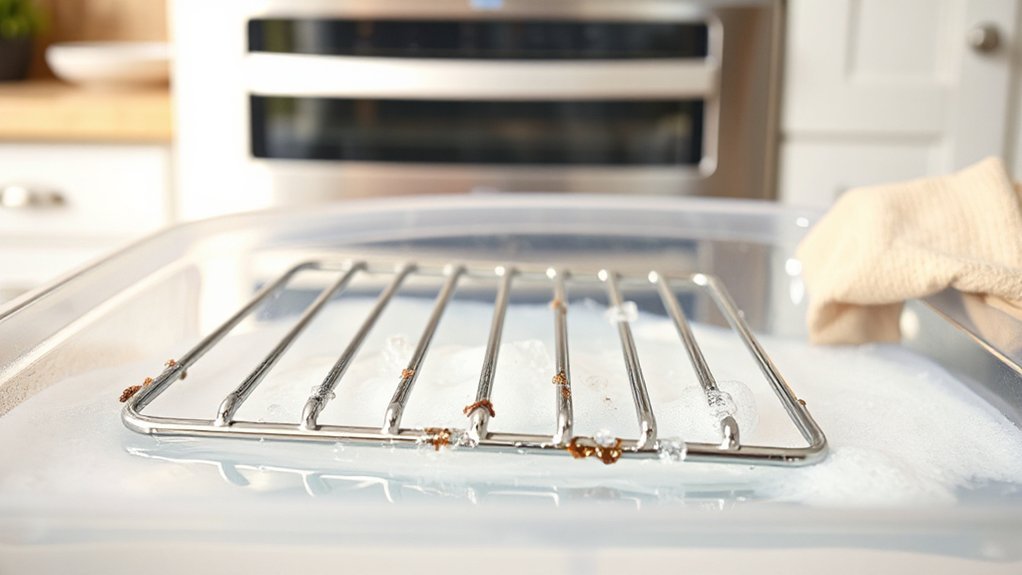
Because grime builds up every time you cook, you should clean oven racks regularly to keep your oven working efficiently and your food tasting as intended. You’ll prevent smoke and burnt odors that alter flavor and trigger smoke detectors. Regular cleaning preserves heat circulation, so baking times stay predictable and energy use stays lower. You’ll reduce fire risk by removing accumulated grease and food debris that can ignite. Beyond performance, the importance of cleanliness includes visible hygiene and reduced pest attraction. You’ll gain health benefits by minimizing bacteria and mold growth in a warm, food-exposed environment. Set a schedule based on use, inspect racks for rust or damage, and clean promptly after spills to maintain function, safety, and sanitary cooking conditions.
Tools and Supplies You’ll Need
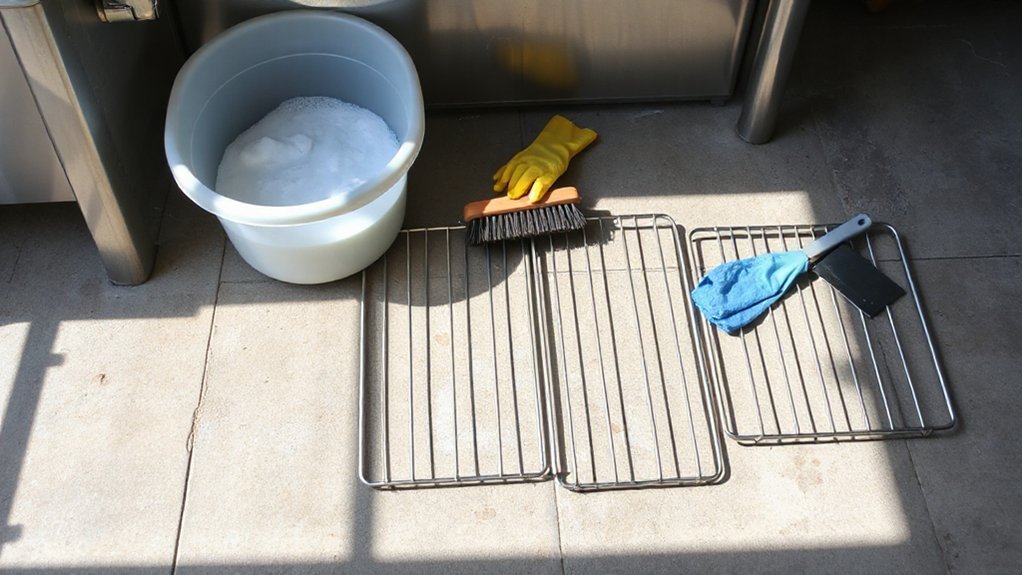
You’ll want a few clean rags and non-abrasive sponges to scrub and wipe without scratching the metal. Pick a cleaning solution suited to the grime — a commercial oven cleaner, baking soda paste, or mild dish soap — and have it ready. Don’t forget protective gear like rubber gloves and eye protection to keep chemicals and grease off your skin and out of your eyes.
Rags and Sponges
One or two clean, lint-free rags and a couple of non-abrasive sponges will make rack cleaning faster and safer: use rags for drying and buffing and soft sponges for loosening stuck-on grease without scratching the finish. Choose rags types such as microfiber for absorbency and cotton for durability; reserve terry cloth for heavy-duty drying and thin lint-free cotton for final polish. For sponge materials, pick cellulose or polyurethane foam with a soft side only; avoid abrasive scrub pads that can strip coatings. Keep one rag dedicated to wet work and another for drying to prevent cross-contamination. Rinse sponges frequently and replace when torn or stained. Store clean rags dry between uses to prevent mildew and odors.
Cleaning Solutions
Now that you’ve gathered rags and sponges, gather the cleaning solutions and tools that’ll actually break down grease and protect the rack finish. Select a degreasing agent: either natural cleaners (baking soda and vinegar paste) for light to moderate buildup or a labeled commercial solution for heavy, baked-on grime. Have a non-abrasive scrub brush, nylon scouring pad, and a plastic scraper on hand to avoid scratching enamel. Use a large basin or tub and heavy-duty trash bags if you plan on soaking racks vertically. Keep a spray bottle for diluted solutions and a bucket for rinsing. Measure and mix according to instructions; stronger isn’t better—follow proportions to prevent damage. Dispose of used solution per label or local guidance.
Protective Gear
Several key items will keep you safe and protect the oven racks while you clean: chemical-resistant gloves, eye protection, and a long-sleeved shirt or apron to shield skin from splashes and sharp edges. Put on chemical-resistant gloves and test their fit before handling cleaners; gloves usage should include checking for tears and replacing compromised pairs. Wear safety goggles that seal against your face when you spray or scrub to prevent fumes and splatter from reaching your eyes. Choose a durable, non-slip pair of shoes and cover arms to avoid cuts from rack edges. Keep a ventilation source like a fan or open window running. Have a neutralizing agent (baking soda solution) nearby for accidental spills and a trash bag for debris.
Prep: How to Remove and Protect Your Racks and Oven
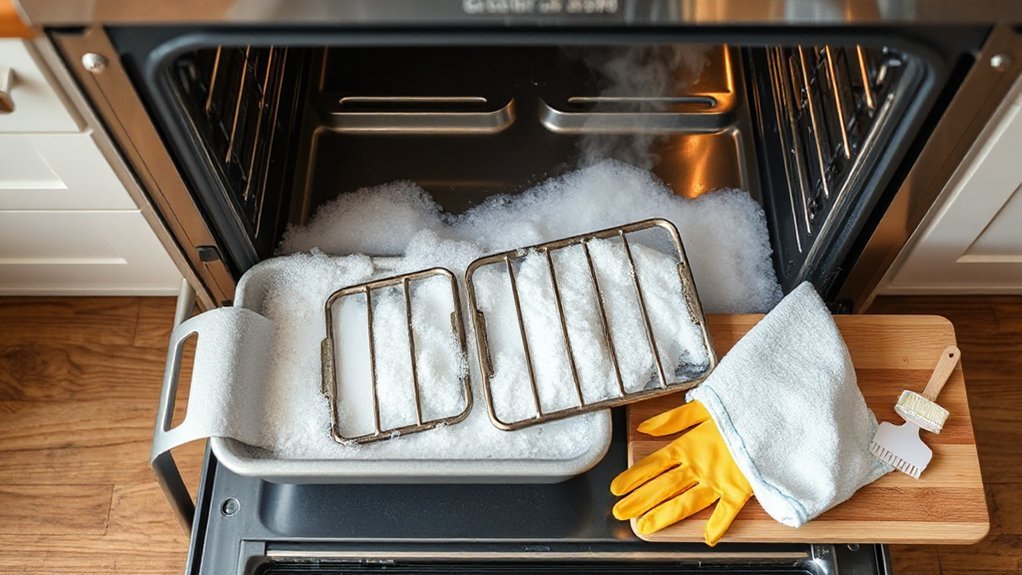
Before you start scrubbing, remove the racks and protect the oven interior: cool the oven completely, slide each rack out straight to avoid bending, and set them on a sturdy work surface lined with old towels or a sheet to catch drips. Wear gloves and eye protection, and keep pets and kids away. Inspect racks for damage and note any warped bars before cleaning. For rack removal, tilt slightly if needed to disengage stops, then lift evenly with both hands. To guarantee oven protection, close the oven door and cover heating elements and gas ports with foil if instructed by your manual; avoid blocking vents. Place a drop cloth under the work area to protect floors and simplify cleanup.
Soaking Method Using Dish Soap and Hot Water
If your racks only have light-to-moderate grime, fill a tub or the bathtub with very hot water, add a generous squirt of grease-cutting dish soap, and submerge the racks so all surfaces are covered; let them soak for 30–60 minutes to loosen baked-on food. After the soaking duration, lift one rack and use a non-abrasive scrub pad and a stiff nylon brush to work along wires and corners, applying more dish soap as needed. Rinse with hot water to check progress; repeat soak for another short interval if residue remains. Dry racks thoroughly with a clean towel to prevent water spots and reinsert only when fully dry. This straightforward approach highlights dish soap effectiveness on routine buildup.
Baking Soda and Vinegar Paste Method for Stubborn Grime
When the dish-soap soak doesn’t remove baked-on grease, switch to a baking soda and vinegar paste that chemically loosens stubborn residue. Measure a cup of baking soda and add just enough water to form a spreadable paste. Lay racks on a protected surface, then coat both sides with the paste, concentrating on caked areas. Let the paste sit 15–30 minutes; it breaks down carbonized grease. Spritz or pour a mild vinegar solution over the paste to activate fizzing, which helps lift grime—use white vinegar diluted with equal parts water. After bubbling subsides, scrub with a nonabrasive brush or pad, rinsing frequently. Rinse racks thoroughly and dry before returning to the oven. Repeat for persistent spots.
Using the Bathtub or Utility Sink Safely
Although using a bathtub or utility sink gives you plenty of room for soaking and scrubbing oven racks, take steps to protect plumbing and finishes: line the tub or sink with an old towel or plastic sheeting to prevent scratches, plug the drain with a stopper or rag to avoid losing parts, and elevate the racks on blocks or a wire rack so cleaning solution circulates underneath. For bathtub safety, avoid harsh chemicals that can damage enamel or plumbing; use diluted detergent, baking soda, or a mild degreaser. Don’t let solution sit on finishes longer than necessary. With utility sink precautions, wear gloves, work on a stable surface, and keep the water temperature moderate to prevent warping. Rinse thoroughly and dry racks before reinstalling.
Quick In-Place Cleaning Without Removing Racks
You can freshen racks without removing them by running the oven’s steam-clean or self-clean cycle to loosen grime. While the oven is cool, scrub remaining residue with a thick baking soda paste applied directly to stubborn spots, then wipe away with a damp cloth. Work methodically from top to bottom and ventilate the kitchen during and after cleaning.
Steam-Clean Inside Oven
If the rack grime isn’t baked on hard, steam-cleaning the oven lets you loosen grease and food residue without removing the racks. You’ll save time and avoid lifting heavy racks. Use steam cleaning as part of routine oven maintenance to soften deposits before you wipe.
- Preheat to 250°F (120°C), put a shallow oven-safe pan with 1–2 cups water on the lower rack, and close the door.
- Let steam build for 20–30 minutes, then turn the oven off and wait 10 minutes to reduce burns while steam subsides.
- Wearing gloves, use a damp microfiber cloth or nonabrasive sponge to wipe softened grime; repeat short steam cycles for persistent spots.
Finish with a dry cloth to prevent streaks and restore a clean interior.
Use Baking Soda Paste
Anyone can tackle light-to-moderate rack grime without removing the racks by applying a simple baking soda paste; it loosens grease and char so you can scrub and wipe in place. First, mix 3 parts baking soda with 1 part water to make a spreadable cleaning paste. Don’t overwater; it should hold on vertical bars. Turn the oven off and let racks cool. Wearing gloves, spread the paste over dirty areas with a sponge or brush, focusing on crevices. Let it sit 20–30 minutes to break down deposits. Use a nonabrasive scrubber to work residues loose, then wipe with a damp cloth. Rinse the cloth and repeat until no residue remains. Finish by drying racks with a clean towel.
Preventive Tips to Keep Racks Cleaner Longer
Because a few simple habits prevent heavy buildup, keeping oven racks cleaner longer takes minimal effort and makes future cleaning faster. You’ll extend time between deep cleans by adopting preventive measures and setting a realistic cleaning frequency. Tackle spills immediately, line pans, and remove crumbs after each use to reduce grime.
A few simple habits prevent heavy buildup, making oven rack maintenance quick and extending time between deep cleans.
- Wipe racks weekly with a damp cloth and mild detergent to prevent sticky residue from hardening.
- Use oven-safe liners beneath dishes and clean spills as they occur; avoid foil directly on racks to prevent trapping heat and degrading finish.
- Schedule a light scrub every 1–3 months depending on use; increase cleaning frequency after roasting or broiling greasy foods.
These steps are practical, repeatable, and reduce time spent on intensive rack scrubbing.
Conclusion
Keeping your oven racks clean improves cooking performance and prevents smoke or odors. Remove racks when the oven’s cool, inspect for damage, then choose a method: soak in hot, soapy water for 30–60 minutes, or paste baking soda and water on stubborn grime and let sit 20–30 minutes before scrubbing with a non‑abrasive sponge. Rinse and dry thoroughly. For large racks use a bathtub or utility sink; clean in place for light buildup. Maintain regular care to avoid heavy buildup.