
If your bathroom sink is slow or blocked, you can fix it with simple, non‑toxic steps you likely already know. Start by removing standing water and visible hair, then use baking soda and vinegar or a plunger to clear organic buildup. There are safe enzyme options and manual techniques for tougher clogs, and knowing when to call a plumber will save time — here’s how to proceed.
Key Takeaways
- Remove the stopper and clear visible hair and debris with gloves and pliers to avoid pushing clogs deeper.
- Pour out standing water, then add 1/2 cup baking soda followed by 1 cup white vinegar and cover for 10–15 minutes.
- After the fizzing stops, flush the drain with a strong stream of cold tap water for 1–2 minutes.
- Use a plunger or a flexible drain snake to dislodge stubborn clogs, sealing overflow ports with a wet cloth first.
- Prevent recurrence by using a mesh strainer, running hot water after use, and monthly enzyme cleaner treatments.
Common Causes of a Slow or Clogged Bathroom Sink
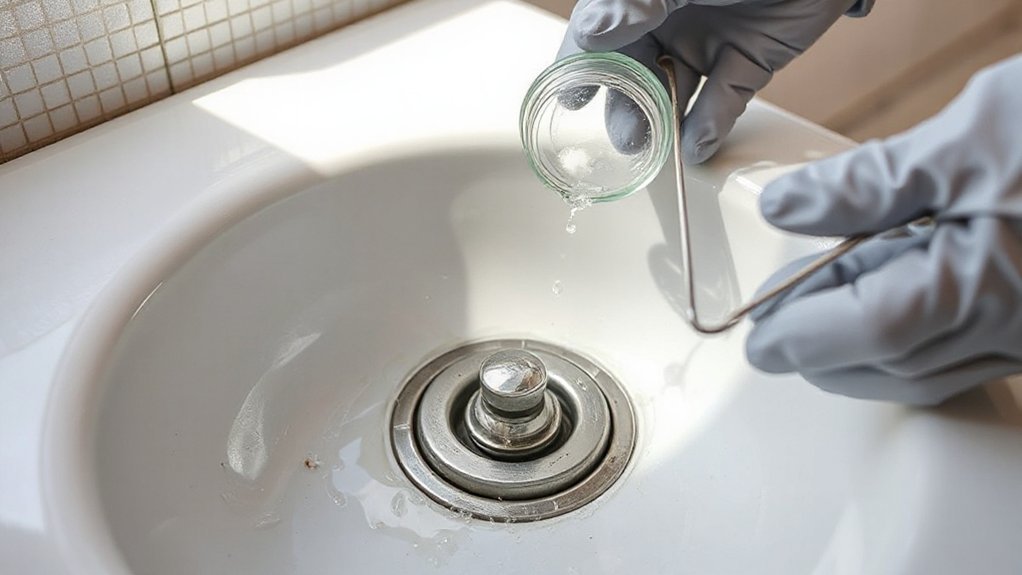
When your bathroom sink drains slowly or backs up, it’s usually because hair, soap scum, toothpaste, and mineral buildup restrict flow, or small objects and accumulated debris trap water in the P-trap; organic matter and minerals combine into globs that cling to pipe walls and fittings, reducing diameter and causing slow drainage or full clogs. You’ll most often encounter hair buildup collecting at the trap inlet and in tailpieces, forming mats that catch soap residue and grit. Soap residue mixes with calcium to form adherent films that narrow pipes. Toothpaste and cosmetics add sticky solids. Hard water deposits roughen surfaces, accelerating accumulation. Mechanical blockages—rings, debris, or dislodged gasket fragments—can partially obstruct flow. Biological films from biofilms further impede drainage and produce odors; identify source before you proceed.
Tools and Supplies You Likely Already Have
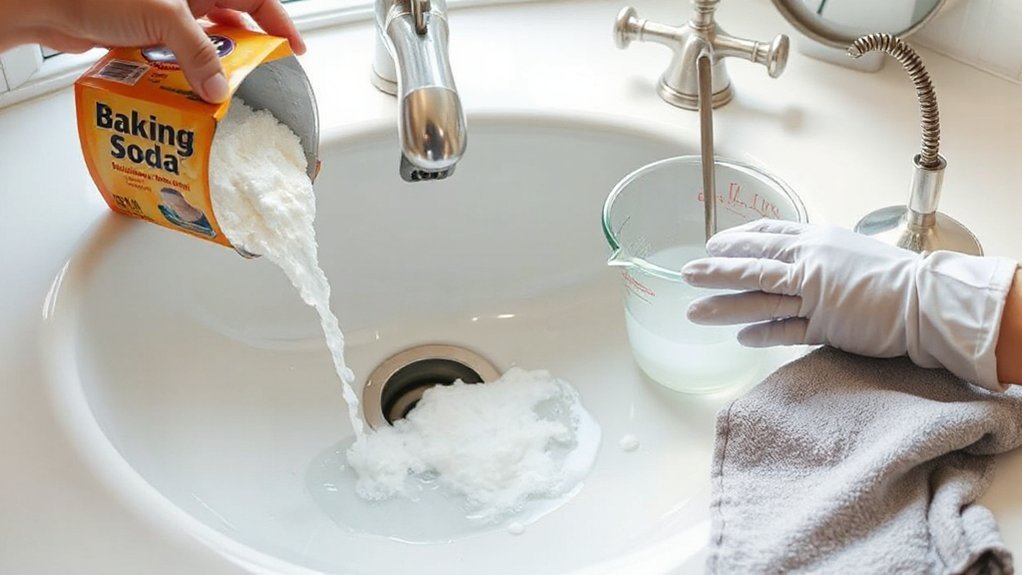
You probably have everything you need on hand: baking soda, vinegar, a plunger, and an adjustable wrench cover most quick fixes. Add a pair of reusable rubber gloves and safety glasses to protect your hands and eyes while you work. Keep a bucket and old towels nearby to catch water and debris when you open the trap.
Common Household Items
Most clogged sinks can be tackled with items already in your home: a plunger, a bucket, adjustable wrench, old towels, rubber gloves, a flashlight, and basic cleaners like baking soda and vinegar. Start by protecting the area with towels and placing the bucket under the P-trap. Use the flashlight to inspect visible blockages; gloves keep your hands clean. Baking soda and vinegar form an effective natural remedies reaction for organic buildup—measure a half cup baking soda, follow with a cup of vinegar, wait 15 minutes, then flush with hot water. Use the plunger to restore flow after chemical reactions or manual clearing. The wrench loosens the P-trap for debris removal; the bucket captures water. These common items reduce need for harsh chemicals or a call to a plumber.
Simple Hand Tools
A few basic hand tools will let you tackle most sink clogs without calling a pro: a plunger for sealing and pressure, an adjustable wrench for loosening the P‑trap nuts, a basin wrench or long‑nose pliers for tight spaces, and a plumber’s snake (or hand auger) for deeper blockages. You’ll also want a bucket, rags, and a small flashlight. Know the plumbing basics: identify the trap, shutoff valves, and trap arm before you start. Use the plunger first to test for simple obstructions; if that fails, remove the P‑trap with the wrench and inspect the trap chamber. Feed the snake into the drain to break up or extract material further down. These tools support regular sink maintenance and let you fix most clogs quickly and safely.
Reusable Protective Gear
Before you loosen pipes or stick your hand into a trap, grab reusable protective gear you likely already own. You’ll need safety goggles to shield eyes from splashes and debris and rubber gloves to protect skin from grime and natural cleaners. Choose thick, reusable rubber gloves that reach mid-forearm; check for cuts and test flexibility. Use sealed, impact-rated safety goggles rather than glasses to prevent chemical or particulate entry. Clean both items after each use with soap and hot water, then air-dry to prevent degradation. Store gear in a labeled container near the sink so it’s ready. Inspect before every job: replace goggles with scratched lenses or gloves with thinning material. Proper gear reduces risk and keeps the job efficient.
Simple Preventative Habits to Keep Drains Clear
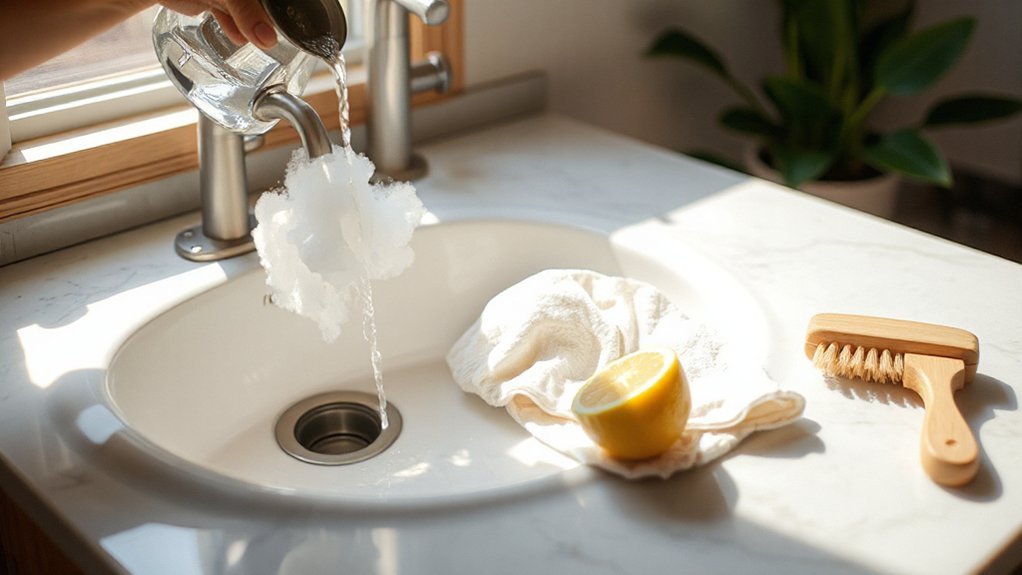
Run hot water for 30 seconds after each use to flush residual soap and oil. Fit a fine-mesh drain strainer and empty it regularly to catch hair and debris. Don’t pour greasy or oily products down the sink—wipe them into the trash first.
Run Hot Water Regularly
If you flush hot water through the sink for 30–60 seconds after use, you’ll dissolve soap scum and move grease and hair downstream before they stick to the pipes. You should make this a simple part of regular maintenance: run a steady stream of hot tap water after shaving, washing hands, or rinsing cosmetics. The hot water benefits are chemical and mechanical — heat lowers viscosity of oils and softens residue, while flow transports particles away from pipe walls. Use the hottest safe setting and a consistent duration; shorter pulses won’t mobilize deposits, longer runs waste energy. Periodically verify outlet temperature and flow to ascertain effectiveness. This habit reduces buildup rate, postpones chemical or mechanical interventions, and keeps trap profiles predictable for future diagnostics.
Use a Drain Strainer
Keeping hot water flowing helps loosen residues, but physically stopping solids from entering the drain prevents clogs in the first place. Use a metal or silicone drain strainer sized to your sink outlet; it captures hair, toothpaste pellets, and other particulates before they enter the trap. You’ll empty the strainer into a trash can after each use or at least daily in high-traffic sinks. Clean the strainer weekly with a brush and mild detergent to remove buildup that reduces flow. Inspect the strainer seating for gaps and replace worn units to maintain a flush seal. Incorporate strainer checks into your regular drain maintenance routine; consistent use and cleaning are simple, low-cost steps that greatly improve clog prevention and reduce the need for chemical or mechanical intervention.
Avoid Grease Disposal
Because grease cools and solidifies as it moves through pipes, you should never pour fats, oils, or greasy wash water down the bathroom sink; instead, wipe greasy residue from razors, makeup tools, or hands with a paper towel and dispose of it in the trash. For grease prevention, treat oily substances as solids: blot oils with absorbent paper, collect and seal used towels or cotton, and discard them with regular waste. Rinse items with hot water only after mechanical removal; hot water alone won’t prevent buildup. Label a small bin near the sink for oily disposables to enforce proper disposal. Inspect traps monthly for residual film and clean with a biodegradable degreaser if needed. Consistent habits reduce clogs and maintenance interventions.
Manual Clearing: Removing the Stopper and Visible Debris
Start by removing the stopper and any visible debris so you can inspect the drain and access blockages directly. For stopper removal, rotate or lift per its mechanism, keep small tools ready, and protect the sink surface. Wear gloves; have a bucket for catchment. Once the stopper’s out, clear visible debris with pliers or a plastic hook, avoiding pushing material deeper.
Remove the stopper, clear visible debris with gloves and tools, inspect the drain, and avoid pushing clogs deeper.
- Tangled hair wound around the stopper shaft
- Sludgy soap residue coating the drain lip
- Small toys or jewelry lodged just inside
- Accumulated grit and toothpaste paste
Inspect the trap if flow remains restricted: loosen slip nuts, empty contents into the bucket, and check for obstructions. Reassemble carefully, testing flow and seals.
The Baking Soda and Vinegar Method Step‑by‑Step
If removing visible debris and checking the trap didn’t restore flow, try the baking soda and vinegar method to clear remaining residue and minor clogs. First, remove standing water with a cup or sponge so the chemicals contact the blockage. Pour 1/2 cup baking soda straight into the drain, then slowly add 1 cup white vinegar. The baking soda and vinegar reaction will fizz, loosening organic build-up and dislodging greasy films. Cover the drain with a plug or wet cloth for 10–15 minutes to concentrate the reaction. After waiting, flush with cold tap water for 1–2 minutes while running the stopper up and down to help dislodge residue. Repeat once if flow hasn’t fully returned. If resistance persists, inspect the P-trap next.
Using Boiling Water Safely to Break Down Soap Scum
While boiling water won’t dissolve heavy clogs, it’s an effective, chemical‑free way to soften and flush away soap scum and greasy residue that narrow your drain. You’ll reduce buildup by applying controlled heat and flow rather than brute force.
Boil water safely: remove sink stopper, clear visible debris, and use oven mitts. Pour in stages — not a single torrent — so temperature shock won’t damage PVC or loosen fittings.
Visualize the process:
- hot water cascades, melting softened soap scum lining the pipe
- steam lifts greasy films, allowing flow
- successive pours increase temperature deeper in the trap
- cooled residues break apart and move downstream
Repeat two to three cycles, then test flow. If resistance remains, try mechanical clearing next.
Natural Enzyme Cleaners: When and How to Use Them
After using heat to loosen soap and grease, switch to biological solutions for slow‑moving or recurring buildup: natural enzyme cleaners use bacteria and enzymes to break down organic matter — hair, food particles, grease — that boiling water can’t remove. You’ll choose products with documented enzyme effectiveness and clear ingredient lists emphasizing natural ingredients. Apply per label: pour measured dose, run a short rinse, then leave dwell time (often 4–12 hours) to let microbes digest deposits. Avoid harsh chemicals; enzymes work poorly if pH or temperature is extreme, so keep water lukewarm and neutral. For maintenance, dose weekly to prevent accumulation. If performance lags, confirm expiration, storage, and correct product for organic clogs versus mineral scale; enzymes won’t dissolve inorganic deposits.
Dealing With Stubborn Clogs: Plunger and Drain Snake Techniques
Because plungers and drain snakes physically remove obstructions, they’re the most reliable tools for stubborn bathroom sink clogs; you’ll use a plunger to dislodge compressible blockages and a drain snake to reach and extract hair, soap scum, and trapped debris deeper in the pipe. Start by sealing overflow ports with a wet cloth, assemble a cup plunger, and use focused, rhythmic thrusts—plunger techniques that maximize pressure differential. If that fails, feed a flexible drain snake down the tailpiece, rotate clockwise, and pull when you feel resistance. Clean removed debris and flush with hot water.
- cup plunger sealed over drain
- cloth blocking overflow
- snake coil entering trap
- extracted hair and gunk on tip
Wear gloves, work slowly, avoid chemical overlap.
When to Call a Professional Plumber
If your attempts with a plunger and drain snake don’t clear the sink, call a professional plumber—especially when clogs recur, drains back up repeatedly, or multiple fixtures are affected. You should also call when you see signs emergencies: sewage smell, gurgling toilets, slow drainage across the house, or water pooling around fixtures. These indicate systemic issues beyond DIY scope. A licensed plumber brings plumbing expertise, proper diagnostic tools (camera inspection, hydro-jetting), and code-aware repairs that prevent recurrence. Don’t wait if temporary fixes fail or if corrosion, leaking joints, or damaged traps are visible. Schedule service promptly to limit water damage and mold risk. Ask for a written diagnosis, scope of work, and cost estimate before authorizing repairs.
Conclusion
You’ve got practical options for most bathroom sink clogs. Start with preventative habits and simple manual clearing, then use the baking soda-and-vinegar fizz and a hot-water flush. For heavier buildup, try boiling water carefully, enzyme cleaners, a plunger, or a hand auger. If mechanical attempts fail or you suspect a deeper line issue, call a licensed plumber to avoid causing damage. Keep a strainer and occasional maintenance to prevent repeat clogs.